

Maddy summaryThe FOCUS Act requires federal agencies managing buildings to report cost overruns exceeding 5% or significant scope changes (over 5%) to Congress with explanations, and limits scope shifts to 10% without approval. It mandates the General Services Administration (GSA) to collect safety incident data from federal agencies and submit a report to Congress within 180 days on building safety improvements. The bill also requires agencies to provide detailed space utilization data for new projects, including justification for not consolidating offices, and directs the Comptroller General to review underused spaces like conference centers for efficiency. These provisions directly affect federal agencies and GSA, aiming to reduce waste and improve oversight through mandatory reporting and interagency coordination.
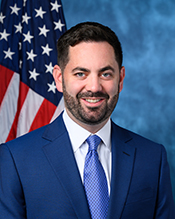
Rep. Michael Lawler
Sponsored bills
Maddy summaryThis bill requires two reports to Congress about how crime impacts federal building usage. The Comptroller General must examine how rising crime, drug use, homelessness, and safety concerns affect in-person work, commuting choices, and office safety at federal buildings. The GSA Inspector General must report on the operational costs tied to crime and safety issues around these buildings. Both reports are due within one year of the bill's enactment. The bill itself does not change policies but mandates data collection on crime's effects.
Maddy summaryHR 4723 requires the U.S. President to impose sanctions on foreign individuals and entities that threaten Bosnia and Herzegovina's territorial integrity, democratic institutions, or the Dayton Peace Agreement. The President must submit a list of such persons every 90 days, triggering sanctions that block their U.S. assets and ban entry into the United States. The bill codifies existing sanctions from two executive orders and allows limited national security waivers (up to 180 days each, expiring after two years). It specifically targets actions like forming unauthorized government structures that disrupt Bosnia's central authority, violating court rulings, or engaging in government corruption.
Maddy summaryThis resolution (HRES 149) is a symbolic congressional statement condemning Russia's actions in Ukraine, specifically the forcible transfer and abduction of Ukrainian children. It directly addresses the Russian government, citing evidence including Ukrainian reports of over 2,300 children kidnapped and Russia's policy granting citizenship to children born in occupied territories after February 24, 2022. The resolution formally declares these actions violate the Genocide Convention (Article II(e)) and claims Russia is attempting to erase Ukrainian identity by targeting children. As a non-binding resolution, it holds no legal force but expresses the House's official stance against these practices.
Maddy summaryThis bill amends an existing provision of the Omnibus Crime Control Act to explicitly authorize federal grant funds to cover the purchase of fentanyl testing kits and opioid reversal agents. It directly affects state and local law enforcement and public health agencies that receive federal grants under this program. The key change allows current grant funding to be used for these specific harm reduction tools without requiring new legislation or appropriations.
Maddy summaryHR 7704, the "Think DIFFERENTLY About Ending Learning Loss Act," directs the U.S. Secretary of Education to study how pandemic-era education policies affected students with Individualized Education Programs (IEPs) in public K-12 schools. The study must analyze academic performance, functional progress, and access to special education services from 2018-2024, using metrics like standardized test results, IEP service hours, and progress reports. It requires a final report to Congress within 30 days of study completion, focusing on comparing pre-pandemic, pandemic, and post-pandemic conditions for these students. The bill does not enact new policies or allocate funds, only mandating data collection and reporting.
Maddy summaryHR 7675 extends the authorization period for PFAS research funding under the 2020 National Defense Authorization Act from 2024 to 2029. This procedural bill directly affects ongoing PFAS research programs by allowing them to continue operating under the existing funding structure through 2029 without requiring new legislative action. It makes no substantive changes to research goals or funding levels, only adjusting the expiration date of the current authorization.
Maddy summaryThis bill prohibits U.S. app stores, hosting services, and distributors from enabling foreign adversary-controlled applications (like TikTok, owned by ByteDance) to operate within U.S. borders. It requires companies to provide users with their data in a machine-readable format before a ban takes effect, and imposes civil penalties of up to $5,000 per affected user for violations. The law directly affects major app platforms, app stores, and internet hosting services, targeting applications owned by entities controlled by designated "foreign adversary" countries (e.g., China). It includes exemptions for companies that divest U.S. operations to non-adversary entities before the ban date.
Maddy summaryHRES 1080 is a congressional resolution expressing that the U.S. and partner nations must coordinate to address humanitarian crises faced by North Koreans in China, particularly forced labor, trafficking, arbitrary detention, and forced repatriation. It directly affects North Korean refugees (especially women and girls) and U.S. import policies, urging action to stop seafood imports from China processed using North Korean labor - citing reports that such labor fuels North Korea’s nuclear program. Key mechanisms include enforcing the Countering America’s Adversaries Through Sanctions Act (which bans goods made with North Korean labor), pressuring China to comply with refugee conventions, and using sanctions authorities like the Global Magnitsky Act against Chinese officials. The resolution calls for diplomatic coordination with allies and UN action to protect refugees and end forced labor practices.
Maddy summaryThis bill amends U.S. immigration law to automatically bar immigrants from entering the country and require their removal if they have been convicted of, admitted to committing, or are charged with sexual assault. It directly affects non-citizens (aliens) who have been involved in sexual assault offenses, as defined under existing law. Key provisions add new grounds for inadmissibility (preventing entry) and deportability (requiring removal) specifically for such offenses under sections 212(a)(2) and 237(a)(2) of the Immigration and Nationality Act. The bill does not change criminal penalties for sexual assault but modifies immigration consequences for those with such convictions or admissions.