

Maddy summaryHRES 1084 is a non-binding resolution condemning the death of Russian opposition leader Alexei Navalny in a Russian prison and demanding the release of all political prisoners in Russia. It specifically calls on the U.S. State and Treasury Departments to impose sanctions on Russian officials responsible for Navalny’s death and ongoing imprisonment of political prisoners, including U.S. citizens like Evan Gershkovich. The resolution expresses solidarity with Navalny’s family and other imprisoned activists, highlighting Russia’s systemic abuse of prisoners and politically motivated detentions. It does not create new laws but urges U.S. and allied governments to prioritize the release of political prisoners through diplomatic and economic pressure.
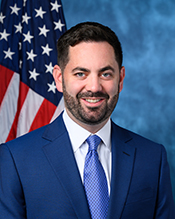
Rep. Michael Lawler
Sponsored bills
Maddy summaryHR 7770, the Rosie the Riveter Commemorative Coin Act, authorizes the U.S. Mint to produce and sell three commemorative coins honoring women who worked on the U.S. home front during World War II. It specifies $5 gold coins (max 50,000), $1 silver coins (max 400,000), and half-dollar coins (max 750,000), all to be issued between January 1, 2025, and December 31, 2025. Each coin sale includes a surcharge ($35 for gold, $10 for silver, $5 for half-dollar), with all surcharge funds directed to the Rosie the Riveter Trust for maintaining the Rosie the Riveter WWII Home Front National Historical Park and educational programs. The coins will feature designs reflecting the legacy of diverse women workers and must meet specific weight, diameter, and composition standards.
Maddy summaryHR 7775, the PFAS-Free Procurement Act of 2024, prohibits U.S. executive agencies from entering new contracts for specific items containing harmful PFOS or PFOA chemicals starting October 1, 2025. It directly affects federal agencies purchasing nonstick cookware, cooking utensils, and furniture, carpets, or rugs with stain-resistant coatings. The bill requires agencies to prioritize buying these items without PFOS/PFOA when available and practical. This law aims to reduce government use of persistent chemicals linked to health and environmental concerns through concrete procurement rules.
Maddy summaryThis bill requires USAID to prioritize partnerships with local organizations in development and humanitarian aid programs. It mandates specific changes like simplifying funding access for local partners, allowing applications in local languages, increasing direct funding to local entities, and updating internal policies to support these partnerships. USAID must implement these changes within 180 days and report annually on progress, including funding amounts directed to local partners. The policy aims to make aid more sustainable by enabling local communities to lead programs they directly benefit from.
Maddy summaryHR 7256, the U.S.-South Africa Bilateral Relations Review Act, requires the President to certify within 30 days whether South Africa's foreign policy actions undermine U.S. national security, based on findings about its support for Hamas, cooperation with Russia and China, and domestic governance issues. It mandates a 120-day comprehensive review of U.S.-South Africa relations by the executive branch, covering diplomatic, military, and economic ties. The review will assess South Africa's alignment with entities like Hamas (a U.S. designated Foreign Terrorist Organization) and its strategic partnerships with Russia and China, as detailed in the bill's findings. This procedural bill directs the administration to evaluate the relationship but does not impose new restrictions or change existing policy.
Maddy summaryThe Great Lakes Mapping Act requires the National Oceanic and Atmospheric Administration (NOAA) to complete high-resolution mapping of all Great Lakes lakebeds by December 31, 2029. This includes creating detailed depth maps, collecting bathymetric data, developing data processing methods, and building a public digital system to catalog and share all collected information. NOAA must make preliminary map sections available during the project and release the full map with supporting data within 180 days of completion. The bill authorizes $200 million to fund this effort, which directly affects NOAA, Great Lakes bordering states, and the public through increased access to lakebed data.
Maddy summaryHR 6831, the VERDAD Reauthorization Act, extends existing U.S. sanctions and restrictions on Venezuela until December 31, 2025. It modifies four separate laws (the Russian-Venezuelan Threat Mitigation Act, Venezuelan Arms Restriction Act, Venezuela Emergency Relief Act, and Venezuela Defense of Human Rights Act) by updating their expiration dates from 2023 to 2025. The bill does not create new policies but ensures current measures remain in effect. This directly affects U.S. foreign policy enforcement toward Venezuela, maintaining economic restrictions and arms limitations. The key change is simply extending the sunset dates for these existing provisions.
Maddy summaryHR 6727 establishes the United States Foundation for International Conservation, a nonprofit organization that will provide grants to support long-term management of protected and conserved areas in eligible countries. The Foundation requires a 2:1 cost match from other sources, demands host country and community consent through binding agreements, and prioritizes areas with high biodiversity or species of significant importance. It will be governed by a Board of Directors including government officials and private sector experts, operate for 10 years with $1 million authorized for 2024 and $100 million annually from 2025-2035, and must follow international conservation standards while prohibiting funding for countries supporting terrorism or violating human rights.
Maddy summaryHR 6610, the Passport System Reform and Backlog Prevention Act, aims to reduce delays in U.S. passport processing for citizens applying for routine new or renewal passports. It mandates a 30-day processing standard from document submission to mailing, requires technology upgrades like digital tracking dashboards and mobile apps for applicant updates, and authorizes hiring up to 100 temporary staff annually for passport offices. The bill also sets cybersecurity standards, maintains affordable fees, and requires regular progress reports to Congress on implementation. These changes directly affect U.S. citizens seeking passports, particularly those in remote areas with limited access to processing centers.
Maddy summaryThis bill prohibits the U.S. State Department from acquiring, leasing, or authorizing construction on overseas diplomatic facilities (like embassies and consulates) where the People’s Republic of China or its entities have ownership control (defined as 25% or more). It applies to all new building acquisitions, leases, and construction contracts after the law’s enactment. The law defines "covered construction" to include all building work, repairs, and essential systems like electrical or plumbing. Violations require the Secretary of State to notify relevant congressional committees within seven days.