

Maddy summaryThe SAVE Act of 2023 amends the Defense Production Act to prioritize securing domestic supply chains for medical materials essential to national defense, directly affecting federal agencies (like HHS and Defense) and manufacturers of critical drugs, devices, and biological products. It requires the President to develop a strategy within 180 days identifying supply chain weaknesses, diversifying sources, and ensuring U.S. competitiveness, with annual progress reports until 2025. The bill also authorizes new federal funding to boost supply chain security for eligible U.S. entities producing critical medical components or technologies. These provisions aim to reduce reliance on foreign sources for medical materials vital to national security.
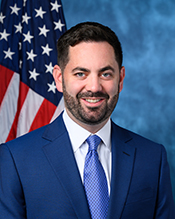
Rep. Michael Lawler
Sponsored bills
Maddy summaryHCONRES 106 is a symbolic concurrent resolution expressing congressional support for local law enforcement officers and condemning efforts to defund police agencies. It does not create new law or policy but formally recognizes officers' dedication to public safety, extends gratitude to them and their families, and specifically condemns calls to "defund, disband, dismantle, or abolish" police. The resolution directly addresses local law enforcement officers and their communities, emphasizing their role in protecting public safety and upholding the rule of law. Introduced in the U.S. House of Representatives on May 6, 2024, it was referred to the Committee on the Judiciary. As a non-binding statement, it reflects congressional sentiment but does not alter funding or operational authority for law enforcement.
Maddy summaryThis resolution (HRES 616) condemns the Taliban's ongoing human rights abuses in Afghanistan, specifically targeting women, girls, religious minorities (including Hazaras and Sikhs), and ethnic groups. It expresses support for Afghans who assisted U.S. missions and calls for the U.S. government to halt Taliban violence and address systemic repression. Key mechanisms include urging the State Department to assess potential crimes against humanity, developing strategies to support human rights defenders, and expediting refugee processing for Afghans with Special Immigrant Visas. The resolution does not impose new legal requirements but formalizes congressional stance and policy guidance. It directly affects U.S. foreign policy implementation toward Afghanistan.
Maddy summaryHR 8498 authorizes $1.02 billion in funding to modernize and rebuild facilities at the United States Merchant Marine Academy. The bill allocates $54 million for planning in fiscal year 2025 and $107.33 million annually from 2026 through 2034 for construction, following the "Full Speed Ahead" infrastructure plan. This funding directly affects the Academy's physical infrastructure, including rehabilitation, modernization, and new construction projects. The bill specifies that funds must align with the Maritime Security Infrastructure Council's plan outlined in the February 28, 2024, Congressional Record.
Maddy summaryThis bill creates a 40% tax credit for businesses investing in new or upgraded facilities manufacturing critical supply chain items like pharmaceuticals, semiconductors, medical devices, and medical countermeasures. The credit applies to tangible equipment (like machinery) placed in service after December 31, 2024, for facilities primarily producing these designated goods. It specifically targets U.S. manufacturers of nationally vital products, excluding facilities already claiming other tax credits (like electricity production credits). The credit aims to incentivize domestic production of items deemed essential for public health, national security, and economic resilience.
Maddy summaryThis bill requires the President to provide Congress with a 15-day written notice before pausing, delaying, or suspending U.S. arms shipments to Israel, including detailed justification and impact analysis. It establishes strict congressional review periods: 15 days for initial review, plus additional 10-12 day windows if Congress introduces a disapproval resolution, effectively giving lawmakers significant power to block such pauses. The bill directly affects the President and the White House by restricting unilateral decisions on military aid to Israel, specifically targeting delays like the May 2024 pause on bomb shipments. Key provisions define "covered defense articles" as weapons under existing export laws and mandate transparency about funding, end users, and potential impacts on Israel’s military edge.
Maddy summaryThe ENFORCE Act establishes a new framework to control the export and transfer of specific artificial intelligence systems deemed critical to U.S. national security. It defines "covered artificial intelligence systems" as those with capabilities that could enable weapons of mass destruction, cyber attacks, or evasion of human oversight - using an interim definition until the Secretary of Commerce issues final regulations within 365 days. The bill requires U.S. companies and individuals, anywhere in the world, to obtain a Department of Commerce license before exporting, transferring, or supporting the development of these systems or related emerging technologies. This directly affects U.S. entities involved in high-risk AI development and trade, imposing new licensing obligations for activities involving systems posing national security threats.
Maddy summaryHRES 1246 is a non-binding House resolution passed on May 21, 2024, condemning the Department of State's May 20 statement expressing condolences for the deaths of Iranian President Ebrahim Raisi and Foreign Minister Amir-Abdollahian. The resolution does not change policy but formally disapproves of the State Department's communication, reflecting the House's position that Raisi's leadership involved overseeing executions and supporting Iran's nuclear program and attacks on Israel. As a procedural resolution, it has no legal effect but serves as a symbolic expression of congressional disapproval.
Maddy summaryThis bill requires the U.S. Department of Defense and State Department to immediately deliver all previously approved military equipment and services to Israel within 15 days, reversing any pauses on arms transfers. It prohibits using federal funds to withhold, halt, or cancel defense article deliveries to Israel and mandates that unobligated security assistance funds for Israel must be spent by the end of 30 days. The bill also requires monthly reports to Congress detailing all security assistance provided to Israel since October 7, 2023, including specific items delivered and funding sources. The law directly affects U.S. agencies responsible for military aid and Israel as the recipient of the security assistance.
Maddy summaryThis bill directs the U.S. Secretary of State to develop a strategy advocating for Taiwan’s full membership or observer status in Interpol, the international police organization. It requires the U.S. to actively seek support from Interpol member states and report to Congress on efforts to secure Taiwan’s participation. The bill aims to address Taiwan’s current lack of access to Interpol’s global crime-fighting communications system (I-24/7), which limits real-time sharing of criminal intelligence. This directly affects Taiwan’s ability to collaborate with international police on security threats and share information on criminal activities. The policy change focuses on U.S. diplomatic advocacy, not altering Taiwan’s legal status.