

Maddy summaryThis bill requires U.S. agencies to prevent taxpayer funds from indirectly supporting the Taliban in Afghanistan. It mandates that State Department and USAID implement new reporting rules for aid recipients, requiring them to track and report all payments (including taxes, fees, and duties) made to the Taliban or Afghan government entities. Agencies must create these rules within 180 days and amend existing contracts to ban such payments. Recipients must submit detailed reports to Congress every six months, identifying who paid, to whom, and the amount.
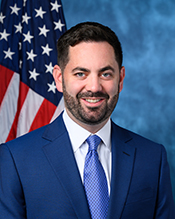
Rep. Michael Lawler
Sponsored bills
Maddy summaryHR 8361, the Economic Espionage Prevention Act, requires the State Department to submit a report within 90 days detailing Chinese entities (citizens or organizations) that knowingly supply critical components to Russia's military or intelligence sectors. The bill authorizes the President to impose sanctions - including property blocking and visa revocation - on foreign entities (including Chinese persons or entities) that engage in economic espionage, support Russia's military, or violate U.S. export controls. These sanctions target entities knowingly involved in activities that support Russia's war efforts, as defined in the bill. The report will analyze the extent of such transactions and potential sanctions, with annual updates required thereafter.
Maddy summaryThe SECURES Act of 2024 requires the U.S. Department of Transportation to propose new federal safety standards for seat belts on all new school buses within 180 days of the bill's enactment. It directs the Secretary to consider evidence showing lap/shoulder belts provide the highest passenger protection, including the National Transportation Safety Board's findings and the National Highway Traffic Safety Administration's prior stance. The rulemaking must also evaluate existing state requirements and innovative seat belt detection or reminder technologies. This bill directly affects manufacturers of new school buses and federal safety regulations, aiming to establish uniform seat belt standards for all new school buses nationwide.
Maddy summaryHR 9471, "Miranda's Law," creates a national system requiring states to automatically notify employers when school bus drivers (with commercial licenses) face license issues like suspensions, moving violations, or accidents. It directly affects school districts, schools, and private transportation companies that employ school bus drivers, mandating their participation in this notification service. The law requires the Transportation Secretary to establish the system within one year, ensuring employers receive immediate alerts about driver license changes instead of needing annual background checks. Schools and contracted transportation providers are both considered employers under this law, and drivers must also receive copies of these notifications.
Maddy summaryHR 9479 would create a refundable tax credit for individuals with medical expenses related to in vitro fertilization (IVF). The credit covers up to $30,000 annually in qualified IVF costs (such as medical procedures), minus any credits claimed in prior years. It applies to expenses for the taxpayer or their spouse (for joint filers) and prevents double benefits by reducing other deductions for the same expenses. This policy change would take effect for expenses paid after the bill's enactment.
Supporting Transit Commutes Act This bill allows employers a tax deduction for certain transportation fringe benefits (e.g., commuter and parking costs, bicycle reimbursements) paid to their employees. It also gives employers a 50% tax deduction for the amount of benefits withheld from their employees' wages.
Maddy summaryHR 8312, the Combat Veterans Pre-Enrollment Act of 2024, creates a 3-year pilot program allowing eligible combat veterans to pre-enroll in the VA healthcare system before separating from active duty. It directly affects service members who would qualify for VA healthcare upon separation and meet specific combat-related service criteria under existing law. The bill establishes a mechanism during the 180 days before separation, requiring coordination between VA, Defense, and Homeland Security to facilitate pre-enrollment. The program includes reporting requirements for participation rates, demographics, and a GAO evaluation of effectiveness after the pilot ends in 2027.
Maddy summaryHR 9437, the Partners in Diplomacy Act, authorizes the U.S. Secretary of State to modify or provide U.S.-owned or leased space at overseas diplomatic facilities for use by specific allied governments. It directly affects U.S. embassies and consulates, and the covered foreign countries - defined as NATO members or major non-NATO allies under U.S. law. The bill allows the Secretary to arrange this space sharing on terms including cost reimbursement, with funds credited to existing appropriations. This creates a formal mechanism for U.S. diplomatic posts to share physical space with key allies, streamlining coordination without requiring new funding.
Maddy summaryHR 7667, the MAPLE Act, amends the seniors farmers' market nutrition program to include maple syrup as an eligible product. This change directly affects seniors who receive nutrition benefits through participating farmers' markets, allowing them to purchase maple syrup with their benefits. The bill adds "maple syrup" to the list of qualifying items previously limited to herbs. It makes a specific, narrow adjustment to the program's eligibility rules without altering other program requirements. This is a procedural amendment focused solely on expanding the range of agricultural products covered.
Maddy summaryHR 7585, the Enhanced Cybersecurity for SNAP Act of 2024, requires states to transition all SNAP (food stamp) EBT cards to chip-enabled technology by 2029, phasing out magnetic stripes. It mandates states to provide mobile-friendly digital interfaces for managing EBT accounts, including real-time transaction alerts, fraud reporting tools, and virtual card numbers for online purchases. The bill prohibits states from using outdated password requirements inconsistent with federal cybersecurity standards and ensures no replacement fees for cards lost, stolen, or damaged due to fraud or expiration. States will receive reimbursement for costs related to upgrading cards and payment terminals, directly affecting 40 million SNAP recipients and state agencies managing the program.