

Maddy summaryHR 1386 authorizes the Secretary of State to counter drone threats to specific U.S. Department of State facilities and assets (like embassies and diplomatic compounds) by allowing actions such as detecting, disrupting, or seizing unmanned aircraft systems without prior consent. It requires coordination with the Federal Aviation Administration to ensure airspace safety and includes strict privacy safeguards for communications intercepted during these operations. The law applies directly to drone operators near covered State Department sites and mandates annual congressional briefings on its use, with authority expiring after seven years. The bill does not create general drone regulations but focuses solely on protecting State Department missions.
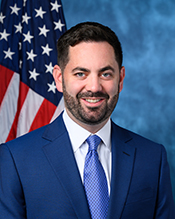
Rep. Michael Lawler
Sponsored bills
Maddy summaryThis bill allows survivors of human trafficking to seek court orders to vacate convictions or expunge arrests related to non-violent crimes they committed while being trafficked. Survivors can file motions supported by affidavits from anti-trafficking service providers, and courts must determine if the crime was directly caused by trafficking. It applies to all past and future cases, including retroactive relief for convictions, and adds a new "human trafficking defense" in criminal trials. The law requires annual reports tracking how many survivors use this relief and the outcomes of their cases.
Maddy summaryThis bill extends a temporary tax provision for distilled spirits in Puerto Rico and the U.S. Virgin Islands. It amends the tax code to change the end date for a reduced tax coverage limit from January 2022 to January 2032. The change applies to distilled spirits imported into these territories after December 31, 2021. This directly affects businesses and consumers involved in the distilled spirits market in Puerto Rico and the Virgin Islands by maintaining the lower tax rate for a longer period.
Goldie's Act This bill expands enforcement provisions under the Animal Welfare Act (AWA). Specifically, the bill directs the Department of Agriculture (USDA) to document and record detailed descriptions of violations of the act observed during inspections and investigations. USDA must provide a copy of all records documenting violations to state, local, and municipal animal control or law enforcement officials within 24 hours of such inspections or investigations. Inspections must be held at least once a year of each research facility, the premises of each animal dealer, and each exhibitor of animals. If violations are found during inspections, then USDA must conduct any necessary follow-up inspections until all the violations are corrected. Inspectors must confiscate or destroy in a humane manner animals found to be suffering physical or psychological harm as a result of failure to comply with the AWA. Violators are subject to civil penalties as outlined in the bill.
This concurrent resolution declares that Congress should not impose any new performance fee, tax, royalty, or other charge relating to the public performance of sound recordings on a local radio station for broadcasting sound recordings over the air, or on any business for such public performance of sound recordings.
Maddy summaryHR 1301, the Death Tax Repeal Act, would eliminate the federal estate tax and generation-skipping transfer tax for estates of individuals dying on or after its enactment date. It directly affects individuals inheriting significant assets, as it removes taxes on estates exceeding $10 million (adjusted for inflation) and repeals taxes on large transfers between generations. The bill modifies the gift tax by establishing a $10 million lifetime exemption with annual inflation adjustments, replacing previous tax brackets. It applies to estates, gifts, and transfers occurring on or after the bill's effective date.
Maddy summaryThis bill updates federal vehicle safety standards to permit pulsating light systems on high-mounted stop lamps, directly affecting vehicle manufacturers and safety regulators. It requires the Transportation Secretary to issue new regulations within 180 days establishing performance rules for these systems. The key provision defines a "pulsating light system" as one that emits rapid pulses (max 4 pulses within 1.2 seconds) when brakes are applied, then switches to steady light, with a mandatory 5-second lockout period before pulses can repeat after brake release. The bill amends Federal Motor Vehicle Safety Standard 108 to formally allow this technology under specific technical parameters.
Maddy summaryHR 1306, the Tax Fairness for Survivors Act, exempts certain payments received by survivors of sexual assault or harassment from federal income taxation. Specifically, it excludes from gross income any judgment, award, or settlement (including backpay, frontpay, punitive damages, and attorney fees) related to these claims, as defined under federal, tribal, state, or local law. The bill amends multiple tax codes (including income tax, Social Security, railroad retirement, unemployment, and wage withholding) to ensure these excluded payments are not subject to those taxes. This directly affects survivors who receive such compensation through legal settlements or court awards. The exemption applies to taxable years beginning after the bill's enactment.
This bill expands the E-3 visa program to cover Irish nationals. The E-3 visa is a nonimmigrant visa currently only available to Australian nationals coming to the United States for employment in a specialty occupation. For Irish E-3 initial applications, the Department of State may approve each fiscal year no more than 10,500 minus the number of Australian initial applications approved the previous fiscal year.
Maddy summaryThis bill requires federal agencies administering water infrastructure funding (like the WIFIA program) to ensure projects have construction payment and performance security. It directly affects contractors working on federally assisted water projects and state/local governments with construction requirements. The key provision mandates that projects must have security covering at least 50% of the construction contract value - either through state/local rules or federal bonds meeting specific standards under 40 U.S.C. §3131(b). This aims to protect taxpayers by reducing the risk of unpaid subcontractors or project failures. The bill modifies existing federal requirements without creating new funding or altering project eligibility.