This joint resolution prohibits the issuance of an export license for specified defense articles, defense services, and technical data for end use by Israel.
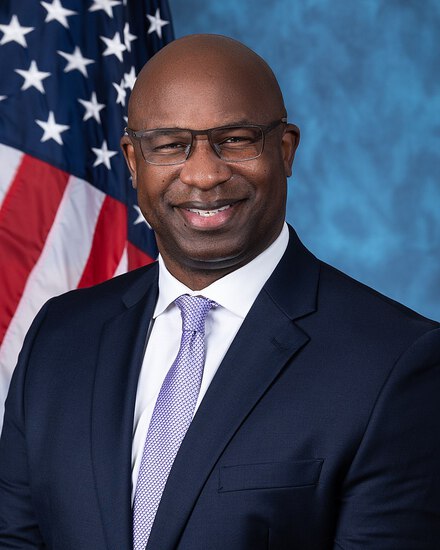
Rep. Jamaal Bowman
Sponsored bills
Birth Access Benefiting Improved Essential Facility Services Act or the BABIES Act This bill requires the Centers for Medicare & Medicaid Services (CMS) to establish a Medicaid demonstration program to improve freestanding birth center services for women with low-risk pregnancies. Among other things, the CMS must (1) publish criteria for freestanding birth centers to participate in the program, including specified accreditation, licensure, and service requirements; (2) publish guidance for states to establish prospective payment systems under Medicaid for program participants; and (3) award planning grants for states to develop program proposals. The CMS may choose up to six states to participate in the program.
Combating Sexual Harassment in Science Act This bill addresses sexual harassment and gender harassment in the science, technology, engineering, and mathematics (STEM) fields by supporting research regarding such harassment and efforts to prevent and respond to such harassment. (Sec. 4) This bill directs the National Science Foundation (NSF) to award grants to institutions of higher education or nonprofit organizations (or their consortia) to expand research into sexual harassment and gender harassment in the STEM workforce, including students and trainees; and examine interventions for reducing the incidence and negative consequences of such harassment. (Sec. 5) The NSF must convene a working group composed of representatives of federal statistical agencies to develop questions on sexual harassment and gender harassment in STEM departments in order to gather national data on the prevalence, nature, and implications of such harassment in institutions of higher education. (Sec. 6) The NSF shall enter into agreements with the National Academies of Sciences, Engineering, and Medicine to (1) update a responsible conduct guide issued by the National Academies to include, among other things, updated professional standards of conduct in research and evidence-based practices for fostering a climate that is intolerant of sexual harassment and gender harassment; and (2) study the influence of such harassment in institutions of higher education on the career advancement of individuals in the STEM workforce. (Sec. 7) The National Science and Technology Council shall establish an interagency working group to coordinate the federal science agencies' efforts to reduce the prevalence of sexual harassment and gender harassment involving grant personnel. The Office of Science and Technology Policy must develop a uniform set of policy guidelines for such agencies to prevent and respond to reports of sexual harassment and gender harassment.

MSI STEM Achievement Act (Sec. 4) This bill supports efforts to increase science, technology, engineering, and mathematics (STEM) education at minority-serving institutions of higher education (IHEs), including Historically Black Colleges and Universities and Tribal Colleges or Universities. The bill requires the National Science Foundation to award grants for purposes including building the capacity of such IHEs to increase the number and success of their students in the STEM workforce. (Sec. 5) The Office of Science and Technology Policy (OSTP) shall develop a uniform set of policy guidelines for federal science agencies to carry out a program of outreach activities to increase clarity, transparency, and accountability for federal science agency investments in STEM education and research activities at minority-serving IHEs. The OSTP shall submit to Congress a report containing a strategic plan for each federal science agency to increase the capacity of minority-serving IHEs to compete for grants, contracts, or cooperative agreements and to encourage such IHEs to participate in federal programs.
Represent America Abroad Act of 2021 This bill requires the Department of State to establish the Represent America Mid-Career Foreign Service Entry Program to increase diversity in the Foreign Service by recruiting mid-career professionals who are from minority groups. As part of the program, the State Department shall (1) establish and publish eligibility criteria for participation; (2) carry out recruitment efforts to attract highly qualified, mid-career professionals from minority groups; and (3) include appropriate mentorship and other career development opportunities for program participants. The State Department must submit an annual report on the status of the program.
STEM Opportunities Act This bill provides for guidance, data collection, and grants for groups historically underrepresented in science, technology, engineering, and mathematics (STEM) education at institutions of higher education (IHEs) and at federal science agencies. Specifically, the bill requires the Office of Science and Technology Policy (OSTP) to provide specified guidance related to such groups to federal science agencies and IHEs. Each federal science agency must collect comprehensive demographic data on recipients of merit-reviewed research and development grants given to IHEs and federal laboratories supported by that agency. Each agency must also implement recommendations from the OSTP report titled Reducing the Impact of Bias in the STEM Workforce . In addition, each agency must carry out a pilot program and implement evidence-based policies and practices to minimize the effect of implicit bias in the grant review process. The National Science Foundation (NSF) must carry out and publish a survey to collect data on the demographics of STEM faculty, by broad fields of STEM, at different types of IHEs. The NSF must also carry out a variety of grant programs, including grants for increasing (1) the recruitment, retention, and advancement of individuals from underrepresented minority groups in STEM careers; (2) the recruitment and retention of minority students who are underrepresented in STEM fields; and (3) student participation in computer science and computational thinking education programs at tribal colleges and universities.
Supporting Early-Career Researchers Act This bill authorizes the National Science Foundation to establish a two-year pilot program to award grants to highly qualified early-career investigators to carry out an independent research program at the institution of higher education chosen by such investigator, to last for a period not greater than two years. The NSF shall select grantees from among citizens, nationals, and lawfully admitted permanent resident aliens of the United States. The NSF shall conduct program outreach to recruit fellowship applicants (1) from all regions of the country; (2) from historically underrepresented populations in the fields of science, technology, engineering, and mathematics (STEM); and (3) who graduate from or intend to carry out research at a variety of types of institutions of higher education, including Historically Black Colleges and Universities.
This resolution expresses the sense of the House of Representatives that the federal government should begin a large-scale effort to reduce incarceration rates and reshape the American legal system by consulting with communities and individuals directly impacted by the justice system; decriminalizing certain behaviors, increasing diversion opportunities, revising sentencing laws, and reducing practices that contribute to recidivism; ending practices that advantage the wealthy and prohibiting private companies from profiting from the criminal justice system; and ending militarized policing practices, investing in other safety services, and implementing policies that address the needs of communities most affected by high rates of incarceration.
This resolution recognizes the forthcoming centennial of the Tulsa Race Massacre of 1921. The resolution acknowledges the historical significance of this event as one of the largest single instances of state-sanctioned violence against Black people in American history; honors the lives and legacies of the estimated 300 Black individuals who were killed during the massacre and the nearly 9,000 who were left homeless and penniless; condemns efforts to cover up the truth and shield the white community, especially government officials, from accountability; condemns the continued legacy of racism and white supremacy against Black people in the United States, particularly in the form of police brutality; encourages education about the massacre, the history of white supremacy that fueled the massacre, and subsequent attempts to deny or cover up the massacre, in all elementary and secondary education settings and in institutions of higher education; and recognizes the commitment of Congress to acknowledge and learn from the history of racism and racial violence to reverse the legacy of white supremacy and fight for racial justice.
This resolution expresses the sense of the House of Representatives that it is the duty of the federal government to expand and strengthen the care economy. The care economy consists of child care, home health, and similar sectors where caregiving is a predominant feature of the work.