

Reproductive Rights are Human Rights Act of 2021 This bill directs the Department of State to include in its annual reports on human rights in countries receiving U.S. development and security assistance a discussion of the status of reproductive rights in each country. This must include whether a country has adopted and enforced policies to (1) promote access to contraception and accurate, nondiscriminatory family planning and sexual health information; (2) provide services to ensure safe and healthy pregnancy and childbirth; (3) expand or restrict access to safe abortion services; and (4) prevent and treat sexually transmitted diseases. For each country, the reports shall also contain (1) data concerning pregnancy-related injuries and deaths; and (2) a description of the nature and extent of discrimination and violence against women, girls, and LGBTQI+ individuals in health care settings and the relevant government's response to such actions.
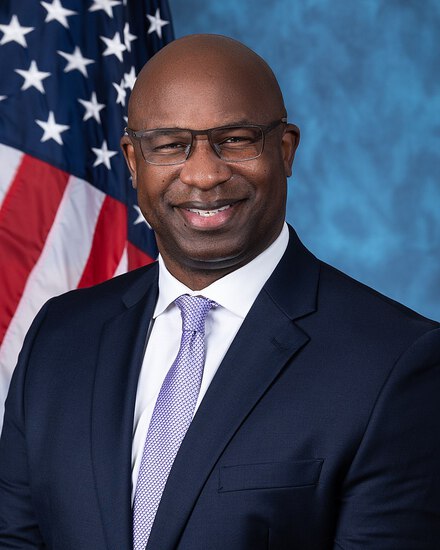
Rep. Jamaal Bowman
Sponsored bills
Victims of Agent Orange Relief Act of 2021 This bill requires the Department of State, the Department of Health and Human Services (HHS), and the Department of Veterans Affairs (VA) to provide assistance to people in Vietnam in relation to Agent Orange exposure. Specifically, the State Department must provide assistance (1) to address the health care needs of certain residents of Vietnam affected by Agent Orange exposure, (2) to institutions in Vietnam that provide health care to such individuals, (3) to improve housing and reduce poverty for specified individuals and their families, and (4) to remediate areas of Vietnam that contain high levels of Agent Orange. HHS must (1) make grants to public health organizations and Vietnamese American organizations to conduct a broad health assessment of Vietnamese Americans who may have been exposed to Agent Orange and their descendants; and (2) establish centers in U.S. locations where large populations of Vietnamese Americans reside to provide assessment, counseling, and treatment for conditions related to Agent Orange exposure. Under the bill, certain benefits will be made available to the children of male Vietnam veterans who are affected by certain birth defects. Currently, these benefits are only available to the children of women Vietnam veterans. The VA shall require any health care provider with whom the VA enters into a contract for the provision of health care to such children to provide the VA access to their medical records for research into the intergenerational effects of Agent Orange exposure.
Stamp Out Lyme Disease Act This bill directs the U.S. Postal Service to issue a Lyme Disease Research Semipostal Stamp, with all proceeds being transferred to the National Institute of Allergy and Infectious Diseases.
John Lewis Every Child Deserves a Family Act This bill prohibits discrimination on the basis of sexual orientation, gender identity, marital status, or religion in the provision of child welfare programs and services by entities receiving federal funding. The Department of Health and Human Services (HHS) must provide technical assistance to help states follow this requirement, including (1) guidance for bringing state laws into compliance, (2) developing training to increase cultural competency related to social identity, and (3) training for judges and attorneys involved in child welfare cases, among other supports. Additionally, HHS must establish the National Resource Center on Safety, Well-Being, Placement Stability, and Permanency for LGBTQ Children and Youth Involved with Child Welfare Services to provide training, technical assistance, and guidance to applicable state and local agencies and service providers. Further, the Religious Freedom Restoration Act may not be the basis for challenging the application or enforcement of this bill. The Government Accountability Office must study and report on states' compliance with the requirements of the bill no later than three years after enactment.
End Polluter Welfare Act of 2021 This bill limits or eliminates certain fossil fuel oil and gas subsidies for oil companies, including by (1) eliminating the limit on liability for offshore facilities and pipeline operators; (2) eliminating the authority of the Department of Energy to carry out the Fossil Energy Research and Development Program and prohibiting funds made available to the Advanced Research Project Agency from being used to carry out any project that supports fossil fuels; (3) terminating certain provisions relating to enhanced oil recovery, producing oil and natural gas from marginal wells, and limitations on percentage depletion for oil and natural gas wells; (4) terminating other deductions and accounting methods supporting oil, natural gas, and coal companies; (5) increasing the Oil Spill Liability Trust Fund financing rate; (6) denying a tax deduction for removal costs and damages relating to oil spills; (7) imposing an excise tax on the removal price of any taxable crude oil or natural gas; (8) increasing amortization periods for tertiary injectant expenses, development expenditures of a mine or other natural deposit, mining exploration expenditures, and intangible drilling and development costs for oil and gas wells and geothermal wells; (9) repealing the tax credits for the production of electricity from refined coal and for carbon oxide sequestration; and (10) requiring a study and elimination of certain other fossil fuel subsidies.
This resolution expresses the sense of Congress that legislation and policies that address poverty, low wages, and related issues should be prioritized. Among other priorities, the resolution commits to updating the poverty measure; raising the minimum wage; expanding unemployment insurance; ensuring that all workers receive paid family and medical leave; implementing a federal jobs guarantee; guaranteeing safe and quality housing, a right to water, high-quality public education, and quality health care for all; enacting relief from household and personal debt that cannot be paid; ensuring that state, local, and tribal governments are adequately funded; expanding and protecting the right to vote; eliminating persistent racial inequities; protecting the constitutional rights of assembly and free speech; enacting comprehensive and just immigration reform; ensuring all the rights of Native and Indigenous peoples and tribal nations; transforming the economy into a green renewable energy economy; demilitarizing U.S. foreign policy, borders, and policing; enacting fair taxes on corporations and the wealthy; using deficit spending to meet pressing needs; and encouraging states and cities to enact policies that follow the direction provided by this resolution.
Comprehensive Mental Health in Schools Pilot Program Act of 2021 This bill requires the Department of Education to establish a pilot program to award grants to local educational agencies for establishing comprehensive mental and behavioral health services programs in elementary and secondary schools.
Young Americans Financial Literacy Act This bill requires the Consumer Financial Protection Bureau to award competitive grants to eligible institutions for the establishment of financial literacy education programs for young people and families. An eligible institution is a partnership among two or more of the following an institution of higher education; a state or local government agency specializing in financial education; a nonprofit agency, organization, or association; a financial institution; or another small organization. Authorized grant funded activities shall include developing and implementing comprehensive, research based, financial-literacy education programs for young people; designing instructional materials; developing and supporting the delivery of professional development programs in financial literacy education; improving access to, and dissemination of, financial literacy information for young people and families; developing educational programs to reduce student loan default rates; conducting ongoing research and evaluation of financial literacy education programs; and measuring the effectiveness of authorized activities. The grant program shall terminate after FY2025.
Keeping All Students Safe Act This bill prohibits the use of seclusion and limits the use of physical restraint in schools and Head Start programs that receive federal funding. Specifically, the bill prohibits the use of seclusion, which is the involuntary confinement of a student alone in a room or area from which the student is physically prevented from leaving. The term does not include a time out, which may involve separating the student from others in a non-locked setting. The bill prohibits the use of mechanical or chemical restraints or physical restraints that restrict breathing or are life threatening. The bill outlines the requirements for the use of physical restraint, including that the student's behavior must pose an imminent danger of serious physical injury to the student or other individual. Each state must ensure that a sufficient number of program personnel are trained and certified by a state-approved crisis intervention training program. Additionally, each program must establish procedures to follow after an incident involving physical restraint. Further, the bill establishes enforcement provisions, including a private right of action for a student who has been subjected to unlawful seclusion or restraint. The Department of Education and the Department of Health and Human Services must withhold payments from a program for unlawful seclusion or restraint. Finally, the bill requires each state educational agency (SEA) to establish, implement, and enforce policies and procedures required by the bill. It also creates a grant program to assist SEAs with these activities.
This resolution urges an immediate cease-fire to prevent further loss of life and escalation of the conflict in Israel and the Palestinian territories, and it supports diplomatic efforts to resolve the Israeli-Palestinian conflict, uphold international law, and protect human rights.