

Guaranteed Income Pilot Program Act of 2021 This bill directs the Department of Health and Human Services (HHS) to establish and implement a three-year pilot program to provide a guaranteed monthly income to individual taxpayers between the ages of 18-65. HHS must consult with the Internal Revenue Service and certain nonpartisan and nonprofit agencies or academic institutions with expertise in social science experimentation to develop and award income subsidies to eligible taxpayers and to conduct a study on the outcomes of the program.
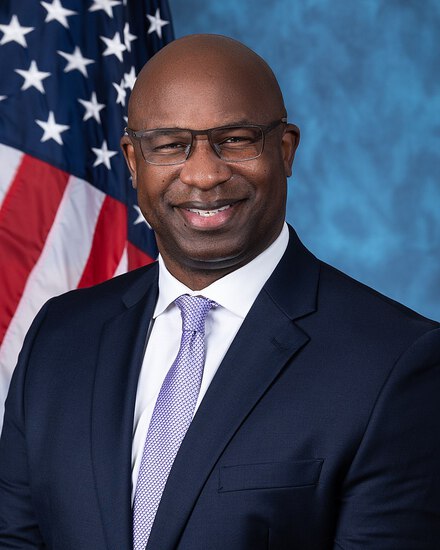
Rep. Jamaal Bowman
Sponsored bills
Build Local, Hire Local Act This bill imposes various requirements on certain federally assisted infrastructure projects. The bill also creates infrastructure-related grant programs and establishes the Buy America Bureau. Such federally assisted infrastructure projects must (1) employ a certain percentage of local workers to the maximum extent practicable; and (2) prioritize hiring certain individuals, such as veterans and those facing barriers to employment. A certain percentage of funds for these projects must be used for contracts with small businesses that have fewer than 10 employees. When applying for a contract, grant, or loan related to a project, the applying entity must disclose whether there are any rulings, such as a civil judgment, finding that the entity has violated certain federal labor and occupational safety laws in the last three years. In addition, the Department of Transportation must award grants to entities in disadvantaged and underserved communities for infrastructure projects that create connected, economically prosperous, and environmentally healthy communities. Further, the Department of Labor must provide grants to workforce development boards and industry partnerships for job training programs to train certain groups, such as individuals with barriers to employment, for jobs in targeted infrastructure industries. The bill also establishes the Buy America Bureau within the Department of Commerce to oversee project compliance with existing laws that require the use of U.S.-made materials in certain federally funded projects.
Student Food Security Act of 2021 This bill expands the Supplemental Nutrition Assistance Program (SNAP) and establishes programs to address food insecurity among college students. Specifically, the bill permanently modifies the eligibility requirements to allow additional college students to receive SNAP benefits, and it establishes a demonstration program to allow college students to use SNAP benefits on college campuses instead of meal plans. The bill also advances implementation of certain data-sharing agreements and notifications to help students who apply for federal financial aid to also apply for and receive other federal means-tested benefits (e.g., Section 8 tenant-based housing assistance, Medicaid, and Supplemental Security Income). In addition, the bill (1) requires questions about food and housing insecurity to be incorporated into the National Postsecondary Student Aid Study, and (2) establishes a grant program to support research and address incidences of food and housing insecurity among college students.
Tax-Free Pell Grant Act This bill excludes from gross income, for income tax purposes, any amount received as a federal Pell Grant. It also expands the definition of qualified tuition and related expenses under the American Opportunity and Lifetime Learning tax credit to include computer or peripheral equipment (up to a maximum of $1,000), child and dependent care expenses, and course materials.
Better Care Better Jobs Act This bill establishes programs and provides funds for state Medicaid programs to improve home- and community-based services (HCBS), such as home health care, personal care, case management, and rehabilitative services. Specifically, the bill provides funds for the Centers for Medicare & Medicaid Services to award planning grants, develop quality measures, and provide technical assistance to states regarding specified HCBS improvements, particularly with respect to access, utilization, and the associated workforce. The bill also increases the Federal Medical Assistance Percentage (i.e., federal matching rate) for HCBS in states that develop plans and meet specified benchmarks for improvements. The bill also makes permanent (1) the Money Follows the Person Rebalancing Demonstration Program (a grant program to help states increase the use of HCBS for long-term care and decrease the use of institutional care), and (2) certain provisions regarding Medicaid eligibility that protect against spousal impoverishment for recipients of HCBS.
Therapeutic Fraud Prevention Act of 20 21 This bill prohibits commercial conversion therapy, which is a practice or treatment designed to change a person's sexual orientation or gender identity or otherwise change behaviors, thoughts, or expressions related to gender or sexual attraction. This prohibition does not apply to treatment that assists an individual undergoing a gender transition or facilitates identity exploration and development.
Saving Hazardous And Declining Environments Act or the SHADE Act This bill requires the Department of Housing and Urban Development to award grants for government entities and nonprofit organizations to plant trees in low-income communities and in communities meeting designated minority or limited English-proficiency thresholds.
Healthy Future Students and Earth Pilot Program Act of 2021 This bill establishes a pilot program for providing 100% plant-based food and milk options in school meals. The Department of Agriculture must award up to 50 grants to school food authorities. Recipients may use funds for activities including training food service personnel on serving 100% plant-based options and covering additional costs of buying plant-based foods and milks.
Vanessa Guillén Military Justice Improvement and Increasing Prevention Act This bill modifies the process and policy related to the disposition of charges and convening of courts-martial for certain sexual assault cases and other specified offenses under the Uniform Code of Military Justice (UCMJ). Among other elements, the bill provides that the determinations on the preferral, disposition, and referral of charges for specified offenses under the UCMJ must be made by a commissioned officer of the Armed Forces who is designated as a court-martial convening authority (in grade O-6 or higher) and who is available for detail as trial counsel, has significant trial experience, and is outside the chain of command of the member subject to the charges.
Municipal IDs Acceptance Act This bill directs financial regulatory agencies to update specified guidance to include municipal identification cards as acceptable forms of identification for purposes of verifying the identity of a bank customer.