

National Institute of Standards and Technology for the Future Act of 2021 This bill reauthorizes the National Institute of Standards and Technology (NIST) through FY2026 and establishes programs and activities. The bill sets forth requirements for supporting basic measurement science, technology research for engineering biology, biomanufacturing, and biometrology; developing standards to measure greenhouse gas emissions; carrying out research on identity management, cybersecurity, biometric identification, and communications measurement; assessing identified vulnerabilities with open-source software; operating the National Advanced Spectrum and Communications Test Network; a strategic plan concerning the Center for Neutron Research; establishing in NIST an organization to facilitate the development of forensic science standards; activities in support of green and sustainable chemistry (i.e., clean, safe, and economic alternatives, technologies, and methodologies to traditional chemical products and processes); information exchange and coordination among federal agencies and with the private sector to ensure federal engagement in the development and use of international technical standards; and establishing a five-year pilot program to award grants to support increased participation by small business and academic interests in international standards organizations. The Government Accountability Office must conduct a study of NIST's policies and protocols to protect its research and combat undue foreign influence. NIST shall establish, as a part of the Hollings Manufacturing Extension Partnership, a pilot program of expansion awards among manufacturing extension centers or a consortium of centers to develop and support training and job placement services. NIST shall establish a National Supply Chain Database to assist the federal government and industry sectors in minimizing disruptions to the United States' supply chain.
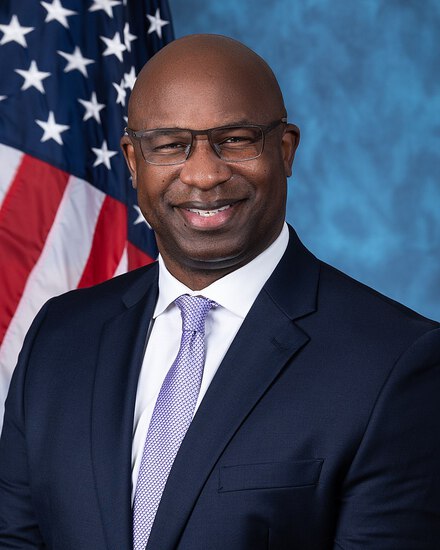
Rep. Jamaal Bowman
Sponsored bills
This resolution expresses that the House of Representatives stands in solidarity with the people of Afghanistan and with vulnerable groups, including women and children; religious and ethnic minorities; lesbian, gay, bisexual, transgender, queer, and intersex (LGBTQI) persons; civil society actors; journalists; and other at-risk populations in Afghanistan; calls on the Taliban to uphold the protection of universal human rights, including the commitments set forth in the Universal Declaration of Human Rights and enshrined in the International Covenant on Civil and Political Rights, to which Afghanistan is a party; calls for the international community to condemn human rights violations committed by the Taliban; and calls on the U.S. government to work closely with the international community and nongovernmental organizations, particularly such organizations based in Afghanistan, to support at-risk Afghan minority populations and other vulnerable communities.
This resolution calls on the Senate to remove the name of Richard B. Russell from the Russell Senate Office Building and revert to the building's original name—the Old Senate Office Building.
This resolution extends collective bargaining rights prescribed in the Congressional Accountability Act of 1995 to employees of the House of Representatives.
This resolution recognizes that the Harlem Renaissance represented a pivotal moment in American history for African Americans and the African diaspora community of intellectuals, artists, performers, writers, poets, and musicians whose works of political discourse and creative expression set a path for self-determination and self-empowerment that is still evident today. The resolution also celebrates the lasting impact of the Harlem Renaissance on the art, literature, music, discourse, and culture of the United States.
Part-Time Worker Bill of Rights Act This bill modifies various employment, leave, and pension rules with respect to part-time workers. Specifically, the bill removes the requirement that employees work a minimum number of hours during the preceding 12-month period before becoming eligible for family and medical leave. The bill also sets the maximum length of service on which employers may condition the eligibility of part-time employees for a qualified pension plan (e.g., 401(k) retirement plan). Except as required by an applicable collective bargaining agreement, such service requirement may be no longer than two consecutive 12-month periods of at least 500 hours of service for part-time employees who have reached the age of 21 by the end of such periods. The bill further prohibits employers of more than 15 employees from setting disparate terms of employment or working conditions for part-time employees, including with respect to compensation, notice of work hours, and promotion opportunities, among others. Additionally, the bill requires such employers to offer available, qualified part-time employees additional work hours before hiring new employees for such hours. Among other enforcement methods, employers must maintain three years of records for offers of additional hours and employee responses to such offers. The bill also provides a private right of action for employees to enforce the nondiscrimination requirements of this bill.
This joint resolution honors the contributions of school counselors to the success of students in elementary and secondary schools. The resolution encourages the observation of National School Counseling Week with ceremonies and activities that promote awareness of the crucial role school counselors play in preparing students for fulfilling lives as contributing members of society.
Safer Heat Act of 2022 This bill requires the Consumer Product Safety Commission to establish safety standards for portable heating devices, including a requirement that a device shuts off at a threshold determined hazardous by the commission. The commission is authorized to enforce these standards.
Scratch Cooked Meals for Students Act This bill establishes a pilot program to award competitive grants to school food authorities and local educational agencies for activities that promote the use of ingredients that are unprocessed or minimally processed (i.e., scratch cooking) in school meals.
Keeping School Meals Flexible Act This bill extends authority through June 30, 2023, for the Department of Agriculture (USDA) to waive certain requirements for the school meal programs to address COVID-19. The bill extends the authority for USDA to issue a single waiver of child nutrition program requirements to all states under the National School Lunch Program for purposes of providing meals and snacks with appropriate safety measures with respect to COVID-19; grant waivers of requirements to allow non-congregate feeding in the Child and Adult Care Food Program for purposes of providing meals and snacks with appropriate safety measures with respect to COVID-19; and grant waivers related to the nutritional content of meals served in child nutrition programs if it determines the waiver is necessary to provide meals and snacks, and there is a food supply chain disruption due to COVID-19.