

Black Lung Benefits Improvement Act of 2022 This bill revises requirements for miners' claims for pneumoconiosis (black lung disease) benefits. Specifically, the bill requires the Department of Labor to pay the attorneys' fees of specified parties on a qualifying benefit claim, give a claimant the opportunity to substantiate a claim for benefits through a pulmonary evaluation, authorize a CT (computerized tomography) scan in diagnosing complicated pneumoconiosis, and develop a strategy to reduce delays in adjudication of black lung disease benefits claims. The bill also establishes criteria that a mining operator must meet to self-insure against claims and increases from $1,000 to $25,000 the daily penalty amount that may be assessed against a mining operator that fails to make black lung benefits payments. The bill authorizes (1) black lung disease clinics to use federal funds to help individuals file claims, and (2) certain previously denied claimants to file a new claim for black lung disease benefits within one year. The bill prohibits a person from (1) knowingly and willfully making a false statement or misrepresentation in increasing or reducing black lung disease benefits, or (2) threatening or misleading a participant in a proceeding regarding such benefits. Further, the bill revises (1) the standards of medical evidence that establish a presumption that a miner is totally disabled by black lung disease, and (2) payments to such miners. Lastly, the bill provides statutory authority for the Office of Workers' Compensation Programs.
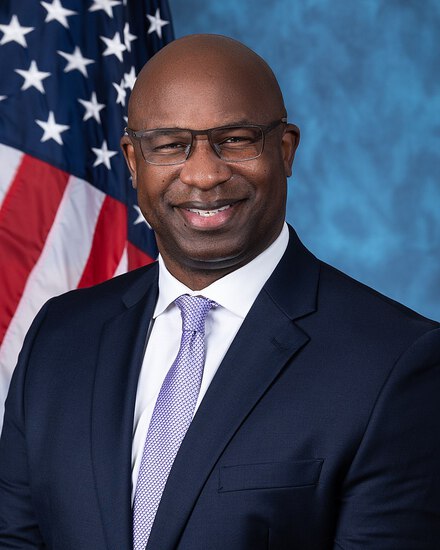
Rep. Jamaal Bowman
Sponsored bills
Light Rail Transit Act This bill directs the Federal Transit Administration (FTA) to establish a grant program to provide grants to state, local, and tribal governments for the design and implementation of light rail projects, including for the redesign, retrofit, renovation, update, and repair of existing light rail systems. As condition of receiving a grant, eligible entities must certify that fares for riding the light rail transit system shall not increase solely due to improvements carried out with grant funds and for any reason for at least one year after completion of a project funded by the bill. In carrying out the program, the FTA must prioritize projects located in economically disadvantaged communities.
Bus Rapid Transit Act This bill directs the Federal Transit Administration (FTA) to establish a grant program to provide grants to state, local, and tribal governments for the design and implementation of bus rapid transit systems, including for the redesign, retrofit, renovation, update, and repair of existing bus systems. As a condition of receiving a grant, eligible entities must certify that fares for riding the bus rapid transit system shall not increase solely due to improvements carried out with grant funds and for any reason for at least one year after completion of a project funded by the bill. In carrying out the program, the FTA must prioritize projects located in economically disadvantaged communities.
This resolution affirms that there is well-established authority for the Food and Drug Administration to approve, license, and otherwise regulate reproductive health products under the Federal Food, Drug, and Cosmetic Act and the Public Health Service Act. The resolution also affirms that (1) such federal laws preempt (i.e., supersede conflicting state or local laws) any state or local laws that prohibit or limit access to or use of any reproductive health product, and (2) the Department of Justice has authority to enforce the preemptive effect of such federal laws by suing any state or political subdivision of a state that prohibits or limits access to or use of any reproductive health product.
Expanding the Voluntary Opportunities for Translations in Elections Act or the Expanding the VOTE Act This bill expands access to voting materials for individuals with limited proficiency in the English language, including by establishing incentive grants for states and political subdivisions to provide translated voting materials. Additionally, the bill directs the Government Accountability Office to study the impact of (1) reducing the threshold requirement under Section 203 of the Voting Rights Act of 1965, and (2) expanding the definition of language minorities to include native speakers of additional languages.
Empowering the U.S. Fire Administration Act This act authorizes the U.S. Fire Administration (USFA) to conduct on-site fire safety investigations of major fires and other fires under other specified circumstances. In the case of a major fire, the USFA may send incident investigators (e.g., safety specialists, fire protection engineers, codes and standards experts, researchers, and fire training specialists) to the site. Any such investigation shall (1) be conducted in coordination and cooperation with appropriate federal, state, local, tribal, and territorial authorities; and (2) examine the previously determined cause and origin of the fire and assess broader systematic matters. Upon concluding any such investigation, the USFA must issue a public report to federal, state, local, tribal, and territorial authorities on the findings of such investigation or collaborate with another investigating federal, state, local, tribal, or territorial agency on that agency's report. The act makes an exception where issuing a report would have a negative impact on a potential or ongoing criminal investigation. Additionally, the USFA may send fire investigators to conduct fire safety investigations at the site of any fire with unusual or remarkable context that results in losses less severe than those occurring as a result of a major fire, in coordination and cooperation with the appropriate federal, state, local, tribal, and territorial authorities.
Rebuild America's Schools Act of 2022 This bill provides support for long-term improvements to public elementary and secondary school facilities. First, the bill sets forth allocations to states and establishes a need-based grant program for local educational agencies (LEAs) to improve school facilities. Further, the bill specifies allowable uses of grant funds, including carrying out major repairs, improving indoor air quality, and making facilities accessible to disabled individuals. Additionally, the bill requires LEAs that receive funds for new construction, modernization, or renovation projects to comply with hazard-resistance building codes and performance criteria under the WaterSense program of the Environmental Protection Agency. Further, the bill requires such LEAs to adopt certain green practices (environmental standards) and requires the use of iron, steel, and manufactured products that are made in the United States (Buy America). The bill restores school infrastructure tax credit bonds. The bill also sets forth reporting requirements, including annual reports on grant program projects and a report by the Government Accountability Office that requires a study of the geographic distribution of projects, the impact of selected projects on student and staff health and safety, and the accessibility of projects to high-poverty schools. The bill also establishes the Office of School Infrastructure and Sustainability within the Department of Education. Next, the bill extends through FY2027 the Impact Aid Construction program. Finally, the bill establishes a grant program to assist LEAs with repairing or replacing concrete foundations affected by pyrrhotite (an iron sulfide material linked to crumbling foundations).
This bill declares that Donald Trump, under the Fourteenth Amendment (which disqualifies from office specified officials who have engaged in insurrection or rebellion), is ineligible to again hold the Office of President of the United States, or to hold any office, civil or military, under the United States.
VA Employee Fairness Act of 2021 This bill repeals provisions excluding any matter or question concerning professional conduct or competence; peer review; or the establishment, determination, or adjustment of employee compensation from the applicability of collective bargaining rights for Veterans Health Administration employees.
This resolution condemns violence against Garifuna communities (Afro-Indigenous people of Honduras) and calls for various efforts to protect the land rights and other rights of those communities.