

Maddy summary# Summary of the "Protecting Our Democracy Act" This comprehensive legislation aims to strengthen democratic processes, increase government transparency, and prevent foreign interference in elections. Key provisions include: ## Ethics and Transparency - **Ethics Pledge**: Requires all appointees to sign an ethics pledge committing to: - Ban on gifts from registered lobbyists - 2-year revolving door ban (prohibiting participation in matters related to former employers) - Golden parachute ban (no special payments from former employers) - Commitment to decision-making based on public interest - **Tax Transparency**: Requires presidential and vice presidential candidates to disclose 10 years of tax returns, with sitting presidents submitting returns within 30 days of enactment ## Campaign Finance and Foreign Interference - **Foreign Contact Reporting**: Requires political committees to report any contact with "covered foreign nationals" within 1 week - **Enhanced Penalties**: Criminal penalties of up to $1 million and 5 years in prison for violations - **Online Advertising Rules** ("Honest Ads Act"): - Requires clear disclosure of who paid for political ads online - Mandates machine-readable public databases of political ads - Requires visible sponsor identification that remains when ads are shared - Defines "qualified political advertisements" to include various online formats ## Preventing Patronage Systems - Limits exceptions to competitive service for federal positions - Restricts transferring positions between competitive and excepted service - Requires employee consent for position transfers ## Use of Federal Property - Prohibits holding national political conventions on federal property - Requires publicly available visitor records at White House and other official locations (with privacy exceptions) The legislation establishes detailed definitions, reporting requirements, and enforcement mechanisms across multiple agencies, with the goal of increasing transparency, preventing foreign interference, and ensuring ethical conduct in government service.
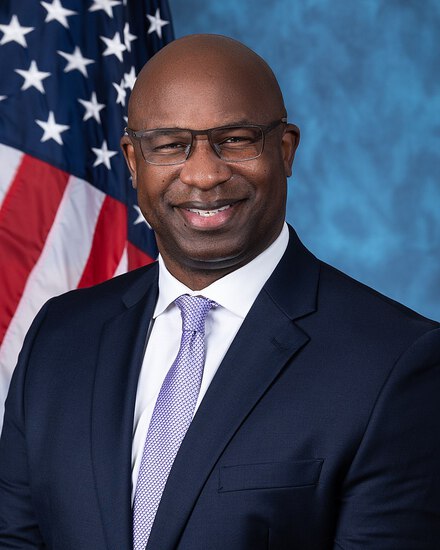
Rep. Jamaal Bowman
Sponsored bills
Maddy summaryHR 4901, the Reproductive Health Care Accessibility Act, aims to improve reproductive health care access for people with disabilities by addressing systemic barriers they face. The bill funds training for health care professionals on providing culturally competent care, creates initiatives to increase the number of health care providers with disabilities in reproductive health fields, and establishes a National Technical Assistance Center to help providers improve services. It allocates $10 million annually for these programs from fiscal years 2024 through 2028, with additional funding for a research study on effective reproductive health care approaches. The bill directly affects people with disabilities seeking reproductive health services, health care providers, and educational institutions training health care professionals.
Maddy summaryThis bill creates a federal loan repayment program to help mental health professionals (like counselors, psychologists, and social workers) repay student loans. It directly affects individuals who have taken out education loans for mental health degrees and agree to work in underserved areas. Key provisions require participants to commit to 3-6 years of full-time service in designated mental health shortage areas or counties with high overdose death rates, with funding increased to $100 million annually for 2023-2032. The program expands eligibility to cover all mental health-related fields, including behavioral health roles.
Maddy summaryThe Communications, Video, and Technology Accessibility Act of 2023 requires video programming providers to provide closed captions and audio description for all online video content, including live and near-live programming. It mandates that video playback devices (such as smart TVs and streaming devices) include accessible controls for captions and audio description, with specific requirements for labeling and discoverability. The bill establishes advisory committees to develop technical standards for accessibility and updates requirements for video conferencing services to include built-in captioning and compatibility with assistive technologies. These provisions directly affect video service providers, device manufacturers, and video conferencing platforms, aiming to improve accessibility for people who are deaf, hard of hearing, blind, or DeafBlind.
Rural Broadband Modernization Act This bill reauthorizes through FY2028 and modifies a program that provides support for broadband access in rural areas. Among other modifications to the program, the bill establishes minimum upload and download capacities.
Maddy summaryThis bill establishes a federal pilot program to help homeless individuals access SNAP (Supplemental Nutrition Assistance Program) benefits. It authorizes $12.5 million annually (2024-2029) to fund grants for community organizations, homeless service providers, and public housing agencies to provide direct outreach, application assistance, transportation to SNAP offices, and staff training. The program specifically targets barriers like lack of documentation and awareness, focusing on helping homeless households enroll in SNAP by connecting them with existing resources. Grantees must report annually on outcomes, including the number of homeless individuals served and enrollment impacts. The pilot runs for up to 5 years, with funds supplementing (not replacing) existing state/local programs.
This concurrent resolution opposes actions that undermine Israel's future as a Jewish, democratic state. The resolution expresses that democracy is at the core of the special relationship between the United States and Israel, and that Congress stands with all Israelis seeking to defend liberal democracy, judicial review, and independent political institutions.
Maddy summaryThis bill aims to reduce corporate concentration in agriculture by imposing a moratorium on large agribusiness mergers and requiring retroactive review of past mergers that may have harmed competition. It mandates that large meatpackers purchase at least 50% of livestock through spot market sales from nonaffiliated farmers, restores mandatory country of origin labeling for beef, pork, and dairy products, and increases funding for beginning, retiring, and socially disadvantaged farmers. The legislation targets unfair practices by large processors and retailers, requiring transparency in pricing and preventing anti-competitive behavior that has driven down farmer income. It directly affects small-scale farmers, ranchers, and rural communities by strengthening their bargaining power in agricultural markets. The bill's provisions aim to reverse decades of consolidation that have driven down farmer income while increasing food prices for consumers.
Maddy summaryHR 5064, the Public Housing Fire Safety Act, requires the Department of Housing and Urban Development (HUD) to inspect public housing for automatic sprinkler systems and report findings to Congress within three years. It establishes a competitive grant program using $25 million annually (2024-2033) from the Capital Fund to retrofit older public housing projects without sprinklers, excluding newly rebuilt properties. The bill directly affects public housing agencies managing buildings that lack sprinklers, providing funding to install them while clarifying that inspections and grants do not mandate retrofits for all properties. Key provisions include mandatory reporting on fire safety gaps and targeted funding to improve safety in older housing units.
Maddy summaryThis bill would prohibit solitary confinement in federal prisons and detention facilities, requiring all incarcerated people to have at least 14 hours per day of out-of-cell group interaction, including 7 hours of structured programming like education, mental health services, and recreation. It establishes strict limits on when confinement can be used (only in emergencies for short periods), mandates medical and mental health assessments, and requires regular reviews of placements in restrictive housing. The bill creates a community monitoring body to oversee implementation and provides financial incentives for states to adopt similar policies for their facilities. The law would take effect within 60 days of enactment, with specific requirements for facility reporting and due process protections.