

Maddy summaryThis bill creates a new grant program to fund partnerships between Hispanic-serving institutions (HSIs) and local school districts with high Hispanic/Latino enrollment (at least 25% Hispanic/Latino students and 50% poverty rate). It authorizes $150 million for fiscal year 2024 to support specific activities like aligning high school coursework with college requirements, providing college application assistance, addressing non-academic barriers (such as housing and food insecurity), and developing teacher pipeline programs. The grants require eligible partnerships to report on outcomes, disaggregating data by student demographics to measure impact on Hispanic/Latino students' college enrollment, persistence, and completion rates. The program directly affects HSIs, qualifying school districts, and the Hispanic/Latino students they serve, aiming to close educational gaps through targeted collaboration.
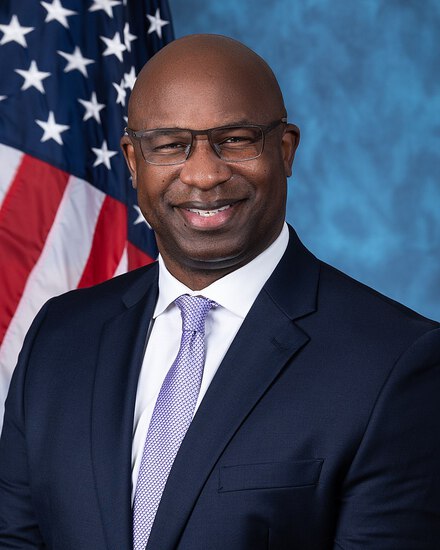
Rep. Jamaal Bowman
Sponsored bills
Maddy summaryThe Green Ribbon Act of 2023 establishes a voluntary program to recognize schools and institutions meeting three environmental goals: graduating environmentally literate students, reducing emissions from buildings/operations, and achieving a net positive environmental impact on students and staff. It creates a federal award program where schools can earn recognition through State nominations, with $10 million authorized for fiscal years 2024-2029 to fund grants, honorariums ($10,000 per award), and technical assistance. The program directly affects K-12 schools, tribal schools, and institutions of higher education, requiring States to allocate at least 40% of grant funds to underresourced schools. Key provisions include updated criteria aligning with EPA and CDC health standards, annual reporting requirements, and a new Office of School Infrastructure within the Department of Education.
Maddy summaryHR 5436, the Expand Emergency Housing Act, modifies housing funding rules to expand emergency assistance. It waives a public service expenditure cap for fiscal year 2024 funds dedicated to preventing, preparing for, and responding to homelessness and emergency rental assistance. The bill also requires HUD to revise regulations so emergency grant payments (up to 6 consecutive months) provided to individuals or families do not count as "income payments" for eligibility purposes. This directly benefits people facing housing instability by making emergency aid easier to access without reducing their eligibility for other assistance programs.
Maddy summaryHR 5433, the Child Care Stabilization Act, provides $16 billion annually from 2024 to 2028 to stabilize the child care sector through grants administered by the Health and Human Services Secretary. It directly affects licensed child care providers by offering stable funding to cover operating costs, while supporting higher wages for early educators without raising family fees. Key provisions include expanding access to high-quality, affordable care - especially for infants/toddlers, rural communities, and children with disabilities - and addressing shortages in underserved areas. The funding builds on existing American Rescue Plan resources, aiming to strengthen the child care workforce and increase available options for working families.
Maddy summaryHR 5428, the No Tax Breaks for Union Busting (NTBUB) Act, prevents employers from deducting certain expenses related to influencing workers' decisions about union representation. It targets spending on tactics like anti-union meetings, workplace surveillance, or consultants during organizing campaigns, making these costs non-deductible for tax purposes. Employers must report such expenses on their tax returns, including details about the activities and amounts spent. The bill aims to remove tax incentives for employer interference in union elections, aligning with federal labor law protections for workers' collective bargaining rights.
Maddy summaryThe Wage Theft Prevention and Wage Recovery Act requires employers to provide detailed paystubs showing wage calculations, initial disclosures about wage rates and classification, and timely final payments upon termination. It increases civil penalties for wage theft violations to up to $110,150 per employee affected for repeated violations and raises liquidated damages to up to 3 times the amount of unpaid wages. The bill extends the statute of limitations for wage theft claims from 2-3 years to 4-5 years and creates a $50 million grant program to support community partnerships that prevent wage theft and help workers recover unpaid wages. These provisions directly affect low-wage workers who experience wage theft, employers who engage in wage theft, and the Department of Labor's enforcement efforts under the Fair Labor Standards Act.
Maddy summaryHR 5369, the Tipped Worker Protection Act, requires employers to pay tipped workers the full federal minimum wage (currently $7.25/hour) instead of the current lower "tip credit" rate ($2.13/hour). It phases in this change over time, starting with a $3.60/hour cash wage in the first year, increasing by $1.50 annually until matching the standard minimum wage. The bill prohibits employers from keeping or using customer tips for any purpose (including covering costs like credit card fees) and mandates that all tips go directly to employees, with new rules governing voluntary tip pools. It directly affects restaurant, bar, and similar service workers who rely on tips for income.
Maddy summaryHR 5322, the Time Off to Vote Act, requires most private employers (with 25+ employees) to provide two consecutive hours of paid leave for employees to vote in federal elections. Employers must grant this leave upon request, can schedule it during early voting periods if permitted by state law, and cannot include lunch breaks in the leave period. The bill prohibits retaliation against employees who take this leave and ensures it does not affect accrued employment benefits. Violations could result in civil penalties up to $10,000 per offense, enforced by the Department of Labor.
Voters on the Move Registration Act of 2023 This bill requires the Consumer Financial Protection Bureau to develop, and specified agencies to distribute, a statement providing individuals with information on how to register to vote and their voting rights. This information must be provided to individuals upon their participation in certain rental assistance programs or application for certain residential mortgages.
Maddy summaryThe People Over Long Lines Act (POLL Act) requires states to develop public plans ensuring voting wait times don't exceed 30 minutes at polling places for federal elections, particularly addressing documented disparities where voters in communities of color wait significantly longer than others. It establishes standards for minimum voting systems, poll workers, and resources based on factors like population demographics, voter turnout, and needs of disabled or limited English proficiency voters. The bill provides $500 million annually in federal funding to help states implement these changes, creates a private right of action allowing voters to sue states for violations with penalties including $50 per hour of wait time, and mandates remedial plans for states with excessive wait times. The law applies to federal elections starting in 2025, with states required to comply by January 1, 2025.