

Military Hunger Prevention Act This bill requires the Department of Defense (DOD) to pay a basic needs allowance to certain low-income members of the Armed Forces. Specifically, those eligible for the basic needs allowance are members who (1) have completed initial entry training, (2) have a gross household income that did not exceed an amount equal to 130% of the federal poverty guidelines of the Department of Health and Human Services (HHS), and (3) do not elect to decline the allowance. In situations where a household contains two or more eligible members, the bill specifies that only one allowance may be paid per year to one member they jointly elect. The amount of the allowance must be the aggregate amount equal to 130% of the HHS federal poverty guidelines minus the gross household income of the covered member during the preceding year divided by 12. The Defense Finance and Accounting Service (DFAS) of DOD must notify, in writing, individuals determined to be eligible for the allowance. The notice must include information regarding financial management and assistance programs administered by DOD for which the individuals are also eligible. Individuals who seek to receive the allowance must submit specified information to DFAS.
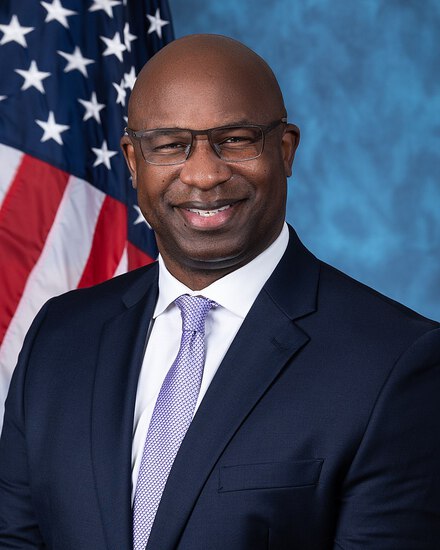
Rep. Jamaal Bowman
Sponsored bills
This bill treats property transferred by gift or upon the death of a decedent as sold at its fair market value (thus requiring recognition of gain realized over the property's basis). Under current law there is a step up in basis of such property which allows for an exclusion of gain for gifts and estate property. The bill allows an exception to this fair market value rule for U.S. citizen spouses, charities, and certain tangible property. The bill allows a taxpayer an exclusion from income for up to $1 million (indexed for inflation) in gain resulting from transfers at death. The bill imposes certain information reporting requirements for gifts or bequests subject to this bill's fair market value rule. It also allows taxpayers to pay any tax due in two or more, but not more than seven, equal installments.
Resident Physician Shortage Reduction Act of 2021 This bill increases the number of residency positions eligible for graduate medical education payments under Medicare for qualifying hospitals, including hospitals in rural areas and health professional shortage areas. Current law provides for an increase of up to 200 positions per fiscal year beginning in FY2023, with a total increase of 1,000 positions; each hospital may receive up to 25 additional positions. The bill provides for an additional increase of 2,000 positions per fiscal year from FY2023-FY2029; during this period, each hospital may receive up to 75 additional positions in total under the bill and current law. Additionally, one-third of the positions that are made available under the bill must be allocated to hospitals that are already operating above applicable resident limits. The bill also requires the Government Accountability Office to report on strategies to increase the diversity of the health professional workforce, including with respect to representation from rural, low-income, and minority communities.
Willie O'Ree Congressional Gold Medal Act This bill provides for the award of a Congressional Gold Medal to Willie O'Ree or, if unavailable, to a member of his family, in recognition of his contributions and commitment to hockey, inclusion, and recreational opportunity.
This bill requires the Joint Committee on the Library to enter into an agreement to obtain a statue of Shirley Chisholm, the first African American woman elected to Congress. The committee shall place the statue in a permanent public location in the U.S. Capitol.
Our Homes, Our Votes Act This bill facilitates voter registration for residents of certain federally assisted housing for the purpose of federal elections. Specifically, the bill requires each lease and annual income recertification for such housing that is administered by a public housing agency (PHA) to include a voter registration application. A PHA must send any completed application to state election officials. The bill also treats owners of federally assisted housing as voter registration agencies.
Ending Punitive, Unfair, School-based Harm that is Overt and Unresponsive to Trauma Act of 2021 or the Ending PUSHOUT Act of 2021 This bill requires the Department of Education (ED) to award grants to local educational agencies and nonprofit organizations for the purpose of reducing suspension and expulsion of students (i.e., exclusionary disciplinary practices). The bill requires ED to collect data on exclusionary discipline in schools. It also establishes a joint task force to end school pushout.
Emmett Till and Mamie Till-Mobley Congressional Gold Medal Act of 2021 This bill provides for the posthumous presentation of a Congressional Gold Medal in commemoration of Emmett Till and Mamie Till-Mobley. After the award the medal shall be given to the National Museum of African American History and Culture.
Access to Genetic Counselor Services Act of 2021 This bill provides for coverage under Medicare of genetic counseling services that are furnished by genetic counselors. Covered services include those services, as well as incidental services and supplies, that would otherwise be covered under Medicare if provided by a physician.
Fair Transportation Act This bill addresses the disbursement of surface transportation funding in an equitable way by federal, state, and local entities. Specifically, the Government Accountability Office (GAO) must review the extent to which states consider equity and improve equity outcomes in the use of federal surface transportation funds at all phases of project delivery, including the diverse transportation needs of economically disadvantaged and underserved populations. Additionally, the Department of Transportation (DOT) must carry out a transportation equity research program for research and demonstration activities that focus on the impacts that surface transportation planning, investment, and operations have on economically disadvantaged and underserved populations, including communities of color, low-income communities, and individuals with disabilities. The GAO must also review discretionary grant programs for surface transportation projects to determine the extent to which DOT is awarding funding through such programs to projects that serve groups or populations experiencing differential impacts in the transportation sector. Further, DOT must issue guidance on equity consideration metrics and best practices while disbursing federal funds.