

Maddy summaryHJRES 82 is a non-binding resolution stating that the Equal Rights Amendment (ERA) has been validly ratified by the required 38 states (including Virginia's 2020 ratification) and should be certified as the 28th Amendment to the U.S. Constitution. It directs the Archivist of the United States to fulfill their statutory duty under Title 1, U.S. Code, to certify and publish the ERA without delay. The resolution argues Article V of the Constitution has no ratification deadline, citing precedents like the 27th Amendment. It does not change the Constitution itself but urges the Archivist to complete the certification process. The bill affects the Archivist’s office, requiring them to act on the ERA’s ratification status.
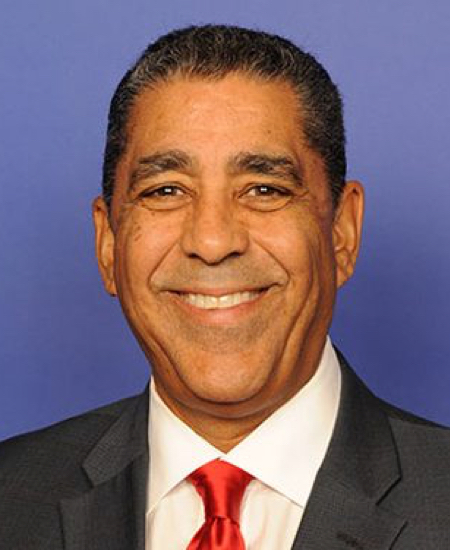
Rep. Adriano Espaillat
Sponsored bills
Maddy summaryThis bill increases funding for federal programs supporting small businesses owned by socially and economically disadvantaged individuals. It raises the annual cap for highway program supportive services from $10 million to $25 million and adds $5 million per year for transit program training and assistance. It also creates a new $5 million annual aviation program to help disadvantaged-owned businesses compete for airport-related contracts. These changes directly affect small businesses seeking federal contracting opportunities in transportation infrastructure projects.
Accelerating Small Business Growth Act This bill establishes a grant program within the Department of Transportation for states, local governments, tribes, and certain public transit authorities to assist small businesses owned by socially and economically disadvantaged individuals compete for federal contracts for infrastructure projects.
Candidate Voice Fraud Prohibition Act This bill prohibits the distribution of certain paid-for political communications that contain materially deceptive audio that is generated by artificial intelligence which impersonates a candidate's voice. It also establishes criminal penalties for related violations. The bill generally prohibits individuals, political committees, and other entities from distributing such a communication if the communication (1) contains materially deceptive audio that is generated by artificial intelligence which impersonates a candidate’s voice, (2) is distributed with actual malice, (3) is intended to injure the candidate’s reputation or to deceive a voter into voting against the candidate, and (4) is distributed within 60 or 90 days of an election (depending on the type of election). This prohibition does not apply to certain entities, such as radio or television broadcasting stations that broadcast the deceptive audio as part of a bona fide newscast. Additionally, the bill establishes a new criminal offense related to the distribution of materially deceptive audio that is generated by artificial intelligence which impersonates a candidate's voice. A violator is subject to criminal penalties—a fine, up to two years in prison, or both. The bill requires the Federal Election Commission to (1) promulgate regulations related to this bill, and (2) report to Congress on matters relating to compliance with and enforcement of this bill and recommendations to ensure compliance with this bill.
Maddy summaryJaime’s Law requires federal background checks for ammunition purchases by expanding existing firearm background check rules to include ammunition. It mandates that unlicensed buyers must transfer ammunition through a licensed dealer (e.g., a gun store), who conducts the background check before completing the sale. The law includes exemptions for transfers between family members, law enforcement, transfers due to death, immediate self-defense situations, and legitimate shooting or hunting activities (with specific conditions). It explicitly states the law does not create a national ammunition registry and does not override state laws on ammunition.
Maddy summaryThe Veteran Service Recognition Act of 2023 requires the Department of Defense, Homeland Security, and Veterans Affairs to study noncitizen veterans removed from the U.S. between 1990 and 2023, documenting their service history and reasons for removal. It establishes a system to identify noncitizen veterans before removal proceedings and creates a Military Family Immigration Advisory Committee to review cases and recommend against removal for veterans. The bill also creates a program to facilitate citizenship for noncitizen service members and provides pathways for previously removed noncitizen veterans to adjust to lawful permanent residence. These provisions directly affect noncitizen veterans and their family members facing immigration proceedings, aiming to better recognize military service in immigration decisions.
Maddy summaryHR 4588, the Senator Paul Simon Study Abroad Program Act of 2023, renames and enhances the existing "IDEAS" grant program to increase U.S. student participation in study abroad. It authorizes $10 million annually to fund competitive grants for colleges and universities (especially minority-serving institutions and those with world language programs), requiring grantees to demonstrate plans for expanding access to underrepresented students, ensuring diversity in participation, and prioritizing study in developing countries. The bill sets a goal of 1 million U.S. undergraduates studying abroad annually within 10 years, with a focus on low-income students, students of color, and community college attendees who are currently underrepresented. It mandates annual reports to Congress on program implementation and requires grantees to maintain health/safety protocols for students abroad.
Maddy summaryHR 4579, the Fairness for Farm Workers Act, amends the Fair Labor Standards Act to establish phased overtime requirements for agricultural workers. Starting in 2024, most farm employers must pay overtime for hours worked beyond 55 per week (reducing to 50 in 2025, 45 in 2026, and 40 in 2027), with small farms (25 or fewer employees) getting a 3-year delay on the full 40-hour standard. The bill also removes existing exemptions that allowed some agricultural employers to avoid overtime pay for certain workers. This directly affects farm workers in agriculture and their employers, requiring compliance with standard overtime rules previously not applied to this sector.
Maddy summaryThe DISCLOSE Act of 2023 would increase transparency in political spending by requiring organizations making campaign-related disbursements over $10,000 to disclose the names and addresses of their major donors, including the top five funders for political communications. It would close loopholes allowing foreign nationals to secretly fund election activities through corporations or other entities by expanding the definition of prohibited foreign contributions. The bill would mandate "stand by every ad" disclosure requirements for political communications across all media, including audio, video, and internet ads, requiring clear identification of funders. It would also require reporting of disbursements related to Federal judicial nominations, which currently aren't subject to disclosure requirements. These provisions would apply to corporations, labor organizations, and certain nonprofits that engage in political activity.
Maddy summaryThe Mink VIRUS Act prohibits U.S. mink farming starting one year after enactment, directly affecting fur farm owners who raise mink for their fur. It requires all mink termination to use humane methods meeting federal and AVMA standards, beginning 90 days after enactment, with civil penalties for noncompliance. The bill establishes a $350 million payment program to compensate affected farmers for transition costs and the market value of their mink farming operations, contingent on using funds only for relocation and securing permanent easements banning future fur farming. This legislation responds to documented risks of SARS-CoV-2 transmission between humans and mink, including mutated virus cases in multiple countries.