

Maddy summaryHR 433, the Department of Education Protection Act, prohibits the use of federal funds to reorganize the Department of Education. Specifically, it blocks any spending from current fiscal year appropriations on activities that would decentralize the department, reduce staffing, or alter its structure, responsibilities, or authority relative to its organization as of January 1, 2025. The bill directly affects the Department of Education by preventing structural changes to its existing offices and operations. This is a procedural measure focused solely on preserving the current departmental framework, not on changing education policy or funding.
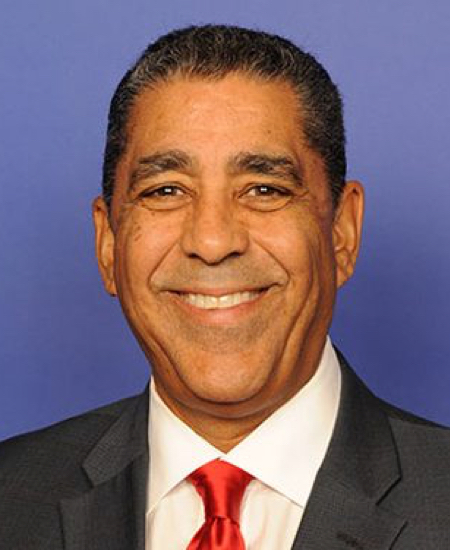
Rep. Adriano Espaillat
Sponsored bills
Maddy summaryThis bill requires colleges and universities to establish a policy for awarding posthumous degrees to students who were enrolled in a degree program, died before completing it, and were in good academic standing at the time of death. It amends the Higher Education Act to mandate this institutional policy and updates accreditation standards to ensure they do not consider the number of posthumous degrees awarded. The policy must be implemented within one year of the law's enactment. This directly affects higher education institutions by changing their degree-issuance procedures for deceased students meeting specific criteria.
Maddy summaryThe LNG Public Interest Determination Act of 2025 requires the Secretary of Energy to approve natural gas exports only if they meet a public interest standard. This standard mandates three specific assessments: climate impact (including effects on global warming and clean energy investment), economic impact on U.S. consumers (with focus on low-income households and businesses), and environmental justice (assessing burdens on vulnerable communities). The Secretary must complete these assessments within one year of receiving environmental data and make a public finding. The bill also requires public participation in the process and treats export approvals as major federal actions under environmental law.
Maddy summaryThis resolution expresses the House's support for Korean American Day, commemorating January 13, 1903 - the arrival of the first large wave of Korean immigrants to the U.S. It urges all Americans to observe the day to recognize Korean Americans' contributions to U.S. society, including their economic, cultural, and military service. The resolution honors the 122nd anniversary of this historical arrival, acknowledging the resilience of early Korean immigrants and their descendants. As a symbolic gesture, it does not create new laws or affect any specific group directly.
Maddy summaryThe Proxy Voting for New Parents Resolution (HRES 23) would allow U.S. House Members who have given birth or whose spouse has given birth to appoint another Member as a proxy to cast their vote or record their presence in the House and committees for up to 12 weeks after childbirth. To use this, the new parent must submit a signed letter to the Clerk detailing the birth or medical condition and naming the proxy; the proxy must vote exactly as instructed and announce the vote as "by proxy." The proxy vote does not count toward quorum, and the new parent can revoke the proxy at any time by submitting a new letter or casting their own vote. This resolution applies to all House Members, including Delegates and the Resident Commissioner, though they cannot cast votes for the House itself.
This resolution honors the life, achievements, legacy, and distinguished public service of former President Jimmy Carter. The resolution also (1) acknowledges President Carter's contributions to the state of Georgia, the United States, and the world; and (2) establishes his legacy as one of the great leaders and statesmen of the United States.
Maddy summaryHR 82, the Social Security Fairness Act of 2023, repeals two provisions that reduce Social Security benefits for certain government workers. It eliminates the Government Pension Offset (GPO), which cuts spousal or survivor benefits for people with pensions from jobs not covered by Social Security (like federal or state government roles), and the Windfall Elimination Provision (WEP), which lowers retirement benefits for those with similar pensions. The law takes effect for benefits paid after December 2023, requiring the Social Security Administration to adjust benefit calculations to remove these reductions. This change directly affects public-sector employees who previously had their Social Security benefits reduced due to their government pensions.
Maddy summaryThis bill designates Holcombe Rucker Park in Harlem, New York, as a National Commemorative Site to honor its historic role in basketball development and Holcombe Rucker's contributions. It authorizes the National Park Service to partner with New York City (via cooperative agreements) to install interpretive plaques or exhibits at the park, with the owner's consent. The designation does not make the park part of the National Park System, nor does it alter local land use, zoning, or property rights. It focuses solely on commemoration, with no new regulations or federal management of the park.
Maddy summaryThe Landlord Accountability Act of 2025 prohibits housing discrimination based on "source of income," which now includes housing vouchers, Social Security benefits, child support, and other income sources. It establishes $100,000 penalties for landlords who intentionally make units uninhabitable to disqualify them from federal housing programs or leave units vacant for more than 60 days. The bill creates a Multifamily Housing Complaint Resolution Program to handle tenant complaints, requires landlords to display tenant rights information in multiple languages, and provides tax credits for landlords maintaining housing for voucher users. It allocates $90 million annually for enforcement and $25 million annually for tenant harassment prevention programs. The bill directly affects landlords of federally assisted multifamily housing projects and tenants using housing vouchers or other income sources.
Maddy summaryHR 40 would establish a 15-member commission to study the legacy of slavery and systemic discrimination against African Americans in the United States, and develop proposals for reparations. The commission would examine historical and ongoing effects of slavery, discriminatory policies (including redlining and educational disparities), and recommend remedies through education and potential reparations. Composed of members appointed by the President, House Speaker, and Senate President pro tempore, the commission would have 18 months to submit a report to Congress, with $20 million authorized for its work. This legislation creates a study process but does not provide reparations directly.