

Maddy summaryThe 9/11 Immigrant Worker Freedom Act creates a pathway for certain immigrants who worked or volunteered in the immediate aftermath of the September 11, 2001, attacks to adjust to lawful permanent resident status. It covers individuals who provided rescue, recovery, or cleanup services at the World Trade Center site (lower Manhattan, Staten Island, or barge piers), the Pentagon, or the Shanksville, Pennsylvania, crash site for specified hours during defined periods, as well as vehicle-maintenance workers exposed to debris. Key provisions include work authorization during the application process, fee waivers for low-income applicants (at or below 250% of the federal poverty level), and strict confidentiality to prevent immigration enforcement actions based on application information. Approved status does not reduce the overall number of available immigrant visas.
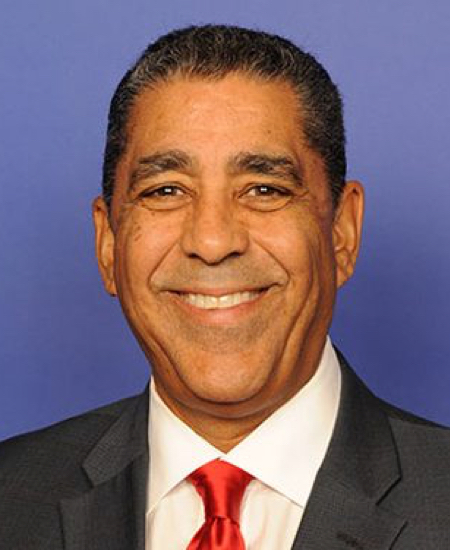
Rep. Adriano Espaillat
Sponsored bills
Maddy summaryThe LINE Act (HR 5319) prohibits the Centers for Medicare and Medicaid Services (CMS) and the Department of Health and Human Services (HHS) from sharing Medicaid health data with U.S. Immigration and Customs Enforcement (ICE). Specifically, it blocks the disclosure of individually identifiable health information from Medicaid enrollment records (under Title XIX of the Social Security Act) to ICE for immigration enforcement purposes. This directly affects Medicaid enrollees, particularly those who may be immigrants, by preventing their health data from being used in immigration proceedings. The law creates a clear barrier between Medicaid health records and immigration enforcement efforts.
Maddy summaryThis bill (HJRES 115) terminates a presidential emergency declaration made on August 11, 2025, which claimed a "crime emergency" in Washington, D.C. It directly affects the District of Columbia by ending federal restrictions that prevented D.C. from using $1 billion in locally-raised funds for public safety, law enforcement, fire services, and schools. The resolution cites that the emergency declaration was legally flawed - section 740 of the DC Home Rule Act does not permit federalizing the Metropolitan Police Department - and notes that D.C. violent crime has reached a 30-year low. The bill formally ends the emergency under the DC Home Rule Act, restoring D.C.'s authority over its own budget and public safety resources.
Maddy summaryHR 4917, the Expanding the VOTE Act, amends the Voting Rights Act to increase language access for voters. It expands the definition of "voting materials" to include digital formats and requires states to provide language assistance (both written and oral) for minority language groups, with special provisions for American Indian and Alaska Native languages when written translations aren't feasible. The bill creates grants to help jurisdictions provide voting materials in languages that don't currently trigger Section 203 coverage, and mandates a study on lowering population thresholds for language assistance requirements. This directly affects states, local election jurisdictions, and voters who speak minority languages, including those in communities not currently covered by existing language access rules.
Maddy summaryThe SWIFT VOTE Act provides $120 million in grants to state and local election offices to fund digital check-in systems (e-pollbooks) and real-time wait time reporting at voting locations for federal elections. It requires jurisdictions to publish hourly wait times for short polling locations or four daily intervals for longer ones on official websites, plus post-election summary reports. The bill mandates that funds supplement, not replace, existing election funding and requires training for election officials on accessibility for voters with disabilities and limited English proficiency. This directly affects state and local election administrators by creating new reporting obligations and funding for technology to reduce voter wait times.
Maddy summaryHR 4796, the Restoring Essential Healthcare Act, repeals a provision that blocked Medicaid payments to certain healthcare providers during a specific period. It directly affects Medicaid beneficiaries who received care from these providers between the enactment of the prior law (Public Law 119-21) and this bill's enactment. The key provision retroactively restores Medicaid payments for services already provided during that blocked period, treating the payment restriction as if it never existed. This change ensures eligible individuals and providers receive reimbursement for covered care delivered during the prohibited timeframe.
Maddy summaryHR 4651 requires U.S. Immigration and Customs Enforcement (ICE) and U.S. Customs and Border Protection (CBP) officers, as well as detention facility staff interacting with detainees, to wear body cameras during all official operations. The bill mandates cameras be turned on at shift start and remain active continuously, with footage made available to parties in related legal proceedings. It also establishes policies for using AI/facial recognition on footage, prohibits staff from claiming camera malfunctions without evidence, and subjects violators to disciplinary actions like pay reduction or suspension. The law must be implemented using existing funding, with annual privacy assessments of how footage is handled.
Maddy summaryThis bill would prohibit the detention of pregnant women, lactating women, and postpartum mothers (within one year of childbirth) in immigration custody, requiring their immediate release except in rare circumstances involving public safety threats. It bans the use of physical restraints on these individuals during pregnancy, labor, delivery, and postpartum recovery, with only extremely limited exceptions. The bill mandates that facilities provide comprehensive reproductive health care including prenatal care, labor and delivery services, postpartum care, and access to abortion services. It requires facilities to maintain medical records, obtain informed consent for medical procedures, and conduct weekly reviews of any detained individuals under exceptional circumstances. The bill also establishes reporting requirements for facilities and creates transparency through public reporting of detention practices.
Maddy summaryHR 4696 amends Section 249 of the Immigration and Nationality Act to update eligibility for a registry program that provides a pathway to legal status for long-term residents. It changes the requirement from entering the U.S. before January 1, 1972, to entering at least 7 years before the application date. This adjustment bases eligibility on a rolling 7-year window instead of a fixed historical cutoff, allowing more recent long-term residents to qualify. The bill directly affects individuals who entered the U.S. after 1972 but maintained continuous residence for at least seven years prior to applying.
Maddy summaryThe End Solitary Confinement Act would prohibit most solitary confinement in federal prisons and detention centers, requiring all incarcerated people to have at least 14 hours daily of out-of-cell group interaction in shared spaces. It establishes strict limits on when solitary confinement can be used (only for brief counts, emergencies as a last resort, or medical isolation), with specific protections for vulnerable populations including youth, the elderly, people with disabilities, pregnant people, and LGBTQ+ individuals. The bill creates a community monitoring body to oversee implementation, requires detailed reporting on confinement practices, and provides incentives for states to adopt similar standards through funding adjustments. It also includes due process protections for placement in restrictive housing and prohibits punitive practices like limiting access to services or confiscating personal property.