

Maddy summaryThis bill requires federal agencies collecting demographic survey data to begin including questions on sexual orientation, gender identity, and variations in sex characteristics (intersex traits) within 360 days of enactment. Agencies must review existing surveys to identify gaps, develop privacy-protective methods for collecting this data (including anonymization and data destruction protocols), and incorporate it into relevant reports within three years. The law applies to all federal surveys that collect standard demographic data (like race, ethnicity, and age), such as the census or health surveys, but does not compel individuals to disclose their status. It emphasizes maintaining confidentiality, allows limited agency waivers if standards can't be met, and mandates a congressional report on implementation within two years.
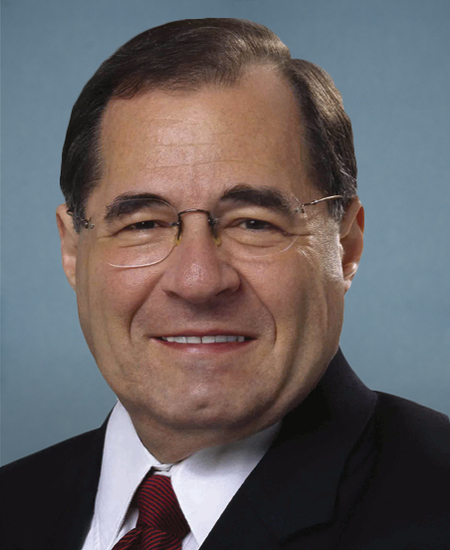
Rep. Jerrold Nadler
Sponsored bills
Maddy summaryHR 3953, the Debt Ceiling Reform Act, changes how Congress can block the Treasury from borrowing more money. It requires the Treasury to notify Congress when debt approaches a $1 trillion increment, giving Congress 30 days to pass a resolution disapproving further borrowing. The bill mandates strict timelines: the House must act within 6 days of introduction (with committees required to report bills within 5 days), and the Senate must consider the resolution within 6 days with limited debate. This process directly affects the Treasury’s ability to issue debt and Congress’s procedural control over debt ceiling decisions. The bill does not eliminate the debt ceiling but streamlines the disapproval process.
Green Climate Fund Authorization Act of 2023 This bill authorizes $4 billion in both FY2024 and FY2025 for U.S. contributions to the Green Climate Fund (a fund established under the United Nations Framework Convention on Climate Change to finance projects that address climate change).
Maddy summaryHR 3973, the Judicial Ethics and Anti-Corruption Act of 2023, establishes new ethics rules for federal judges and justices. The bill prohibits judges from owning stocks, commercial real estate, business interests, and certain trusts, while creating a Federal Employee Investment Account for permitted investments. It requires judges to disclose potential conflicts of interest, restricts privately funded judicial education events, and creates a Supreme Court Complaints Review Committee to handle complaints against justices. The bill aims to increase transparency and reduce conflicts of interest for federal judges and justices.
Pets Belong With Families Act This bill prohibits public housing agencies from imposing breed restrictions on pets owned by residents of public housing units. The bill continues to allow public housing agencies to prohibit ownership of dangerous animals in public housing, but prohibits classification as dangerous by breed and requires that any such classification be based on specific behaviors or actions of the animal.
Maddy summaryHR 3850, the Pride In Mental Health Act of 2023, establishes a federal grant program to improve mental health and substance abuse services for LGBTQ+ youth (including nonbinary, intersex, and Two Spirit individuals). The bill directs the Health and Human Services Secretary to fund eligible organizations to provide trauma-informed care, cultural competency training for caregivers, school bullying prevention guidelines, and family support resources. It explicitly prohibits grant funds from being used for conversion therapy or advertising related to such therapy. The bill also requires data collection on LGBTQ+ youth mental health and a federal survey to measure psychological distress.
Maddy summaryHR 3817, the Mental Health Workforce and Language Access Act of 2023, creates a federal grant program to help community health centers hire bilingual mental health staff who can communicate directly with patients who have limited English proficiency. The bill allocates up to $10 million annually (2024-2029) to fund these grants, prioritizing health centers where at least 10% of patients primarily speak a language other than English. Health centers receiving grants must use funds to recruit qualified staff - such as licensed counselors or supervised trainees - who speak both English and another language fluently, and to report on program effectiveness to Congress. This directly affects patients with limited English proficiency seeking behavioral health services at participating community health centers.
San Gabriel Mountains Protection Act This bill designates wilderness areas and wild and scenic rivers in California and modifies the boundaries of the San Gabriel Mountains National Monument in California to include additional National Forest System (NFS) land. Specifically, the monument shall include approximately 109,167 acres of additional NFS land. The bill designates parcels of NFS land as wilderness and components of the National Wilderness Preservation System to create the Condor Peak Wilderness and Yerba Buena Wilderness and to add to the San Gabriel Wilderness and Sheep Mountain Wilderness. The bill designates specified wild and scenic rivers. The Department of Agriculture may issue a special use authorization to the owners of a water transport or diversion facility located on NFS land in the Pleasant View Ridge Wilderness for the continued operation, maintenance, and reconstruction of the facility if specified conditions are met.
Reduce Excessive Decibels and Unwanted Commotion and Emissions to Heighten Enforcement and Limitation of Intrusive Chopper Operations to Protect Towns and Enhance Residents from Noise Act of 2023 or the REDUCE HELICOPTER Noise Act of 2023 This bill directs the Federal Aviation Administration (FAA) to establish and maintain a database for the Aircraft Noise Ombudsman to receive, collect, and provide access to information regarding helicopter noise complaints. Under the bill, an owner or operator of a helicopter that receives any complaint from an individual must submit the information to the ombudsman within 48 hours. The submission must include a description of any action the owner or operator is taking or plans to take to address the complaint (to the extent that the owner or operator is the subject of the submitted complaint). Individuals may also directly submit a helicopter noise complaint to the ombudsman. Within 48 hours of receiving a noise complaint submission, the ombudsman must (1) determine which owner or operator is the subject of the complaint, (2) determine whether the complaint is meritorious, and (3) input meritorious complaints into the database. In the case of a complaint not submitted by an owner or operator of a helicopter that is the subject of the complaint, the bill establishes requirements for FAA notification and owner or operator response. A violation of the database requirements is subject to civil penalties. The bill also requires any individual or entity that has registered a helicopter or that has at least a 10% ownership interest in a registered helicopter to submit specific information to the FAA to be verified. The bill also includes additional verification requirements for the issuance of dealers' certificates of registration.
Maddy summaryThe American Family Act establishes a monthly child tax credit of $250 per month for each child under age 6 and $300 per month for each child aged 6-18, with income limits of $150,000 for joint filers and $112,500 for other filers. The credit is refundable, meaning it can be paid even if the taxpayer owes no income tax, and will be adjusted annually for inflation. The bill includes detailed rules for determining eligibility, including requirements that the child resides with the taxpayer for more than half the month and provisions to prevent fraud through recapture of improperly received payments. The credit will be paid monthly in advance rather than as a single annual payment, with specific mechanisms for calculating and distributing the payments.