

Maddy summaryHR 6576, the Full-Service Community School Expansion Act of 2023, authorizes $500 million to $1 billion annually for fiscal years 2024-2028 to expand full-service community schools. The bill directly affects public elementary and secondary schools with at least 40% of students eligible for free or reduced-price lunch or identified for improvement under federal education law. Key mechanisms include funding planning grants to develop community-wide leadership teams, implementation grants for schools to provide integrated student supports (health, mental health, housing services), expanded learning opportunities (after-school programs, career training), and family engagement activities. The bill requires schools to establish collaborative leadership structures, maintain public transparency, and ensure services complement rather than replace existing programs. This legislation aims to create school environments that address students' academic, social, emotional, and health needs through coordinated community partnerships.
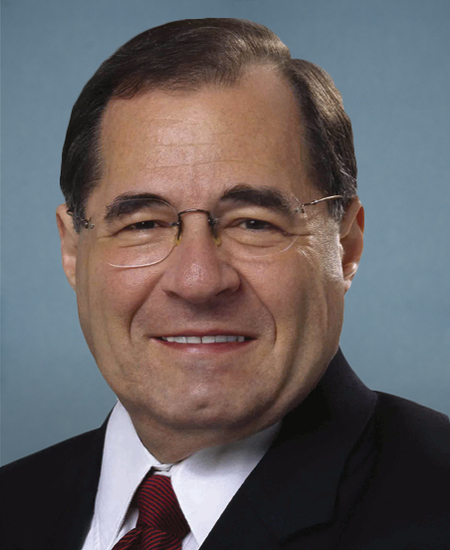
Rep. Jerrold Nadler
Sponsored bills
Maddy summaryThis bill (HR 6553) waives all costs for U.S. government-led evacuations of American citizens from Israel, Gaza, the West Bank, and nearby countries (like Cyprus) between October 7 and November 17, 2023. It directly affects U.S. citizens endangered by the Hamas-led attacks on October 7 and subsequent conflict. The key mechanism amends existing law to require the State Department to cover all expenses related to these evacuations through government-coordinated transport, eliminating repayment obligations for affected citizens. This policy change applies specifically to evacuations during that defined period following the October 7 attacks.
Billionaire Minimum Income Tax Act This bill imposes a minimum tax on individual taxpayers whose net worth for the taxable year exceeds $100 million. The tax is equal to 25% of the sum of a taxpayer's taxable income, plus net unrealized gains for the taxable year. The tax may not exceed 40% of the amount by which the taxpayer's net worth exceeds $100 million.
Maddy summaryHRES 881 is a symbolic House resolution commemorating the 50th anniversary of the Endangered Species Act of 1973. It honors the Act's role in preventing the extinction of species like the bald eagle and humpback whale, citing its success in protecting 99% of listed species. The resolution does not create new legal requirements or affect any specific group, as it serves solely as a ceremonial recognition of the Act's conservation achievements.
Maddy summaryHRES 886 is a non-binding House resolution supporting Transgender Day of Remembrance (TDoR) by recognizing the epidemic of violence against transgender people and memorializing those lost in the year ending September 30, 2023. It specifically acknowledges the disproportionate impact of violence on transgender women of color, citing 33 documented deaths in the U.S. during that period (with estimates suggesting the actual number is higher due to underreporting). The resolution calls for Congress to prioritize studying and preventing such violence while affirming that all transgender people deserve dignity and respect. As a symbolic resolution, it does not create new laws or allocate funding but serves to raise awareness and honor victims.
Maddy summaryThis bill extends a tax incentive allowing businesses to immediately deduct costs for cleaning up contaminated properties (brownfields). It modifies the tax code to permit these deductions for expenses paid between 2012-2022 and starting in 2027. The change directly affects developers and property owners involved in brownfields redevelopment projects, enabling them to reduce taxable income for cleanup costs. The policy update avoids requiring capitalization of remediation expenses over time, providing immediate tax relief during specified periods.
Maddy summaryHRES 821 is a symbolic resolution designating November 12 as Creutzfeldt-Jakob Disease (CJD) Awareness Day. It formally supports raising public awareness about CJD, a rare, rapidly progressive, and fatal brain disorder affecting patients and their families. The resolution recognizes the challenges posed by CJD's rarity and swift progression, without proposing any new policies or funding. It serves as a non-binding acknowledgment of the disease's impact, intended to benefit those directly affected by CJD.
Maddy summaryHR 6212, the PROTECT Florida Act, extends the existing moratorium on oil and gas leasing and exploration in the Gulf of Mexico until 2032 and adds a new ban on such activities off Florida's Atlantic coast until June 2029. The bill blocks federal permits for oil and gas exploration, leasing, and seismic testing in two specific areas: the Straits of Florida and the southern portion of the South Atlantic Planning Area south of Florida's coastline. These restrictions apply to all related activities, including preleasing and seismic testing, directly affecting federal agencies and companies seeking to conduct offshore drilling operations in those regions. The legislation aims to prevent new oil and gas development in Florida's coastal waters for the specified periods.
Living Organ Donor Tax Credit Act of 2023 This bill establishes a refundable tax credit of up to $5,000 for expenses related to the removal and donation of all or part of a kidney, liver, lung, pancreas, intestine, or bone marrow by a living individual for transplant into another individual. Expenses that may be included in the calculation of this tax credit include travel, lodging, medical expenses related to donation and follow-up care, paperwork and legal costs, lost wages, and any other costs paid by the taxpayer in connection with the transplant. Expenses related to the transplant that are reimbursed by any person or entity (public or private) may not be included in the calculation of the credit amount.
Maddy summaryHR 6105, the No Toxics in Food Packaging Act of 2023, prohibits the use of specific chemicals in food packaging by deeming them unsafe under existing law. It directly bans ortho-phthalates (like DEHP and DBP), PFAS, certain bisphenols (including BPA), styrene, and antimony trioxide in all food contact materials. The bill requires the FDA to consider vulnerable populations - such as infants, pregnant women, and workers - when evaluating alternative substances. The ban takes effect two years after the bill's enactment. This law primarily affects food manufacturers, packaging producers, and the FDA's regulatory oversight of food contact substances.