

Maddy summaryThis bill restricts warrantless surveillance of U.S. persons by amending the Foreign Intelligence Surveillance Act. It limits who can conduct queries of U.S. person data (capping at five personnel per FBI field office), prohibits using such queries for law enforcement without proper authorization, and requires documentation of all queries. The bill creates exceptions for emergencies, consent, and cybersecurity, but prohibits using metadata results to access protected communications. It also limits how information acquired under Section 702 can be used in criminal proceedings, requiring specific approvals for such use.
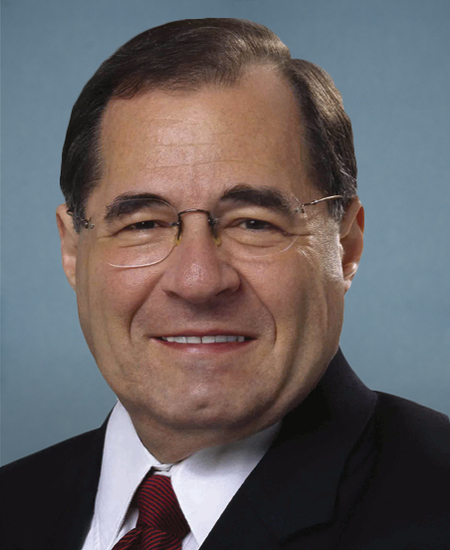
Rep. Jerrold Nadler
Sponsored bills
Maddy summaryHRES 904 is a House resolution supporting World AIDS Day goals. It encourages efforts to achieve zero new HIV transmissions, zero discrimination, and zero AIDS-related deaths by 2030, while commending existing programs like PEPFAR and the Ryan White CARE Act. The resolution also supports continued funding for HIV prevention, treatment, and research, with specific focus on communities disproportionately affected by HIV in the U.S. and globally. As a symbolic statement, it does not create new laws or allocate funds.
Maddy summaryHR 6654, the Farewell to Foam Act of 2023, bans the sale and distribution of expanded polystyrene foam food containers, packaging peanuts ("loose fill"), and coolers starting January 1, 2026. It directly affects food service providers (like restaurants and schools), manufacturers, distributors, and retailers who sell these foam products. The bill prohibits selling these items, with enforcement starting with a written warning for first violations, followed by escalating civil penalties ($250 for a second violation, up to $1,000 for fourth+ violations), while exempting small businesses with low annual revenue from repeated penalties within a 7-day period.
Maddy summaryThe Inclusive Democracy Act of 2023 protects voting rights for people with criminal convictions in federal elections, ensuring they can register and vote while incarcerated, on probation, or on parole. It requires states to notify individuals about their voting rights at key points (during conviction, on probation/parole, and in carceral settings), and mandates carceral settings to provide voter registration forms, absentee ballot applications, and voting information. The bill establishes procedures for transmitting registration and ballot applications with expedited processing near election deadlines, requires states to accept applications and ballots postmarked within 2 days of deadlines, and prohibits prosecution for voting in non-federal elections when registered for federal elections. The law applies to federal elections starting with the 2024 general election.
Maddy summaryThis bill amends the Equal Credit Opportunity Act to require lenders to collect and report data on loans to LGBTQI-owned businesses. It specifically adds "LGBTQI-owned" to existing categories for data collection, includes sexual orientation, gender identity, and intersex status as protected characteristics in lending data, and defines an "LGBTQI-owned business" as one where over 50% of ownership/control and net profit/loss accrues to self-identifying LGBTQI individuals. The policy change directly affects financial institutions that report lending data to the government, mandating they track and disclose these new categories. This provides concrete data on lending practices for LGBTQI business owners, who face documented barriers in accessing credit.
Maddy summaryThe Workers POWER Act (HR 6634) strengthens federal labor enforcement by expanding staffing and resources for the Department of Labor's Wage and Hour Division and Occupational Safety and Health Administration (OSHA). It creates new paid student positions (5 in Washington, DC, plus 2 per regional office), establishes child labor fellowships (5 per agency), and increases student loan repayment benefits for eligible employees. The bill also authorizes performance-based bonuses, retention incentives, and $250 million annually in grants to states to improve their labor enforcement capacity. These changes directly affect Department of Labor enforcement staff and state/local labor agencies working to address wage theft, child labor, and workplace safety violations.
Maddy summaryThis bill designates the United States Postal Service facility at 298 Route 292 in Holmes, New York, as the "Sheriff Adrian 'Butch' Anderson Post Office Building." It updates all federal references (including laws, maps, and documents) to use this new name for the location. The bill has no policy changes or financial impact - it solely commemorates Sheriff Adrian "Butch" Anderson through a building designation.
Maddy summaryHR 6592, the Fight Book Bans Act, provides federal grants to reimburse public school districts for legal costs when they choose to keep instructional or library materials after parental objections. It directly affects school districts (covered local educational agencies) that select materials for students and handle challenges to their removal. The bill authorizes up to $100,000 per case in grants to cover attorney fees and court costs, provided the district didn’t remove the materials and wasn’t reimbursed by the state. Funding of $15 million is authorized for fiscal years 2024-2028. The grants are strictly for legal challenges to decisions not to remove materials, not for the content of the materials themselves.
Maddy summaryHRES 907 is a non-binding House resolution condemning rising antisemitism in the U.S., citing increased hate crimes (25% rise in 2022 per FBI data) and campus incidents (41% increase from 2021-2022 per ADL). It calls on all Americans, including campus leaders and government agencies, to combat antisemitism and urges implementation of the U.S. National Strategy to Counter Antisemitism. The resolution specifically requests increased funding for the Nonprofit Security Grant Program to strengthen safety protections for Jewish communities. It directly affects Jewish Americans, campus communities, and government agencies responsible for hate crime prevention and community safety.
Maddy summaryThe Refuge System Protection Act of 2023 allows the U.S. Fish and Wildlife Service to seek legal action against individuals or entities that damage protected resources within national wildlife refuges, fish hatcheries, or other U.S. Fish and Wildlife Service-managed lands. It authorizes the Attorney General to sue for "response costs" (like cleanup) and "damages" (such as replacement costs for destroyed resources), but only if claims exceed $5,000. Recovered funds must be returned to the specific refuge unit where the damage occurred to cover restoration, cleanup, or monitoring. The bill also permits accepting donations to cover immediate response costs and clarifies that liability under this law supplements, but does not replace, existing federal or state laws.