

Maddy summaryHR 7921, the Countering Antisemitism Act, establishes a National Coordinator to Counter Antisemitism within the Executive Office of the President and creates an Interagency Task Force to coordinate federal efforts against antisemitism across multiple agencies. The bill requires federal agencies to report on implementing the U.S. National Strategy to Counter Antisemitism, mandates annual threat assessments of antisemitic violent extremism from the FBI, DHS, and National Counterterrorism Center, and addresses antisemitic discrimination in higher education through a designated Office for Civil Rights Designee. It also includes provisions for a study on Holocaust education by the U.S. Holocaust Memorial Museum, a study on online antisemitism with recommendations for Congress, and amendments to the Nonprofit Security Grant Program to require public reporting on grant applications and awards.
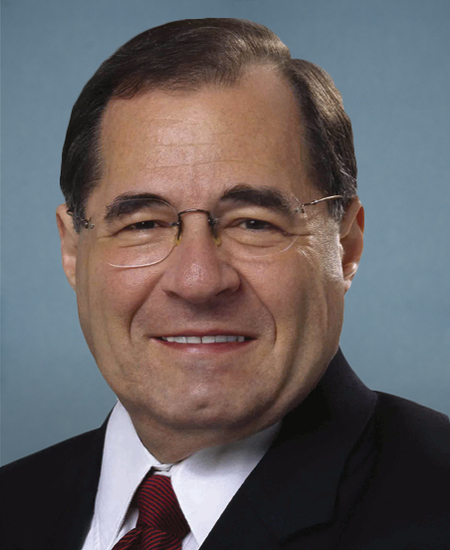
Rep. Jerrold Nadler
Sponsored bills
Maddy summaryThe STAMP Act of 2024 bans state and local governments from taxing menstrual products. It prohibits taxes on items like pads, tampons, menstrual cups, discs, and period underwear that meet industry standards. The law directly affects consumers purchasing these products and state/local governments that previously imposed such taxes. It takes effect 120 days after enactment, removing tax burdens on menstrual products nationwide.
Maddy summaryThis bill requires federal agencies to include specific equity goals in their planning documents. Agencies must set at least one goal (or 20% of total goals, whichever is greater) focused on improving services for underserved communities and individuals, defined as groups systematically denied full participation in economic, social, and civic life. Agencies must also consult with community groups, local governments, and research partners when developing these plans. The law amends existing planning requirements under Titles 5 and 31 of the U.S. Code to implement these changes.
Maddy summaryThis bill requires each federal agency to establish an Equity Advisory Team with at least 10 specific agency roles represented, including leadership from civil rights, data, human capital, and policy teams. It creates an Equity Subcommittee within the Performance Improvement Council to coordinate equitable service delivery guidance across agencies and share best practices. The bill also mandates that Chief Data Officers ensure agencies follow equitable data collection and use standards, and establishes an Equitable Data Working Group to report quarterly on achieving equity in federal data practices. These provisions directly affect all federal agencies by requiring new internal structures and reporting on equitable operations.
Maddy summaryHCONRES 102 is a non-binding symbolic resolution supporting International Transgender Day of Visibility, introduced by multiple House members. It formally encourages the U.S. to observe the day with ceremonies and programs, celebrates transgender community achievements, and recognizes their ongoing fight for equality amid documented discrimination in employment, healthcare, housing, and public spaces. The resolution highlights transgender representation in politics (including 21 state legislators) and historical context, while acknowledging rising anti-transgender legislation. It directly affirms the transgender community's visibility and rights without creating new policies or funding.
Maddy summaryThis bill establishes a federal committee composed of agency heads from Education, Justice, Consumer Financial Protection, and other departments to coordinate oversight of for-profit colleges. The committee will share data across agencies, create a centralized complaint system for students, and publish an annual report with detailed data on for-profit institutions' finances, student outcomes, and complaints. It also creates a "For-Profit College Warning List" that identifies institutions with serious issues like fraud or misrepresentation, providing plain-language summaries for parents and students. The bill directly affects for-profit colleges, their students, and the federal agencies that oversee higher education programs.
Maddy summaryHR 7714, the Colorectal Cancer Early Detection Act, authorizes $200 million annually (2025-2029) for competitive CDC grants to states to improve colorectal cancer awareness and early detection specifically for individuals under age 45. The bill directs states to target high-risk young people (including those with family history, inflammatory bowel disease, genetic syndromes, or symptoms like rectal bleeding) and underserved communities (American Indian/Alaska Native, African American, rural populations, and those with type 2 diabetes). Grantees must implement activities like risk-factor education, clinician training on early detection, patient navigation support, and developing decision tools for early screening before age 45. The program requires states to report on grant usage and outcomes after five years.
Maddy summaryThis bill would provide federal grants to public housing agencies to modernize public housing through energy efficiency upgrades, infrastructure improvements, and renewable energy systems. It requires all public housing to become "zero-carbon homes" that produce enough renewable energy to meet their own consumption within 10 years. The bill includes specific requirements for workforce development, hiring from low- and very low-income communities (40% in year 1, 50% in year 2, 90% after that), and contracting with resident-owned businesses (20% in year 1, 30% in year 2, 50% after that). It also mandates resident and community engagement in planning, and requires public housing agencies to meet specific energy efficiency and water quality standards. The bill directly affects all public housing agencies managing housing for low- and very low-income residents across the United States, including tribal housing entities.
Maddy summaryHR 7770, the Rosie the Riveter Commemorative Coin Act, authorizes the U.S. Mint to produce and sell three commemorative coins honoring women who worked on the U.S. home front during World War II. It specifies $5 gold coins (max 50,000), $1 silver coins (max 400,000), and half-dollar coins (max 750,000), all to be issued between January 1, 2025, and December 31, 2025. Each coin sale includes a surcharge ($35 for gold, $10 for silver, $5 for half-dollar), with all surcharge funds directed to the Rosie the Riveter Trust for maintaining the Rosie the Riveter WWII Home Front National Historical Park and educational programs. The coins will feature designs reflecting the legacy of diverse women workers and must meet specific weight, diameter, and composition standards.
Maddy summaryHR 7753, the "Protecting Communities from Helicopter Noise Act," requires the Federal Aviation Administration (FAA) to study helicopter noise impacts near the Statue of Liberty National Monument. The study will analyze noise volume, health and environmental effects, compliance with existing agreements, and potential solutions like flight path changes or altitude limits within a 15-mile radius of the monument. It directly affects communities living in residential and recreational areas near the monument and the FAA, which must complete the study and submit a report to Congress within 180 days of the bill's enactment. The bill does not impose new regulations but mandates a data-driven assessment to inform future decisions on helicopter operations.