

Maddy summaryHRES 1163 is a ceremonial resolution recognizing the Youth America Grand Prix (YAGP) for its 25-year role as the national youth dance competition in the U.S. It commends YAGP for providing ballet scholarships to students across all 50 states and over 40 countries, awarding more than $5 million in scholarships and supporting over 250,000 dancers. The resolution highlights YAGP’s role in increasing diversity in dance (30% growth in representation) and its impact on developing professional dancers, with over 450 alumni now performing globally. As a symbolic gesture, it does not create new policies or funding but formally acknowledges YAGP’s cultural and educational contributions to dance.
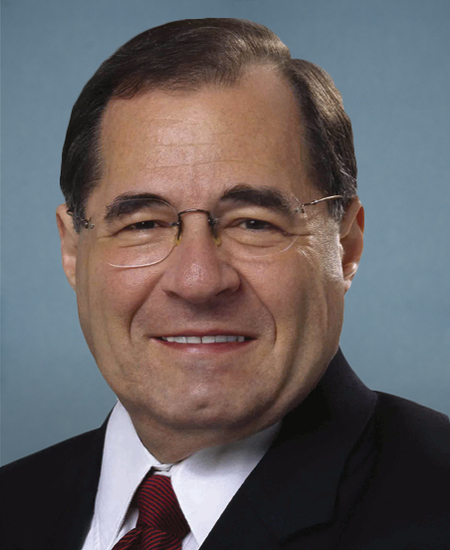
Rep. Jerrold Nadler
Sponsored bills
Maddy summaryHR 8061, the Crime Victims Fund Stabilization Act of 2024, ensures stable funding for the Crime Victims Fund by directing certain False Claims Act collections into it from 2024 through 2029. Specifically, it adds a provision requiring that amounts collected under the False Claims Act (excluding whistleblower rewards and government reimbursement for damages) be deposited into the fund during this period. This directly affects crime victims who rely on the fund for services like counseling and emergency aid, as it prevents potential shortfalls in funding. The bill makes a concrete policy change by redirecting specific federal civil penalties into the fund, rather than altering the fund's existing purposes or eligibility rules.
Maddy summaryThis bill prohibits law enforcement and intelligence agencies from purchasing or obtaining certain personal records from data brokers or other third parties. It defines "covered records" as information about people in the US (including location data, communication contents, and online activity), requiring government agencies to follow FISA procedures to obtain such information. The bill also prohibits using illegally obtained records as evidence in court and limits how agencies can share such information. It directly affects data brokers who sell personal information and government agencies that seek to obtain personal data, strengthening privacy protections for US persons by requiring specific legal procedures.
Maddy summaryThe Second Chance Reauthorization Act of 2024 extends funding for existing federal reentry programs through 2029, replacing previous 2019-2023 funding periods. It specifically adds new provisions requiring state and local reentry projects to include peer recovery services, substance use disorder treatment, case management, overdose reversal medications, and reentry housing. These changes directly affect state/local governments, prisons, and nonprofit organizations administering reentry services for people returning to communities after incarceration. The bill does not create new programs but continues and refines current initiatives focused on reducing recidivism through evidence-based support.
Maddy summaryThe Love Lives On Act of 2023 modifies benefits for surviving spouses of military veterans and service members. It removes an expiration date on the Marine Gunnery Sergeant John David Fry Scholarship for surviving spouses, ensures remarriage doesn't automatically end eligibility for veterans' dependency and indemnity compensation, and expands access to commissary and exchange privileges for remarried surviving spouses. The bill also clarifies that remarried widows or widowers whose subsequent marriage ended (due to death, divorce, or annulment) can still be considered dependents under TRICARE. These changes directly affect surviving spouses of veterans and military members who have remarried or are considering remarriage, providing more consistent benefits regardless of marital status.
Maddy summaryHR 1083, the Caring for Survivors Act of 2023, increases financial support for surviving spouses of veterans. It amends Title 38 to raise dependency and indemnity compensation from a fixed $1,154 to 55% of the monthly compensation rate under section 1114(j), effective six months after enactment. The bill also modifies eligibility for survivors of veterans who died before 1993, ensuring they receive the greater of their current benefit or the new calculation. Additionally, it reduces the required continuous service rating period for survivors from 10 years to five years when a veteran was totally disabled at death. These changes directly affect surviving spouses, particularly those with veterans who died prior to 1993.
Maddy summaryThis bill authorizes federal grants to the Theodore Roosevelt Presidential Library Foundation for establishing a library in Medora, North Dakota, requiring the Foundation to match federal funds two-to-one from non-Federal sources (e.g., state funds or private donations). It directs federal agencies to transfer relevant artifacts and collections to the library without cost for public display. The library will operate independently under the Foundation, with no ongoing federal management or operational involvement.
Maddy summaryThis bill authorizes $5 billion annually (2025-2034) for three key housing programs - Home Investment Partnerships, Community Development Block Grants, and the Housing Trust Fund - but restricts funding to areas already designated with a "high housing cost adjustment" by HUD. It mandates a two-year assessment by the Secretary of Housing and Urban Development to evaluate how area median income (AMI) calculations impact affordability, particularly in high-cost urban areas, including analyzing ZIP code-level metrics and alternatives to AMI. The study must examine rent burdens, income limits for tax-subsidized housing, and the specific effects of high-cost adjustments in places like New York City. The bill directly affects low-income and middle-class families in urban areas where housing costs significantly exceed local median income, aiming to inform potential reforms to housing affordability metrics.
Maddy summaryHRES 1135 is a non-binding resolution supporting the "Rise Up for LGBTQI+ Youth in Schools" initiative. It calls for communities to demand equal educational opportunities, civil rights protections, and an end to exclusion for LGBTQI+ students in K-12 schools, particularly transgender, nonbinary, Black, Indigenous, and disabled youth. The resolution encourages states and school districts to adopt policies prohibiting bias-based bullying, harassment, and erasure - such as inclusive sports participation, bathroom access, and curriculum inclusion - without creating new legal requirements. It references growing state-level restrictions targeting LGBTQI+ students, including sports bans and curriculum censorship, as context for the call to action. The resolution itself does not enact new laws but formally recognizes efforts to foster safer, affirming school environments.
Maddy summaryHR 7940, the Coal Cleanup Taxpayer Protection Act of 2024, changes bonding rules for coal mining reclamation. It bans self-bonding (where mining companies guarantee their own cleanup costs) for both federal and state programs, requiring operators to replace existing self-bonds within 90 days or at permit renewal. The bill also mandates states to submit detailed reports on past bond forfeitures and financial forecasts, and establishes new rules for surety bonds and collateral - prohibiting coal mines, equipment, or coal itself as collateral. These changes directly affect coal mining operators, state regulators, and federal oversight under the Surface Mining Control and Reclamation Act.