

Maddy summaryThis bill clarifies the Holocaust Expropriated Art Recovery Act of 2016 by preventing courts from dismissing claims based on time-related defenses (like laches or adverse possession) or other non-merits arguments (such as the act of state doctrine or forum non-conveniens). It specifically bars these defenses for claims seeking recovery of art looted by Nazis during World War II, ensuring cases are resolved on their merits. The bill applies to all pending cases and new claims filed after enactment, regardless of the victim's nationality. It strengthens the original law's purpose of enabling victims' heirs to pursue rightful recovery without procedural barriers.
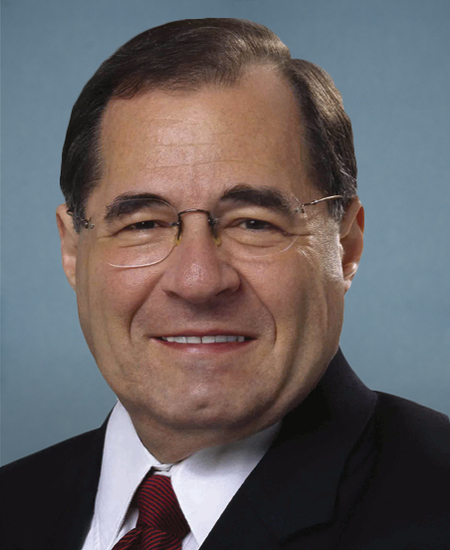
Rep. Jerrold Nadler
Sponsored bills
Maddy summaryThe No Secret Police Act of 2025 requires U.S. Immigration and Customs Enforcement (ICE) and other Department of Homeland Security officers working on border security or immigration enforcement to visibly display their official badges or uniforms and provide identification during detentions or arrests. It prohibits officers from wearing face coverings that conceal their face during these interactions. The bill also mandates that the Department report to Congress about tactical gear policies and research technology to improve badge visibility in different conditions like weather or lighting. These changes aim to increase transparency in immigration enforcement encounters.
Maddy summaryThe CONNECT for Health Act of 2025 expands Medicare telehealth coverage by removing geographic restrictions that limited where patients could receive care, expanding the types of health care providers who can offer telehealth services, and eliminating the requirement for an in-person visit before receiving telemental health services. The bill includes specific provisions to support telehealth use for Native American health facilities, rural health clinics, and Federally Qualified Health Centers. It requires the Centers for Medicare & Medicaid Services to collect and publish data on telehealth usage and impacts, and to develop resources to improve accessibility for people with disabilities and limited English proficiency. Program integrity measures are added to monitor telehealth billing practices and prevent fraud while maintaining coverage for telehealth services during public health emergencies.
Maddy summaryThis bill prohibits federal agencies from penalizing homeless individuals for engaging in life-sustaining activities on public land, such as sleeping, storing belongings, accessing food/water, or using public spaces. It requires federal agencies to provide accessible, free shelter alternatives (like tiny homes with basic amenities or parking with sanitation) if they cannot prove adequate indoor space is available without requiring daily reapplication or charging fees. Individuals harmed by violations can sue federal agencies for injunctive relief and attorney fees, and homeless people facing charges for basic survival activities may use "lack of shelter access" as a legal defense. The bill directly affects homeless individuals using federal public spaces, aiming to replace criminal penalties with housing access.
Maddy summaryThe PRIDE Act of 2025 updates the Internal Revenue Code by replacing gender-specific terms like "husband and wife" with gender-neutral terms such as "married couple" or "spouse" across over 30 tax code provisions. This change affects all married couples filing federal taxes and the IRS, as it modernizes tax law language to be inclusive of all married individuals regardless of gender. The bill makes specific textual amendments to sections dealing with filing status, deductions, credits, and estate tax provisions without creating new tax benefits. It ensures tax law language does not assume the gender of spouses, making the tax code more equitable for all married couples. This is a language update to existing tax law, not a change in tax policy or benefits.
Maddy summaryThis bill makes technical corrections to the Camp Lejeune Justice Act of 2022 to streamline claims for individuals harmed by water contamination at Camp Lejeune. It clarifies the evidence required (30+ days at the base plus a link between contaminants and health harm), specifies that cases must be handled in North Carolina courts (with limited transfer options), and sets attorney fee caps (20% before suit, 25% after). These changes directly affect veterans and civilians who lived at Camp Lejeune and filed claims under the 2022 law. The bill does not create new eligibility but aims to improve the legal process for existing cases.
Maddy summaryThe Women's Health Protection Act of 2025 would protect access to abortion services across the United States by prohibiting states from imposing restrictions that are more burdensome than those on comparable medical procedures. The bill directly affects people seeking abortion care and health care providers by banning restrictions such as mandatory in-person visits, requirements for specific tests, limitations on telemedicine, and rules based on a patient's reason for seeking abortion. It prohibits state laws that single out abortion for unnecessary restrictions while allowing post-viability abortions when necessary to protect a patient's life or health. The bill preempts conflicting state laws and provides enforcement mechanisms through private lawsuits and actions by the Attorney General.
Maddy summaryHR 4108, the Refuge From Cruel Trapping Act, bans the possession or use of body-gripping traps (traps that kill or severely injure wildlife) in National Wildlife Refuges. It directly affects visitors, hunters, and trappers using such traps within refuge boundaries, with limited exceptions for federal agencies managing invasive species or endangered wildlife, dismantling traps, Alaska-specific use, and tribal subsistence hunting. The bill includes penalties of up to $500 per trap, potential jail time, and forfeiture of traps or captured wildlife for violations. It requires the Secretary of the Interior to issue implementing regulations within 120 days but takes effect 120 days after enactment.
Maddy summaryThis bill prohibits state officials from blocking abortion access for patients traveling from other states, including restricting providers who offer legal abortions in their state to out-of-state patients. It protects people traveling across state lines for legal abortions, those assisting such travel, and the interstate transport of FDA-approved abortion medication. Violations can be challenged by the Justice Department or affected individuals through civil lawsuits seeking injunctions and damages. The law applies broadly across all states, territories, and tribal nations, defining "abortion service" to include both medical procedures and related care.
Maddy summaryHR 4104 would expand access to Medicaid, CHIP, and Affordable Care Act (ACA) health coverage for immigrants lawfully present in the U.S., including those with deferred action or pending immigration applications. It removes state-level barriers to Medicaid/CHIP eligibility for lawfully present individuals, treats Federally authorized presence as "lawfully present" for ACA subsidies, and allows states to choose to cover undocumented individuals through Medicaid or CHIP. The bill also extends these changes to Medicare Part A and Part B, ensuring lawfully present immigrants qualify for coverage and subsidies under existing programs. These provisions apply to all federally funded health programs and take effect in 2026 for most ACA-related changes.