

Maddy summaryHR 949, the Insular Area Medicaid Parity Act, removes federal funding caps on Medicaid for U.S. territories, directly affecting Puerto Rico, the U.S. Virgin Islands, Guam, the Northern Mariana Islands, and American Samoa. The bill amends the Social Security Act to eliminate the existing limit on federal Medicaid funding for these territories, allowing them to receive full federal matching funds like states. This change takes effect for fiscal year 2023, ending the previous restriction that required territories to fund a portion of their Medicaid costs themselves. The policy change ensures these territories can access the same level of federal Medicaid support as states.
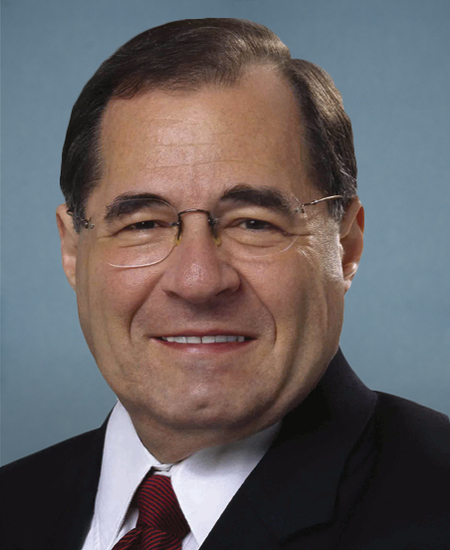
Rep. Jerrold Nadler
Sponsored bills
Kids' Access to Primary Care Act of 2023 This bill modifies payments for Medicaid primary care services. Specifically, the bill applies a Medicare payment rate floor to Medicaid primary care services that are provided after the date of enactment of the bill and extends the payment rate to additional types of practitioners (e.g., obstetricians). The Centers for Medicare & Medicaid Services must conduct a study on the number of children enrolled in Medicaid, the number of providers receiving payment for primary care services, and associated payment rates before and after the bill's implementation.
Maddy summaryThe Heating and Cooling Relief Act significantly expands the Low-Income Home Energy Assistance Program (LIHEAP) to help low-income households with rising energy costs. It increases annual funding to $400 billion for fiscal years 2024-2033 (up from $2 billion), adds $1 billion yearly for cooling assistance during heat events, and expands eligibility to include households with a 3% energy burden. The bill requires states to provide protections against home energy shutoffs and late fees for program participants, and to prioritize energy-efficient, renewable energy solutions. It also creates new "just transition" grants to help communities move away from fossil fuels while reducing energy burdens for vulnerable households.
Maddy summaryThe HELP Copays Act (HR 830) changes how health insurance plans calculate patient cost-sharing. It requires that payments made by third parties (like pharmacies, charities, or discount programs) toward medical costs count toward a patient's deductible, copay, or out-of-pocket limit. This directly affects insured individuals who receive financial assistance, discounts, or product vouchers for healthcare expenses. The law ensures these external payments reduce the patient's actual out-of-pocket costs more quickly, aligning with existing Affordable Care Act and Public Health Service Act requirements.
Aviation-Impacted Communities Act This bill addresses noise mitigation for aviation-impacted communities. ( Aviation-impacted community is defined as a community that is located not more than one mile from any point at which a commercial or cargo jet route is 3,000 feet or less above ground level.) Specifically, the bill expands Airport Improvement Program noise mitigation program funding for aviation-impacted communities that are not currently within the 65 day-night average sound level (DNL) standard; requires the Federal Aviation Administration (FAA) to enter into an agreement with the National Academy of Sciences to conduct a study that summarizes the relevant literature and studies done on aviation impacts worldwide and focuses on large hub commercial airports and surrounding communities, including communities currently outside of the 65 DNL contour; directs the FAA to conduct outreach to aviation-impacted communities to inform them of the opportunity to be a designated community; requires the FAA to devise an action plan that alleviates or addresses the concerns of a designated community; and provides grants for necessary noise mitigation in a designated community for residences, hospitals, nursing homes, adult or child day care centers, schools, and places of worship.
Maddy summaryHR 1014, the Big Oil Windfall Profits Tax Act, imposes a tax on major oil companies (defined as those averaging over 300,000 barrels of crude oil daily in 2019) based on the difference between current Brent crude oil prices and the 2015-2019 average, calculated at 50% of that excess. The tax revenue funds the "Protect Consumers from Gas Hikes Fund," which provides quarterly rebates to eligible individuals (with income limits of $75,000-$150,000 depending on filing status) via refundable tax credits. The bill directly affects large oil producers through the new excise tax and eligible U.S. residents through the rebate program. Key mechanisms include the price-based tax calculation, automatic fund transfers for rebates, and income-adjusted credit limits. The tax applies to crude oil extracted or imported in the U.S., with rebates distributed starting in 2022.
Maddy summaryThis bill authorizes a single Congressional Gold Medal to honor all U.S. Army Dustoff crews who served during the Vietnam War (1962-1973). It recognizes their critical role in evacuating nearly 900,000 wounded personnel, including U.S., South Vietnamese, and allied forces, under extreme combat conditions. The medal, designed with input from the Secretary of Defense, will be presented to the U.S. Army Medical Department Museum for permanent display. Duplicate bronze medals may be sold to cover costs, but the primary action is the commemorative recognition of these crews' service.
Maddy summaryHR 1002, the "Saving the Civil Service Act," restricts how federal government positions can be moved between competitive hiring (where most federal jobs are filled through merit-based exams) and non-competitive "excepted service" positions. The bill prevents agencies from moving positions out of the competitive service unless they fit specific schedules in place as of September 2020, requires Office of Personnel Management (OPM) approval for certain transfers, and mandates employee consent for any position transfer between service types. It also limits the number of employees that can be moved from competitive to excepted service during a presidential term - capping it at 1% of an agency's workforce or five employees, whichever is greater. The bill directly affects federal employees and agencies by making it harder to shift positions out of the competitive hiring system without strict oversight.
Maddy summaryThe SNAP Theft Protection Act of 2023 requires the Secretary of Agriculture to establish regulations allowing states to reissue Supplemental Nutrition Assistance Program (SNAP) benefits stolen through identity theft or skimming (like card skimming). It directs states to identify eligible households and reissue lost benefits meeting specific criteria, directly affecting SNAP recipients who experience benefit theft. Key provisions include setting criteria for reissuance, requiring a 240-day status report to Congress on implementation, and annual reports detailing the value and number of reissued benefits per state. The bill also mandates periodic reviews of electronic benefit transfer security to adapt to evolving theft threats.
Maddy summaryHR 987 authorizes the U.S. Mint to produce commemorative coins honoring Golda Meir, Israel's first female Prime Minister, and the 75th anniversary of U.S.-Israel relations. It specifies three coin types: $5 gold coins (max 50,000), $1 silver coins (max 400,000), and half-dollar clad coins (max 750,000), with detailed weight and composition requirements. All coins will include Golda Meir's image, her name, and commemorative inscriptions, and will be sold during 2026. A surcharge ($35 for $5 coins, $10 for $1 coins, $5 for half-dollars) will be paid to the American Friends of Kiryat Sanz Laniado Hospital Inc. to support its hospital operations.