Restoring Artistic Protection Act of 2022 This bill limits the admissibility of evidence of a defendant's creative or artistic expression against the defendant in a federal criminal case. The term creative or artistic expression means the expression or application of creativity or imagination in the production or arrangement of forms, sounds, words, movements, or symbols, including music, dance, performance art, visual art, poetry, literature, film, and other such objects or media.
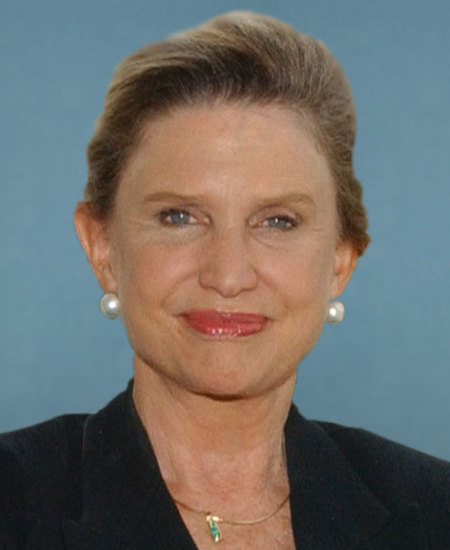
Rep. Carolyn B. Maloney
Sponsored bills
Renewing Immigration Provisions of the Immigration Act of 1929 This bill expands eligibility for a program that authorizes the Department of Homeland Security to, at its discretion, provide lawful permanent resident status to certain long-term residents of the United States, including individuals who are unlawfully present. Currently, this program, sometimes referred to as the Registry program, is only available to eligible non-U.S. nationals ( aliens under federal law) who entered the United States before January 1, 1972. The bill removes this entry cutoff date and opens up the program to eligible individuals who have resided in the United States for at least seven years. Existing requirements (e.g., the individual must not be inadmissible or deportable due to certain grounds related to crime or terrorism) continue to apply.
Children's Safe Welcome Act of 2022 This bill imposes requirements related to the treatment of noncitizen children detained in immigration custody. For example, the bill (1) prohibits an accompanied noncitizen child from being separated from a parent or legal guardian while in immigration custody, except in certain situations; (2) requires each child in immigration custody to receive a legal orientation presentation and have access to legal counsel and child advocates; and (3) requires each unaccompanied noncitizen child in Department of Health and Human Services custody to be placed in the least restrictive setting that most approximates a family and in which any special needs may be met.
Youth Voting Rights Act This bill expands voting access for youth. Specifically, the bill establishes a private right of action to enforce the Twenty-Sixth Amendment, which prohibits denying or abridging the right to vote based on age. Additionally, the bill directs each state to designate as voter registration agencies all offices within public institutions of higher education (IHEs) that provide assistance to students, implement a preregistration process to allow minors who are 16 years or older to register to vote in federal elections that take place when or after the preregistered individual turns age 18, and ensure the availability of polling places on campuses of IHEs (with the availability of waivers). The bill prohibits durational residency requirements for voting in all federal elections. Currently, this prohibition applies only to voting for the offices of President and Vice President. States and local jurisdictions with voter identification requirements must treat IHE-issued student identification cards as voter identification. The Election Assistance Commission (EAC) must make grants to states to increase the involvement of individuals under age 18 in public election activities. The Government Accountability Office must report to Congress on trends related to voter registration, absentee voting, and provisional voting. The EAC must also collect and make publicly available certain data from states.

ATF Data and Anti-Trafficking Accountability Act or the ATF DATA Act This bill directs the Bureau of Alcohol, Tobacco, Firearms and Explosives to report to Congress and make publicly available certain data sets regarding firearms tracing data.
Backlog Justice Act of 2022 This bill requires certain actions to address the backlog of untested sexual assault kits. For example, the bill (1) directs the Bureau of Justice Assistance to establish a publicly accessible online database regarding untested kits, and (2) requires the Department of Justice to provide an increased amount of certain grant funding for states that have in place electronic evidence tracking systems for these kits.
Aaron Salter, Jr., Responsible Body Armor Possession Act This bill establishes a federal statutory framework to restrict the purchase, ownership, or possession of enhanced body armor by civilians. The term enhanced body armor means body armor, including a helmet or shield, with a ballistic resistance that meets or exceeds the ballistic performance standard of Type III armor, as determined using the National Institute of Justice standard in effect at the time the person purchases, owns, or possesses the armor.
Stop Taxes Against Menstrual Products Act of 2022 or the STAMP Act of 2022 This bill makes it unlawful for a state or local government to impose a tax on the retail sale of a menstrual product.
PREA Rights Enforcement Act of 2022 This bill allows a person to file a civil action against the United States for violations in a federal prison of established national standards for the detection, prevention, reduction, and punishment of prison rape.