

Safety From Violence for Healthcare Employees Act or the SAVE Act This bill establishes a new criminal offense for knowingly assaulting or intimidating hospital personnel during the performance of their official duties in a manner that interferes with their performance of the duties or limits their ability to perform the duties. Additionally, the bill authorizes grants to reduce the incidence of violence at hospitals, including violence or intimidation against hospital personnel in the performance of their duties.
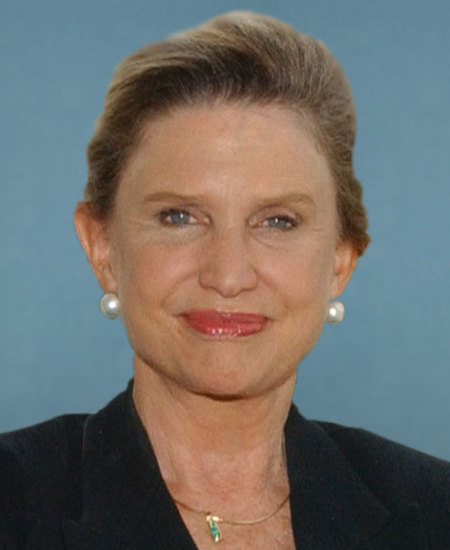
Rep. Carolyn B. Maloney
Sponsored bills
Stealthing Act of 2022 This bill establishes a civil action for the nonconsensual removal of a sexual protection barrier (e.g., a condom). A person may recover compensatory and punitive damages, injunctive and declaratory relief, and such other relief as a court may deem appropriate.
Consent is Key Act This bill directs the Department of Justice to increase a state's allocation of funds under the Sexual Assault Services Program if the state has in effect a law that authorizes civil damages and equitable relief against a person who engages in the nonconsensual removal of a sexual protection barrier (e.g., a condom).
Judicial Ethics and Anti-Corruption Act of 2022 This bill makes various changes to the federal framework governing judicial ethics. Among the changes, the bill prohibits federal judges and Supreme Court Justices from owning individual stocks and securities; requires the Judicial Conference of the United States to issue regulations restricting the solicitation or acceptance of gifts in connection with a private judicial seminar; expresses the sense of Congress that the Code of Conduct for U.S. Judges shall apply to Supreme Court Justices; requires federal judges and Supreme Court Justices to report on each association or interest that would require recusal, including any financial interest of a spouse or minor child who resides in the household; and establishes a committee to review complaints against the Supreme Court.
Strengthen and Tackle Opportunities to Prevent Violence Act of 2022 or the STOP Violence Act of 2022 This bill allows funds under the Antiterrorism and Emergency Assistance Program to be used for efforts to prepare against mass violence and protect public assembly facilities.
Generic Substitution Noninterference Act This bill prohibits drug manufacturers from helping or directing health care providers to limit prescriptions to brand-name drugs when generic versions are available. The Federal Trade Commission and states may enforce this bill through civil actions.
Women in Criminal Justice Reform Act This bill establishes programs and requirements to address the health and wellness of women in the criminal justice system. For example, the bill requires the Bureau of Prisons to (1) ensure that all incarcerated women have access to basic standards of health care specific to their needs, and (2) develop and implement gender-responsive training for its officers and employees.
Stopping Harmful Image Exploitation and Limiting Distribution Act of 2022 or the SHIELD Act of 2022 This bill establishes a new criminal offense related to the distribution of intimate visual depictions. Specifically, it makes it a crime to knowingly distribute (or intentionally threaten to distribute) an intimate visual depiction of an individual (1) with knowledge of or reckless disregard for the individual's lack of consent and reasonable expectation of privacy, and (2) without a reasonable belief that distributing the depiction touches a matter of public concern. A violator is subject to criminal penalties—a fine, a prison term of up to two years for each individual victim depicted, or both.
SESTA/FOSTA Examination of Secondary Effects for Sex Workers Study Act or the SAFE SEX Workers Study Act This bill requires the Department of Health and Human Services (HHS) and the Department of Justice (DOJ) to study the impacts of the reduction in access to certain websites and other interactive computer services resulting from the Allow States and Victims to Fight Online Sex Trafficking Act of 2017 on individuals engaged in adult, consensual sex work. Specifically, HHS must study the impacts of the reduction on the health and safety of individuals engaged in transactional sex while DOJ must study the impacts of the reduction on human trafficking investigations and prosecutions.
Latonya Reeves Freedom Act of 2022 This bill prohibits government entities and insurance providers from denying community-based services to individuals with disabilities that require long-term service or support that would enable such individuals to live in the community and lead an independent life. Specifically, these entities may not discriminate against such individuals in the provision of community-based services by such actions as imposing prohibited eligibility criteria, cost caps, or waiting lists or failing to provide a specific community-based service. Additionally, community-based services must be offered to individuals with such disabilities prior to institutionalization. Institutionalized individuals must be notified regularly of community-based alternatives. The bill requires the Department of Justice to issue regulations requiring government entities and insurance providers to offer community-based long-term services to individuals with such disabilities who would otherwise qualify for institutional placement. Government entities must ensure sufficient availability of affordable, accessible, and integrated housing that is not a disability-specific residential setting or a setting where services are tied to tenancy. Regulations shall also (1) require government entities and insurance providers to perform self-evaluation on current services, policies, and practices and concerning compliance with requirements of this bill; and (2) require government entities to submit a transition plan. The bill provides funds for FY2022 for the Department of Health and Human Services to provide technical assistance with respect to transition plans. The bill allows civil actions by individuals subjected to, or about to be subjected to, a violation of its requirements.