Save our Stages Extension Act This bill extends to March 11, 2023, the time frame during which Shuttered Venue Operators Grant recipients may use grant funds to cover their expenses. These grants provide funds to certain types of entities in the arts and entertainment industry affected by the COVID-19 pandemic. Currently, a recipient may use such funds to cover expenses incurred between March 1, 2020, and December 31, 2021.
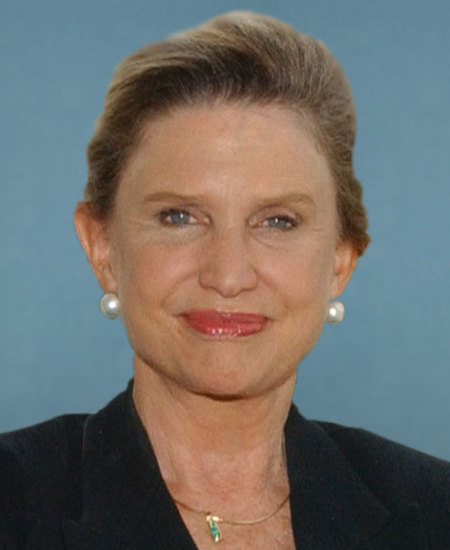
Rep. Carolyn B. Maloney
Sponsored bills
Stop Stalling Access to Affordable Medications This bill makes it an unfair method of competition to submit an objectively baseless petition to the Food and Drug Administration (FDA) in an attempt to interfere with a competitor's application for market approval of a drug. The bill authorizes the Federal Trade Commission to sue an individual or entity that submits such a petition to the FDA. A party found liable in such a lawsuit shall be subject to civil penalties, such as a fine of up to $50,000 for each day that the FDA spent reviewing the baseless petition.
Affordable Prescriptions for Patients Through Promoting Competition Act of 2021 This bill prohibits product hopping by drug manufacturers and authorizes the Federal Trade Commission to sue in court or institute administrative proceedings to enforce this prohibition. Generally, product-hopping describes a situation where, when the patents on a reference drug (or biological product) expire, the manufacturer switches to a follow-on product that is covered by a later-expiring patent. Under this bill, a follow-on product is a changed, modified, or reformulated version of the reference drug that shares an indication (what the drug is used for) with the reference drug. The bill presumes product hopping has occurred when a reference drug manufacturer engages in a hard switch or a soft switch . A hard switch occurs when, after receiving notice of an application for Food and Drug Administration (FDA) approval to market a generic (or biosimilar) version of the reference drug, the manufacturer markets a follow-on product and (1) the FDA withdraws approval of the reference drug at the manufacturer's request, or (2) the manufacturer announces the withdrawal or discontinuance of the reference drug or destroys the drug's inventory in a manner that impedes generic competitors. Furthermore, the bill presumes that a soft switch occurred if a reference drug manufacturer (1) markets a follow-on product, and (2) takes actions that disadvantage the reference drug relative to that follow-on product in a way that impedes competition from a generic drug. A drug manufacturer may rebut these presumptions by demonstrating that its conduct was not intended to limit competition.
Preserve Access to Affordable Generics and Biosimilars Act This bill authorizes the Federal Trade Commission (FTC) to initiate proceedings against parties to any agreement resolving or settling a patent infringement claim in connection with the sale of a drug or biological product. Such an agreement is presumed to have anticompetitive effects and is a violation of this bill if the filer of the generic drug or biosimilar application receives anything of value and agrees to limit or forego research, development, manufacturing, marketing, or sales of the generic drug or biosimilar. An agreement is exempted if the only consideration granted to the generic manufacturer is (1) the right to market its product prior to the expiration of any statutory exclusivity, (2) a payment for reasonable litigation expenses, or (3) a covenant not to sue on any claim that the generic drug or biosimilar infringes a patent. An agreement is also exempt if the agreement's pro-competitive benefits outweigh the anticompetitive effects. When a generic or biosimilar drug manufacturer enters into an agreement with another drug manufacturer related to the manufacturing, marketing, or sale of a drug, the manufacturers must certify that the material they have given the FTC concerning the agreement contains the complete agreement and any agreements related to that main agreement, including descriptions of any oral agreements or representations. The bill imposes penalties for violations of this bill, including the forfeiture of the 180-day marketing exclusivity period for a generic drug.

Chai Suthammanont Remembrance Act of 2021 This bill requires federal agencies to develop and disclose safety plans that contain certain information for on-site employees and contractors during the public health emergency relating to COVID-19 (i.e., coronavirus disease 2019). Specifically, the bill requires each agency to post a safety plan on its website that includes descriptions of (1) the personal protective equipment that the agency will provide to its on-site employees and contractors; (2) protections for employees whose work requires them to travel off-site; (3) testing, contact-tracing, and vaccination protocols; and (4) protocols that ensure the continuity of operations in the event it is necessary to reverse on-site requirements. Each agency's Office of the Inspector General must report on whether the agency has published and implemented its safety plan.
This bill expresses the sense of the House of Representatives that Congress and the President should examine and support ways to expand access to contraceptives.
This resolution recognizes the importance of ending the stigmatization of substance use disorder.
Veteran's Electronic Transcript of Residency for Entering New Tenancies Act or the VET RENT Act This bill requires the Department of Defense to establish and implement a standard record of housing history for members of the Armed Forces who reside in housing provided by the United States.
Medically Tailored Home-Delivered Meals Demonstration Pilot Act of 2021 This bill requires the Centers for Medicare & Medicaid Services to establish a demonstration program to allow hospitals to provide medically tailored, home-delivered meals to Medicare beneficiaries who have a diet-impacted disease (e.g., kidney disease) and have daily living limitations. Participating hospitals must (1) retain a physician, registered dietitian or nutrition professional, or clinical social worker to screen, monitor, and coordinate services for individuals who receive meals through the program; and (2) contract with experienced organizations for meal delivery. Hospitals may choose to also provide meals to an individual's primary caregiver or to a dependent under the age of 18 who resides in the same household.
ESP Family Leave Act This bill allows education support professionals to meet the hours of service requirements for family and medical leave if they have worked a number of hours equal to not less than 60% of the total monthly hours expected for their job descriptions and duties, as assigned for the previous school year. Education support professionals are employees within a public school or public institution of higher education which may include specified staff, such as paraeducators, administrative support staff, custodians, skilled trade workers, and nursing support staff. The Department of Labor may provide a method for calculating such leave for these professionals.