

Enhanced Background Checks Act of 2021 (Sec. 2) This bill revises background check requirements applicable to proposed firearm transfers from a federal firearms licensee (e.g., a licensed gun dealer) to an unlicensed person. Specifically, it increases the amount of time, from 3 business days to a minimum of 10 business days, that a federal firearms licensee must wait to receive a completed background check prior to transferring a firearm to an unlicensed person. (This type of transaction is often referred to as a default proceed transaction.) If a submitted background check remains incomplete after 10 business days, then the prospective purchaser may submit a petition for a final firearms eligibility determination. If an additional 10 days elapse without a final determination, then the federal firearms licensee may transfer the firearm to the prospective purchaser. (Sec. 3) The Government Accountability Office must report on the extent to which the changes have prevented firearms transfers to prohibited persons. (Sec. 4) The Federal Bureau of Investigation must report on the number of petitions it receives for final federal firearms determinations. (Sec. 5) The Department of Justice, in consultation with the National Resource Center on Domestic Violence and Firearms, must report on further amendments to the background check process that would likely reduce the risk of death or great bodily harm to victims of domestic violence, domestic abuse, dating partner violence, sexual assault, and stalking.
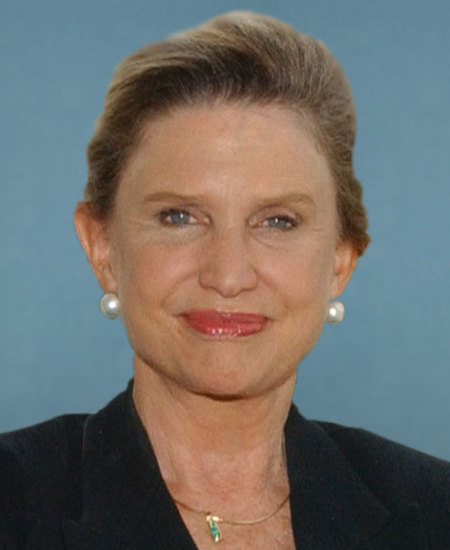
Rep. Carolyn B. Maloney
Sponsored bills
This resolution expresses support for the designation of a National Leading Entertainment and Arts through Diversity Month to emphasize the importance of increased representation across the entertainment industry.
Maddy summaryHRES 1141 is a symbolic resolution designating the week of May 23-27, 2022, as "Educator Mental Health Awareness Week." It expresses congressional support for recognizing the mental health challenges faced by teachers and school staff, particularly during the pandemic. The resolution highlights statistics showing heightened stress, depression, and anxiety among educators, as reported in 2021 surveys. It urges awareness of educator well-being but does not create new programs, funding, or legal requirements. The resolution serves only as a non-binding statement of support.
Obstetric Fistula Prevention, Treatment, Hope, and Dignity Restoration Act of 2022 This bill authorizes the President to provide assistance to support the treatment of obstetric fistula and address the social, structural, health, and human rights issues that lead to obstetric fistula. Such assistance shall promote the Campaign to End Fistula and the International Obstetric Fistula Working Group led by the United Nations Population Fund.
Virginia Graeme Baker Pool and Spa Safety Reauthorization Act of 2022 This bill reauthorizes through FY2027 and expands swimming pool safety grants and education and awareness programs.
Violence Against Women Reauthorization Act of 2021 This bill modifies and reauthorizes through FY2026 programs and activities under the Violence Against Women Act that seek to prevent and respond to domestic violence, sexual assault, dating violence, and stalking. The bill also authorizes new programs, makes changes to federal firearms laws, and establishes new protections to promote housing stability and economic security for victims of domestic violence, sexual assault, dating violence, and stalking.
Access to Baby Formula Act of 2022 This bill authorizes the Department of Agriculture (USDA) to take certain actions to address emergencies, disasters, and supply chain disruptions (particularly the shortage of infant formula in the United States) affecting participants of the Special Supplemental Nutrition Program for Women, Infants, and Children (WIC). The bill directs USDA to require each infant formula cost containment contract to include remedies in the event of an infant formula recall, including how an infant formula manufacturer would protect against disruption to WIC participants in the state. USDA must, within 30 days, ensure there is a memorandum of understanding with the Department of Health and Human Services that includes procedures for coordination and information sharing regarding any supply chain disruption, including a supplemental food recall. The bill also authorizes USDA to waive or modify any WIC qualified administrative requirement during emergencies, disasters, and supply chain disruptions. Specifically, USDA may waive or modify such a requirement for one or more state agencies if (1) the requirement cannot be met by state agencies during the emergency, disaster, or disruption; and (2) the modification or waiver is necessary to provide assistance to WIC participants and does not substantially weaken the nutritional quality of supplemental foods. For example, USDA may waive the maximum monthly allowance for infant formula. The bill establishes notification requirements for USDA and state agencies related to supply chain disruptions.
Aviation-Impacted Communities Act This bill addresses noise mitigation for aviation-impacted communities. ( Aviation-impacted community is defined as a community that is located not more than one mile from any point at which a commercial or cargo jet route is 3,000 feet or less above ground level.) Specifically, the bill expands Airport Improvement Program noise mitigation program funding for aviation-impacted communities that are not currently within the 65 day-night average sound level (DNL) standard; requires the Federal Aviation Administration (FAA) to enter into an agreement with the National Academy of Sciences to conduct a study that summarizes the relevant literature and studies done on aviation impacts worldwide and focuses on large hub commercial airports and surrounding communities, including communities currently outside of the 65 DNL contour; directs the FAA to conduct outreach to aviation-impacted communities to inform them of the opportunity to be a designated community; requires the FAA to devise an action plan that alleviates or addresses the concerns of a designated community; and provides grants for necessary noise mitigation in a designated community for residences, hospitals, nursing homes, adult or child day care centers, schools, and places of worship.
Federal Employees Sustainable Investment Act This bill establishes a new fund—the Corporate Responsibility Stock Index Fund—as an investment option under the Thrift Savings Plan. The Corporate Responsibility Stock Index Fund must be invested in a stock portfolio designed to replicate the performance of a commonly recognized, passively managed index comprised of stocks that meet certain minimum criteria related to corporate responsibility.
Targeting Resources to Communities in Need Act of 2022 This bill addresses funding for areas of persistent poverty. Specifically, the bill requires the Bureau of the Census to publish a list of all areas of persistent poverty and annually update the list; the Office of Management and Budget (OMB) to implement guidance to increase the share of federal investments targeted to areas of persistent poverty and other areas with high and persistent poverty, and to report annually to Congress; and the Government Accountability Office to report on the measures implemented by the OMB under this bill, including an assessment regarding the impact of the measures on increasing federal investments spent in the affected areas.