Maddy summaryHRES 1525 is a non-binding House resolution condemning antisemitism spread by public figures, celebrities, and officials on social media. It cites the Anti-Defamation League’s report of 2,717 antisemitic incidents in 2021 (a 34% increase from 2020) and urges influential people to use their platforms to speak out against antisemitism. The resolution calls for unity with Jewish communities and emphasizes the need for Holocaust education to combat rising hate. As a symbolic measure, it does not create new laws or penalties but formally expresses the House’s stance against antisemitic rhetoric.
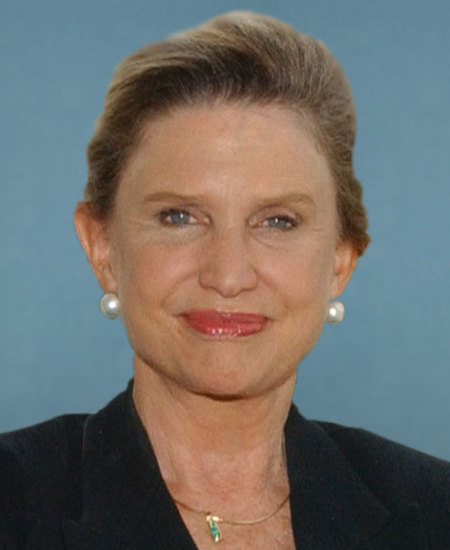
Rep. Carolyn B. Maloney
Sponsored bills
National Archives and Records Administration (NARA) Modernization Act This bill removes gendered pronouns from the United States Code pertaining to the responsibilities of the Archivist and other senior officials at NARA.
VA Employee Fairness Act of 2021 This bill repeals provisions excluding any matter or question concerning professional conduct or competence; peer review; or the establishment, determination, or adjustment of employee compensation from the applicability of collective bargaining rights for Veterans Health Administration employees.
Maddy summaryHRES 1522 is a symbolic resolution condemning the November 19, 2022, mass shooting at Club Q, an LGBTQ+ nightclub in Colorado Springs that killed five people and injured 22. It honors the victims, offers condolences to their families, and expresses support for those impacted by the attack. The resolution also highlights the broader context of anti-LGBTQ+ violence and hate, including the Pulse nightclub tragedy, and calls for an end to anti-LGBTQ+ hate and violence. As a ceremonial resolution, it contains no new laws or funding but serves as a formal statement of solidarity with the LGBTQ+ community.
Equal Access to Green cards for Legal Employment Act of 2022 or the EAGLE Act of 2022 This bill modifies requirements related to employment-based visas and addresses related issues. The bill increases the per-country cap on family-based immigrant visas from 7% of the total number of such visas available that year to 15% and eliminates the per-country cap for employment-based immigrant visas. The bill establishes transition rules for employment-based visas such as (1) reserving a percentage of EB-2 (workers with advanced degrees or exceptional ability) and EB-3 (skilled and other workers) visas for individuals not from the two countries with the largest number of recipients of such visas, and (2) allotting a number of visas for professional nurses and physical therapists. The bill imposes additional requirements on an employer seeking an H-1B visa, such as prohibiting (1) an employer from advertising that a position is only open to H-1B applicants or that H-1B applicants are preferred, and (2) certain employers from having more than half of their employees as nonimmigrant visa workers. The Department of Labor shall create a publicly available website where an employer seeking an H-1B visa must post certain information about the open position. The bill also expands Labor's authority to review and investigate H-1B applications for fraud or misrepresentations. The bill also allows certain aliens to obtain lawful permanent resident status if the alien (1) is in the United States as a nonimmigrant, (2) has an approved immigrant visa petition, and (3) has waited at least two years for a visa.
This resolution expresses that the House of Representatives is committed to building upon the 20 years of success of the George McGovern-Robert Dole International Food for Education and Child Nutrition Program, complementing humanitarian assistance efforts and development programs through the continued implementation of the McGovern-Dole Program to address global food insecurity and create conditions for peace and stability, and supporting U.S. farmers, millers, shippers, and commodity groups that provide agricultural commodities for use in the McGovern-Dole Program to help combat global malnutrition and food insecurity and advance global education.
Respect for Marriage Act This act provides statutory authority for same-sex and interracial marriages. Specifically, the act replaces provisions that define, for purposes of federal law, marriage as between a man and a woman and spouse as a person of the opposite sex with provisions that recognize any marriage between two individuals that is valid under state law. (The Supreme Court held that the current provisions were unconstitutional in United States v. Windsor in 2013.) The act also replaces provisions that do not require states to recognize same-sex marriages from other states with provisions that prohibit the denial of full faith and credit or any right or claim relating to out-of-state marriages on the basis of sex, race, ethnicity, or national origin. (The Supreme Court held that state laws barring same-sex marriages were unconstitutional in Obergefell v. Hodges in 2015; the Court held that state laws barring interracial marriages were unconstitutional in Loving v. Virginia in 1967.) The act allows the Department of Justice to bring a civil action and establishes a private right of action for violations. The act does not (1) affect religious liberties or conscience protections that are available under the Constitution or federal law, (2) require religious organizations to provide goods or services to formally recognize or celebrate a marriage, (3) affect any benefits or rights that do not arise from a marriage, or (4) recognize under federal law any marriage between more than two individuals.

International Violence Against Women Act of 2022 This bill requires a U.S. global strategy to prevent and respond to violence against women and girls. The bill establishes in the Department of State an Office of Global Women's Issues, which shall be headed by an Ambassador-at-Large for Global Women's Issues. The Ambassador-at-Large shall (1) coordinate U.S. government efforts regarding gender equality and the advancement of women and girls in foreign policy, and (2) develop or update periodically a U.S. global strategy to prevent and respond to gender-based violence. The bill establishes in the U.S. Agency for International Development the position of Senior Coordinator for Gender Equality and Women's Empowerment who shall coordinate policies, programs, and funding regarding gender equality and women's empowerment.
Working for Immigrant Safety and Empowerment Act of 2022 or the WISE Act of 2022 This bill addresses immigration-related issues for victims of domestic violence and other crimes. For example, the bill (1) extends the period of admission into the United States for certain spouses or children who derive their immigration status from an individual who is abusing the spouse or child; and (2) establishes a presumption that an individual with certain pending applications, such as for a visa for a victim of human trafficking or certain other crimes, should be released from immigration detention without conditions.
Veteran Service Recognition Act of 2022 This bill addresses immigration-related issues pertaining to noncitizen (or non-U.S. national) military veterans, including by authorizing the Department of Homeland Security (DHS) to provide lawful permanent resident status to a veteran subject to removal. If a noncitizen veteran appears to be eligible for lawful permanent resident status under this bill, that veteran must receive a reasonable opportunity to apply for such status and may not be removed until there is a final administrative decision on the veteran's eligibility. For the purposes of providing such status under this bill, DHS may waive any applicable grounds of inadmissibility, except for certain crime- or security-related grounds. The bill also extends certain deadlines relating to obtaining citizenship after serving in the Armed Forces. DHS must create a system for identifying noncitizens who are or may be veterans. Before initiating removal proceedings against a noncitizen, DHS must attempt to determine whether the noncitizen is a veteran. DHS must ensure that veteran status is considered in immigration proceedings. The bill also requires U.S. Citizenship and Immigration Services (USCIS) and the Department of Defense to take certain actions to facilitate opportunities for military recruits and veterans to obtain U.S. citizenship, such as by training Judge Advocate General Corps members to act as liaisons between the Armed Forces and USCIS on servicemember citizenship applications. The bill also establishes the Military Family Immigration Advisory Committee to provide recommendations on cases involving the removal of a servicemember, veteran, or certain family members of a servicemember or veteran. Such an individual may not be removed until the committee has provided a recommendation to DHS about the individual's case, unless the individual is inadmissible due to a conviction for an aggravated felony. The bill also waives certain grounds of inadmissibility (e.g., being unlawfully present in the United States) for certain noncitizens applying for lawful permanent resident status as an immediate relative of a U.S. citizen who has served at least two years in the Armed Forces.