No Shame at School Act of 20 22 This bill establishes requirements for the treatment of a child who is participating in the National School Lunch Program or the School Breakfast Program and owes unpaid school meal fees. It also requires local educational agencies to certify certain children (e.g., homeless children) as categorically eligible for free lunches or breakfasts without an application.
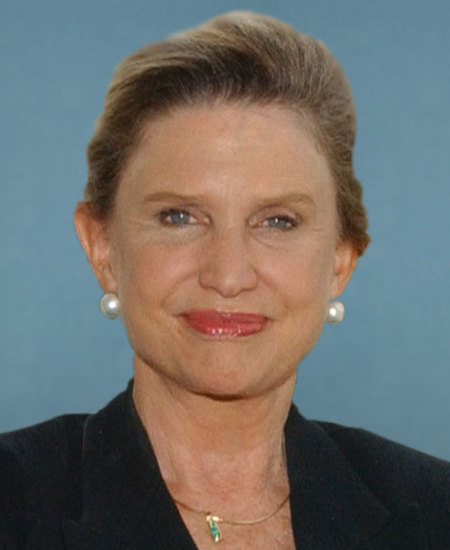
Rep. Carolyn B. Maloney
Sponsored bills
Right to Contraception Act This bill sets out statutory protections for an individual's right to access and a health care provider's right to provide contraception and related information. Contraception refers to an action taken to prevent pregnancy, including the use of contraceptives (i.e., a device or medication used to prevent pregnancy), fertility-awareness based methods, and sterilization procedures. Generally, the bill prohibits measures that single out and impede access to contraception and related information. However, a party may defend against a claim that a measure violates the bill's prohibitions by demonstrating, through clear and convincing evidence, that the measure significantly advances access to contraception and cannot be achieved through less restrictive means. The Department of Justice, individuals, or health care providers may bring a lawsuit to enforce this bill, and states are not immune from suits for violations.
LGBTQI+ and Women's History Education Act of 2022 This bill directs the National Museum of American History of the Smithsonian Institution to carry out, among other things (1) the development and national dissemination of accurate, relevant, and accessible national resources for classrooms to administer LGBTQI+ and women's history education in an inclusive and intersectional approach; (2) the development, national dissemination, and implementation of principles of sound pedagogy for administering LGBTQI+ and women's history education; and (3) the development, operation, and expansion of a teacher fellowship program to cultivate and support leaders in LGBTQI+ and women's history education. In addition to the activities described in this bill, the museum shall develop and maintain on its website content designated for educators, students, and families to improve their awareness and understanding of LGBTQI+ and women's history education.
Reproductive Health Travel Fund Act of 2022 This bill authorizes the Department of Health and Human Services to award grants to pay for travel, childcare, and other expenses of an individual seeking access to abortion services. Eligible grant recipients must be nonprofit or community-based organizations that assist individuals seeking abortion services through programs that are unbiased and medically and factually accurate. The grants may not be used to pay for abortion procedures.
No Tax Breaks for Union Busting (NTBUB) Act This bill denies employers a tax deduction for any expenditures incurred for attempting to influence their employees with respect to labor organizations or labor organization activities, such as elections, labor disputes, and collective actions. The bill requires employers to report on their attempts to influence their employees with respect to labor organizations and their activities.
Preventing Personal Conflicts of Interest in Federal Acquisition Act This bill addresses conflicts of interest in federal acquisition. Specifically, the bill directs the Federal Acquisition Regulatory Council to (1) expand the scope of rules to prevent personal conflicts of interest beyond the limited types of functions or services that are currently addressed in a specified part of the Federal Acquisition Regulation (FAR), and (2) revise the FAR to address the functions and services that give rise to heightened concerns for personal conflicts of interest. The bill similarly expands the scope of the Office of Federal Procurement Policy's standard policy to prevent personal conflicts of interest by contractor employees performing relevant acquisition functions for or on behalf of a federal agency or department. The bill prohibits contractors, contractor employees, and subcontractors and their employees from providing services supporting the regulatory, policymaking, or adjudicative functions of an agency at the same time that the contractor, employees, or subcontractor provides services to an entity regulated by, or having non-routine business before, the agency, except where there is a compelling reason, as documented in writing. The Department of Justice may bring a civil action in U.S. district court for violations of this bill.

Preventing Organizational Conflicts of Interest in Federal Acquisition Act This bill addresses conflicts of interest in federal acquisitions. Specifically, the bill directs the Federal Acquisition Regulatory Council to (1) identify contracting methods, types, and services that raise heightened concerns for potential organizational conflicts of interest beyond those currently addressed in the Federal Acquisition Regulation (FAR); and (2) revise the FAR to address organizational conflicts of interest and require executive agencies to take certain actions. The council must revise the FAR to provide and update definitions related to organizational conflicts of interest, to include specified contractor relationships; provide executive agencies with solicitation and contract provisions that require contractors to disclose information relevant to potential organizational conflicts of interest and limit future contracting with respect to potential conflicts; and require executive agencies to establish or update agency conflict of interest procedures to implement these FAR revisions and address agency-specific conflict of interest issues.
Justice in Power Plant Permitting Act This bill addresses renewable energy use and facility contracting requirements and also establishes the Just Energy Transition Fund to, among other purposes, support projects to replace plants that are denied under the revised Clean Air Act permitting process established by this bill.
Improving Digital Identity Act of 2021 This bill establishes the Improving Digital Identity Task Force to establish a government-wide effort to develop secure methods for governmental agencies to validate identity attributes to protect the privacy and security of individuals and support reliable, interoperable digital identity verification in the public and private sectors. The National Institute of Standards and Technology (NIST) shall develop and periodically update a framework of standards, methodologies, procedures, and processes as a guide for federal, state, and local governments to follow when providing services to support digital identity verification. The Department of Homeland Security (DHS) shall award grants to states to upgrade systems that provide drivers' licenses or other types of identity credentials to support the development of highly secure, interoperable state systems that enable digital identity verification. The Government Accountability Office shall submit to Congress a report that includes (1) an analysis of legal and regulatory requirements with respect to the collection and retention of Social Security numbers by nongovernmental organizations, and (2) a recommendation on the necessity and effectiveness of any such legal and regulatory requirement analyzed and the use of a form of identification other than a Social Security number. DHS shall issue binding operational directives to federal agencies to implement (1) the Digital Identity Guidelines published by NIST; and (2) the memorandum of the Office of Management and Budget issued on May 21, 2019, which includes the subject Enabling Mission Delivery through Improved Identity, Credential, and Access Management .
Expanding Access to Family Planning Act This bill provides, subject to specified conditions, funding through FY2032 for federally funded family planning services and clinics. In particular, the funds must be used for (1) grants and contracts that support the provision of family planning services, and (2) clinic infrastructure (e.g., construction and renovation of clinics). Clinics that receive funding to provide family planning services must offer each patient with a positive pregnancy test the opportunity for nondirective counseling on (1) prenatal care and delivery; (2) infant care, foster care, and adoption; and (3) pregnancy termination. This counseling must include referrals if requested by a patient. Additionally, if a funding recipient makes subawards for the provision of family planning services, the recipient may not prohibit an entity from participating in a subaward program for reasons other than the entity's inability to provide family planning services.