

Atrocity Crimes, Relief and Accountability Act or the ACRA Act The bill requires the State Department and the U.S. Agency for International Development to provide assistance to suspected victims, survivors, and witnesses of war crimes; establishes a Ukraine victims trust fund; and establishes a Ukraine atrocity crimes rewards fund. The bill also allows the International Criminal Court to conduct limited activities in the United States relating solely to foreign nationals suspected of committing war crimes in Ukraine.
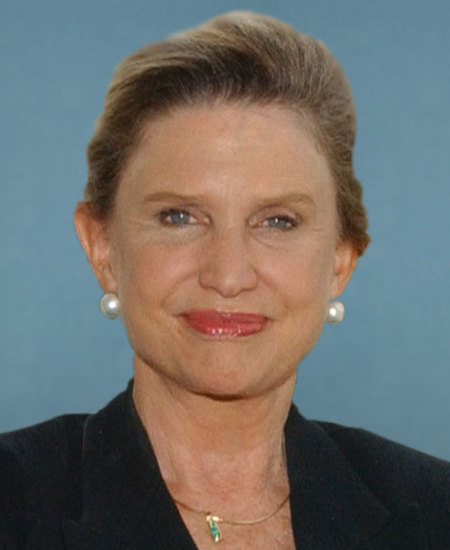
Rep. Carolyn B. Maloney
Sponsored bills
Shirley Chisholm Congressional Gold Medal Act This bill provides for the posthumous presentation of a Congressional Gold Medal in commemoration of Shirley Chisholm, in recognition of her activism, independence, and groundbreaking achievements in politics, election as the first African American woman in Congress, and campaign to be the first African American to gain the nomination of a major political party for President of the United States. Following its award, the gold medal shall be given to the Smithsonian Institution where it shall be available for display and research.
Registration for Index-Linked Annuities Act This bill requires the Securities and Exchange Commission (SEC) to create a new form for the registration of index-linked annuities to ensure that a purchaser can make a knowledgeable decision. The bill defines a registered index-linked annuity as an annuity that is deemed a security, that must be registered with the SEC, and that is issued by an insurance company subject to state supervision. Furthermore, the returns of these annuities (1) are based on the performance of a specified benchmark index or rate, and (2) may be subject to a market value adjustment if amounts are withdrawn early.
Overdraft Protection Act of 2021 This bill prohibits a financial institution from engaging in unfair or deceptive acts in connection with overdraft coverage. Each financial institution that offers overdraft coverage for accounts must disclose overdraft coverage fees. It must also disclose that the consumer's transaction may be declined if there are insufficient funds in the related account, and the consumer will not be charged a fee if such transaction is declined. A financial institution must provide certain other disclosures regarding its overdraft protection program, including prompt notification of the account's overdraft status. The bill limits the number of overdraft fees a consumer may be charged each month and year, and provides that such fees must be reasonable. The bill prohibits an overdraft coverage fee if the overdraft results solely from a debit hold amount that exceeds the actual dollar amount of the transaction. The bill also prohibits a financial institution from charging a non-sufficient fund fee for any automated teller machine or debit card transaction, or reporting negative information regarding consumer use of overdraft coverage to any consumer reporting agency when the overdraft amounts and coverage fees are paid under the terms of an overdraft coverage program.
American Families United Act This bill authorizes the Department of Homeland Security (DHS) or the Department of Justice (DOJ) to exercise discretion in certain immigration cases. The bill also removes certain requirements related to birthright citizenship. Under this bill, DOJ or DHS may, on a case-by-case basis, exercise discretion by declining to remove an alien or bar an alien from entering the United States to prevent hardship for the alien's U.S. citizen spouse, parent, or child. However, DOJ or DHS may not exercise this discretion if the alien is removable or inadmissible due to certain grounds, including specified crime- and security-related grounds. The bill also removes certain requirements related to birthright citizenship for a child born outside of the United States to one U.S. citizen parent and one alien parent. Specifically, the bill removes a provision that requires the U.S. citizen parent to be physically present in the United States for at least five years before the child's birth in order for the child to acquire U.S. citizenship at birth.
This resolution recommends that the Department of Health and Human Services declare a public health emergency to respond to the spread of monkeypox in countries, including the United States, where the disease is not endemic. (Monkeypox is a viral disease that is endemic to parts of Africa and causes symptoms similar to, but less severe than, smallpox.)
Equal Access to Justice for Victims of Gun Violence Act of 2022 This bill removes limitations on the civil liability of gun manufacturers and the disclosure of gun trace data in civil actions. Specifically, the bill repeals the Protection of Lawful Commerce in Arms Act, which prohibits civil actions against a firearm or ammunition manufacturer, seller, importer, dealer, or trade association for damages resulting from the criminal or unlawful misuse of a firearm. Additionally, the bill states that firearms trace data maintained by the Bureau of Alcohol, Tobacco, Firearms and Explosives is not immune from legal process. Such data is subject to discovery; is admissible as evidence; and may be used, relied on, or disclosed in a civil action or administrative proceeding.
Maddy summaryThis resolution (HRES 1245) is a symbolic gesture expressing the House's support for designating November 22, 2022, as "Kimchi Day." It acknowledges kimchi's cultural significance in Korean cuisine (dating back over 2,000 years), its UNESCO recognition as intangible cultural heritage, and its health benefits as a probiotic food. The resolution does not create new laws or affect any individuals or policies; it simply formally supports the designation of a day to celebrate kimchi's cultural and culinary role. It was introduced by representatives with Korean-American connections and references kimchi's growing popularity in the U.S. as an example of multicultural exchange.
This resolution recognizes the mental health concerns faced by adolescents and the need for adequate mental health resources to address those concerns, particularly among minority populations.
Fashioning Accountability and Building Real Institutional Change Act or the FABRIC Act This bill requires garment industry employers to pay at least the hourly minimum wage and prohibits piece rate pay. Garment manufacturers and contractors also must register with the Department of Labor.