

Maddy summaryThis bill authorizes border states (adjacent to the U.S. northern or southern border) to place movable, temporary structures on federal land near the border for security purposes without needing a special use permit. States must notify the relevant federal agency (e.g., Bureau of Land Management or Forest Service) at least 45 days before placement, and structures can remain for up to one year, with possible 90-day extensions if U.S. Customs and Border Protection determines "operational control" hasn't been achieved. The bill directly affects border states and federal land management agencies by streamlining temporary border security measures on public lands.
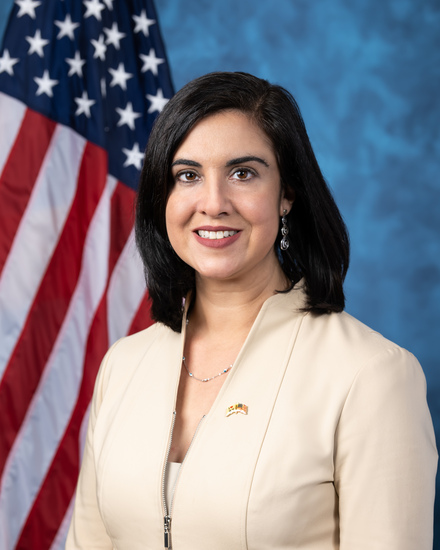
Rep. Nicole Malliotakis
Sponsored bills
Maddy summaryThe HOPE Act of 2024 would establish HOPE Accounts, tax-advantaged savings accounts for paying qualified medical expenses. These accounts would allow individuals to save for medical costs with tax-free growth and distributions, with contribution limits of up to $4,000 per month for self-only coverage or $8,000 for family coverage. To qualify, individuals must have minimum essential health coverage and cannot have other health savings accounts like HSAs or FSAs. Contributions are generally not deductible but may be excluded from gross income for lower-income individuals, and distributions for qualified medical expenses would be tax-free. The bill also includes rules for employer contributions and coordination with existing health savings mechanisms.
Maddy summaryHR 9374, the Stand with Israel Act, prohibits U.S. federal funds from being used to support the United Nations or its entities if they restrict Israel's full participation as a member state. The bill specifically blocks funding for any UN body that expels, downgrades, or suspends Israel's membership or limits its ability to participate equally with other nations. This affects U.S. government contributions to the UN, requiring the Department of State and other agencies to halt funding for such UN actions. The key mechanism is a new provision in the UN Participation Act that mandates this funding restriction whenever Israel's UN participation is impaired.
Maddy summaryThe SAFER at the Border Act prohibits the U.S. Department of Homeland Security from temporarily admitting (paroling) certain individuals at the border. It defines "known terrorists" (those arrested, charged, or convicted for terrorism), "suspected terrorists" (reasonably suspected of terrorism), and "special interest aliens" (those with potential terrorism links based on travel patterns). The bill explicitly bans parole for these individuals, even for humanitarian reasons or public benefit, and also prohibits parole for refugees. Additionally, it allows states to sue the Department of Homeland Security if they suffer financial harm exceeding $100 from the parole of such individuals.
Maddy summaryThis bill raises the tax on investment income for private colleges and universities from 1.4% to 10% and adds a 20% rate for institutions whose tuition increases outpace inflation (defined as exceeding the Consumer Price Index over a 3-year period for all first-time, full-time undergraduates). It lowers the income threshold triggering the tax from $500,000 to $250,000, expanding the number of schools subject to the tax. The changes apply to taxable years beginning after December 31, 2024. The bill directly affects private higher education institutions with significant investment income, particularly those increasing tuition faster than inflation.
Maddy summaryThis bill ensures that Khalid Shaikh Mohammad, Walid Muhammad Salih Mubarak Bin ‘Attash, and Mustafa Ahmed Adam al Hawsawi - detainees held at Guantanamo Bay for their alleged roles in the September 11, 2001, attacks - remain subject to military trial under Chapter 47A of Title 10, United States Code, regardless of any plea agreements they may have entered. It explicitly allows the death penalty as a sentencing option in their trials and mandates strict confinement conditions: solitary confinement at Guantanamo Bay, no contact with foreign nationals, no unauthorized psychological treatment, and no transfer to the U.S. mainland or any other country. The bill directly affects only these three individuals and modifies procedural and sentencing rules for their specific cases.
Maddy summaryHR 9299, the IRAN Act, requires the U.S. Secretary of State to lead federal efforts promoting internet freedom and access to information in Iran. It amends a 2012 law to mandate specific strategy updates, including evaluating how activists use virtual private networks (VPNs) and satellite tech, developing guidance to prevent sanctions from blocking internet tools for Iranians, and planning to bypass government internet blackouts. The bill directs the State Department to coordinate with Treasury, Commerce, USAID, and intelligence agencies to implement these updates. This affects U.S. government agencies' coordination and aims to improve internet access for Iranian civil society activists.
Maddy summaryThe Safer Skies Act of 2024 requires certain smaller airlines to adopt the federal security screening program currently used by larger carriers. Specifically, it mandates that airlines operating passenger planes with more than 9 seats (that do not use TSA checkpoints, offer individual seats in advance with public schedules) must comply with the Aircraft Operator Standard Security Program within 360 days of enactment. The Transportation Security Administration must revise its rules to enforce this new requirement. This directly affects regional carriers that currently skip standard airport security screenings but serve passengers under these specific operational conditions. The bill extends existing security standards to cover these previously exempt airlines without creating new security protocols.
Maddy summaryThis bill (HR 9255) is a simple naming resolution that renames a specific U.S. Postal Service facility. It designates the post office at 114 John Street in New York, New York, as the "Jack Greenberg Post Office." The bill requires all federal references to the building (in laws, maps, documents, etc.) to use the new name. This is a procedural change affecting only the official name of that single post office location.
Maddy summaryHR 9274, the SHAWL Act, establishes two new Smithsonian museums: the National Museum of the American Latino and the American Women’s History Museum. It authorizes both museums to be located within the National Mall’s "Reserve" area, overriding prior restrictions, and requires federal agencies managing potential sites to transfer jurisdiction to the Smithsonian after notifying congressional committees. The bill mandates that both museums accurately represent diverse cultures, histories, and viewpoints within Latino and women’s communities through exhibits and programs, requiring input from a broad range of community experts. It also requires the Smithsonian to submit biennial reports to Congress detailing compliance with these representation requirements.