

Maddy summaryThis bill establishes a single point of contact within the Social Security Administration (SSA) for individuals whose Social Security numbers have been misused in identity theft cases. It requires SSA to create a dedicated team of specially trained employees who coordinate all aspects of a victim's case - tracking it until resolution and working with other SSA units - to simplify the process for affected individuals. The law directly impacts victims of identity theft involving fraudulent benefits (under Social Security Titles II, VIII, or XVI), record changes at SSA, or requests for new Social Security numbers. The SSA must implement this system within 180 days of the bill's enactment.
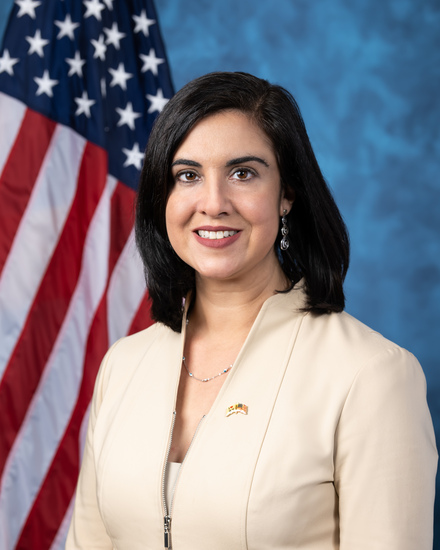
Rep. Nicole Malliotakis
Sponsored bills
Maddy summaryHRES 1456 is a symbolic resolution designating September 17, 2024, as "Constitution Day" to honor the signing of the U.S. Constitution on September 17, 1787. It calls for the people of the United States to observe the day with ceremonies and activities, recognizing the Constitution's historical significance and foundational role in American governance. This resolution does not create new laws or affect any individuals or policies; it is purely a non-binding expression of support by the House of Representatives.
Maddy summaryThe PRIMATES Act of 2024 prohibits the National Institutes of Health (NIH) from conducting or funding research that causes significant pain or distress to nonhuman primates, defined as studies classified in USDA pain categories D or E. It requires the NIH to publish an annual report detailing all nonhuman primate research projects - including costs, pain categories, and efforts to phase out such research - and mandates a Government Accountability Office (GAO) study to evaluate NIH's progress in reducing nonhuman primate use compared to other federal agencies. The bill directly affects NIH-funded research involving nonhuman primates and imposes new transparency requirements on taxpayer-funded studies.
Maddy summaryHR 8314, the No Foreign Election Interference Act, imposes penalties on tax-exempt organizations (like nonprofits under Section 501(c)) that receive contributions from foreign nationals and then donate to political committees. Specifically, such organizations face a penalty equal to twice the donation amount for the first violation, and lose their tax-exempt status after making three such "disqualified" contributions. The law applies to donations made on or after January 1, 2025, and defines a "testing period" of eight years to determine if foreign contributions were received before a political donation. This targets financial flows between foreign donors and political activities, not general election interference.
Maddy summaryHR 1425, the "No WHO Pandemic Preparedness Treaty Without Senate Approval Act," requires the U.S. Senate to approve any World Health Organization (WHO) pandemic preparedness treaty through a two-thirds vote. The bill deems any convention, agreement, or international instrument on pandemic prevention drafted by the WHO’s International Negotiating Body (INB) as a treaty subject to Senate ratification, rather than allowing it to take effect as an executive agreement. This directly affects U.S. foreign policy implementation regarding WHO agreements, ensuring Congress has a formal role in approving such binding international commitments. The bill stems from congressional concerns about WHO’s pandemic response and public skepticism toward the organization, as outlined in its findings.
Maddy summaryThis bill prohibits U.S. port operators from entering contracts for ownership, leasing, or operation of ports covered by maritime security plans with entities owned by China, Russia, North Korea, or Iran - either directly or if any portion is owned by those countries. It applies to major U.S. ports managing international cargo and passenger traffic that require federal security plans under existing law. The law bans such contracts for all port facilities subject to these security requirements. This directly affects port authorities and private operators managing critical infrastructure under federal security mandates.
Maddy summaryThis bill requires the FEMA Administrator to reimburse public employee retirement systems for costs related to accidental disability retirements and deaths of workers who participated in 9/11 rescue, recovery, or cleanup efforts. It specifically authorizes $3.4 billion in FY2024 funding for these reimbursements, which must be used solely by eligible retirement systems (those with members who worked at the World Trade Center site). The funds cannot be diverted to other purposes or entities. This policy change directly affects retirement systems managing benefits for first responders and workers injured or killed during the 9/11 operations.
Maddy summaryThis bill adds the Secretary of Agriculture to the Committee on Foreign Investment in the U.S. (CFIUS) for transactions involving agricultural land, biotechnology, or agriculture-related infrastructure (like transportation, storage, or processing). It requires the Secretary to notify CFIUS about transactions where a foreign person from China, North Korea, Russia, or Iran acquires U.S. agricultural assets, as defined by existing law. CFIUS then decides whether to review such transactions or take other action. The provisions apply only to transactions involving those four countries and sunset once they are removed from the official list of "foreign adversaries" in federal regulations.
Maddy summaryHR 8312, the Combat Veterans Pre-Enrollment Act of 2024, creates a 3-year pilot program allowing eligible combat veterans to pre-enroll in the VA healthcare system before separating from active duty. It directly affects service members who would qualify for VA healthcare upon separation and meet specific combat-related service criteria under existing law. The bill establishes a mechanism during the 180 days before separation, requiring coordination between VA, Defense, and Homeland Security to facilitate pre-enrollment. The program includes reporting requirements for participation rates, demographics, and a GAO evaluation of effectiveness after the pilot ends in 2027.
Maddy summaryHR 7667, the MAPLE Act, amends the seniors farmers' market nutrition program to include maple syrup as an eligible product. This change directly affects seniors who receive nutrition benefits through participating farmers' markets, allowing them to purchase maple syrup with their benefits. The bill adds "maple syrup" to the list of qualifying items previously limited to herbs. It makes a specific, narrow adjustment to the program's eligibility rules without altering other program requirements. This is a procedural amendment focused solely on expanding the range of agricultural products covered.