

Maddy summaryThe SCREENS for Cancer Act of 2024 reauthorizes and expands the National Breast and Cervical Cancer Early Detection Program (NBCCEDP), which provides free screenings and care coordination to low-income, uninsured, or underinsured women. It increases annual funding from $275 million (2024) to $500 million (2028) and explicitly adds "prevention" to the program’s mission, requiring it to reduce racial and ethnic disparities in cancer outcomes. The bill mandates the program to address barriers like social determinants of health and implement evidence-based strategies to boost screenings, particularly for underserved communities disproportionately affected by pandemic-related screening declines. This directly benefits millions of women, especially Black, Hispanic, and Asian women, who face higher cancer death rates and reduced access to care.
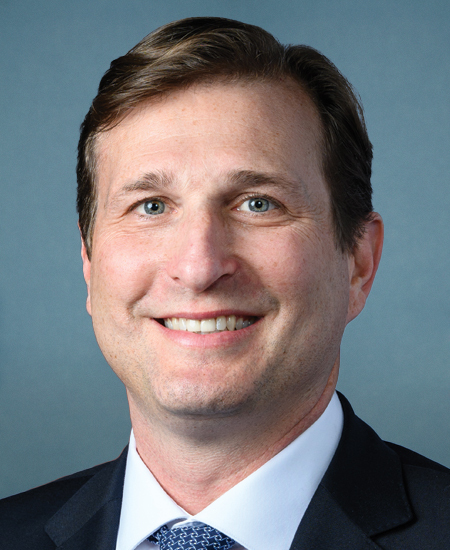
Rep. Daniel S. Goldman
Sponsored bills
Maddy summaryThis bill reauthorizes the National Alzheimer's Project Act through 2035 (extending the previous deadline of 2025) and adds new requirements to promote healthy aging and reduce Alzheimer’s risk factors. It mandates the program to provide information on healthy behaviors that may lower cognitive decline risk and expands the advisory group to include representatives from agencies like the Department of Justice, FEMA, and Social Security Administration, plus experts with diverse clinical trial experience. The bill directly affects Alzheimer’s research, care programs, and the federal advisory group overseeing national efforts. Key changes include requiring annual evaluations instead of initial ones and adding a focus on reducing health disparities in Alzheimer’s initiatives.
Maddy summaryThe PROKID Act establishes an independent Office of the Ombudsperson within the Department of Health and Human Services to monitor facilities where immigrant children are detained. The Ombudsperson will conduct regular site visits, investigate complaints about conditions, and ensure compliance with laws including the Flores settlement agreement. The bill requires detailed data collection on immigrant children in custody, including location, length of stay, and placement details, which must be published monthly on the Office of Refugee Resettlement website. It also creates an expert advisory committee to review facility compliance and make recommendations for improving conditions for immigrant children in government custody.
Maddy summaryThis resolution (HRES 616) condemns the Taliban's ongoing human rights abuses in Afghanistan, specifically targeting women, girls, religious minorities (including Hazaras and Sikhs), and ethnic groups. It expresses support for Afghans who assisted U.S. missions and calls for the U.S. government to halt Taliban violence and address systemic repression. Key mechanisms include urging the State Department to assess potential crimes against humanity, developing strategies to support human rights defenders, and expediting refugee processing for Afghans with Special Immigrant Visas. The resolution does not impose new legal requirements but formalizes congressional stance and policy guidance. It directly affects U.S. foreign policy implementation toward Afghanistan.
Maddy summaryHR 6248, the "Think Differently Transportation Act," requires Amtrak to submit detailed annual reports to Congress about its compliance with the Americans with Disabilities Act (ADA). Specifically, the bill mandates that Amtrak’s reports include an action plan to fix non-compliant rail cars and stations (per a 2020 Department of Justice settlement), plus a status update on all Amtrak-served stations. For each station, the report must clarify Amtrak’s responsibility level (sole, shared, or none), timelines for compliance, and the entity responsible for non-Amtrak portions. This bill directly affects Amtrak’s reporting obligations and Congress’s oversight of ADA accessibility in rail services.
Maddy summaryHRES 1244 is a formal House resolution censuring Supreme Court Associate Justice Samuel Alito for allegedly violating judicial ethics rules. The resolution claims Alito knowingly violated the Federal recusal statute and the Supreme Court’s 2023 Code of Conduct by flying an upside-down American flag in front of his home during the 2020 election dispute period - a symbol associated with false claims of election fraud. It demands Alito recuse himself from all cases related to the 2020 election and the January 6, 2021, Capitol insurrection, arguing his conduct created a reasonable appearance of bias. This is a symbolic resolution with no legal effect, as censures in Congress do not alter judicial duties.
Maddy summaryHR 8469, the Diverse Cybersecurity Workforce Act of 2024, requires the Cybersecurity and Infrastructure Security Agency (CISA) to establish a new program within its existing education initiative. The program targets underrepresented groups in cybersecurity, including racial and ethnic minorities, women, veterans, people with disabilities, older individuals (40+), those from low-income backgrounds, and people with nontraditional educational paths (like community colleges or HBCUs). CISA must tailor outreach to schools, unions, community colleges, and local workforce offices to promote cybersecurity careers in these communities. The bill authorizes $20 million annually (2025-2030) and mandates annual reports to Congress on the program's impact on workforce diversity.
Maddy summaryHR 8485, the "No Foreign Emoluments Without Congressional Consent Act," prohibits senior federal officials - including the President, Vice President, Cabinet members, Members of Congress, and high-level presidential staff - from accepting foreign payments (such as from foreign governments or entities controlled by them) without prior congressional approval. It requires officials to submit detailed written notices to the Office of Government Ethics before accepting such payments, triggering a 90-day congressional review period during which Congress must approve via a specific concurrent resolution. The bill covers payments received during official service and for two years after leaving office, with strict penalties including civil fines up to $5,000 plus the payment's value or criminal charges for violations. Excluded are standard gifts or decorations under existing law and certain large investment entities meeting specific SEC criteria.
Maddy summary# Summary of Legislative Text This is a comprehensive legislative proposal focused on addressing substance use disorder through public health approaches, with significant funding and program requirements. Key elements include: 1. **Major Funding Programs:** - **Subtitle A (Local Grants):** $3.0 billion annually (2024-2033) for local entities to provide prevention, treatment, and recovery services - **Subtitle B (State/Regional Grants):** $4.6 billion annually (2024-2033) for state-level programs - **Subtitle C (Other Grants):** $1.0 billion annually (2024-2033) for specific entities and underserved populations - **Subtitle D (Innovation/Training):** $1.5 billion annually (2024-2033) for training, research, and capacity building 2. **Key Program Requirements:** - Mandates for evidence-based treatment services across multiple levels of care - Requirements for cultural competency, particularly for Native American communities - Specific focus on harm reduction, prevention, and recovery support - Provisions for naloxone distribution and overdose reversal programs 3. **Regulatory Changes:** - New certification requirements for covered manufacturers, distributors, and dispensers of Schedule II controlled substances - Penalties for failure to submit certifications or submitting false certifications - Creation of a "Comprehensive Addiction Resources Fund" for penalty revenues 4. **Focus Areas:** - Prevention services (including trauma-informed approaches) - Early intervention services - Recovery support services - Harm reduction programs - Workforce development for treatment providers - Special attention to underserved populations (rural communities, racial minorities, formerly incarcerated individuals) 5. **Funding Priorities:** - 10% of funds for Native American communities - Specific requirements for cultural competency and language access - Mandated data collection and reporting systems This legislation represents a significant shift toward public health approaches to substance use disorder, emphasizing prevention, treatment, and recovery support rather than punitive measures, with substantial funding commitments over a decade.
Maddy summaryThis bill requires call center employers (with 50+ full-time staff) to notify the Labor Secretary 120 days before moving operations overseas or contracting such work, adding them to a public list for 5 years. Employers on this list become ineligible for federal grants or loans during that period, and federal contracts must prioritize companies not relocating work overseas. It also mandates that all businesses handling customer service communications disclose agent locations at call start (with limited exceptions), allow transfers to U.S.-based agents upon request, and annually certify compliance to the FTC. These provisions directly affect large call center employers and all businesses providing customer service via phone, email, or chat in the U.S.