

Maddy summaryHR 8732, the Domestic Workers Bill of Rights Act, would establish new labor protections for domestic workers including nannies, housekeepers, and caregivers who work in private homes. The bill requires written agreements between employers and domestic employees, provides earned sick days, ensures fair scheduling practices, and prohibits unfair wage deductions for cash shortages or communications. It also creates a Domestic Employee Standards Board to recommend workplace standards and establishes a National Domestic Employee Hotline for assistance. The bill specifically targets domestic workers who have historically been excluded from labor protections under the Fair Labor Standards Act and Civil Rights Act, benefiting an estimated 2.2 million domestic workers in the U.S. who are disproportionately women of color and immigrants.
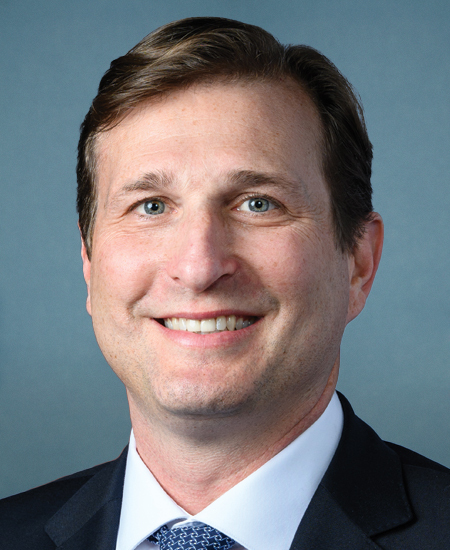
Rep. Daniel S. Goldman
Sponsored bills
Maddy summaryHRES 1295 is a symbolic resolution expressing the House's support for recognizing Sunday, June 16, 2024, as Father's Day. It does not create new laws or policies but formally acknowledges the role of fathers in families and society. The resolution urges support for existing policy goals like universal paid family leave, affordable childcare, and child tax credits - though it does not mandate any changes. It directly affects all fathers and families in the U.S. by affirming their importance, but has no binding legal effect. This is a procedural resolution, not a legislative bill with concrete policy changes.
Maddy summaryThis bill amends federal jury selection laws to explicitly prohibit discrimination based on sexual orientation and gender identity. It updates definitions in Title 28 of the U.S. Code by adding "sexual orientation and gender identity" to the protected characteristics under "sex" and defining key terms like "gender identity" and "sexual orientation." The changes directly affect federal jury pools by requiring courts to consider these factors when selecting jurors and preventing discrimination in the process. The law clarifies that discrimination based on these characteristics - including associations with others who share them - is prohibited during jury selection. This is a concrete policy change to expand anti-discrimination protections in federal jury service.
Maddy summaryThis bill requires gun dealers to provide buyers with specific secure storage information, including how to store firearms unloaded, locked, away from children, and separately from ammunition. It also mandates that dealers stock a variety of secure storage devices (like safes, lock boxes, and trigger locks) rather than just one type. Additionally, the bill creates a $500 tax credit for individuals purchasing "qualified gun safes" designed for secure, authorized-access storage of firearms. The law affects federal firearms licensees (dealers) and firearm buyers directly, with implementation set for six months after enactment.
Maddy summaryHR 5012 (SHINE for Autumn Act of 2023) authorizes federal funding to improve stillbirth research and data collection. It provides $5 million annually for states to collect standardized stillbirth data (including risk factors) while protecting privacy, $1 million annually for developing public educational materials and data collection guidelines, and $3 million annually for medical fellowships training pathologists in perinatal autopsy and stillbirth research. The bill directly affects state health departments, medical professionals (like obstetricians and pathologists), and families who experience stillbirth by improving data quality for future research. It requires federal reports on guidelines and program effectiveness within five years but does not provide direct medical care or financial assistance to families.
Maddy summaryHR 537 authorizes a Congressional Gold Medal to honor 60 diplomats who saved Jewish lives during the Holocaust by issuing visas and passports against their governments' orders, risking expulsion and personal danger. The medal will be presented to the next of kin of these diplomats, alongside representatives from their home countries, and permanently displayed at the United States Holocaust Memorial Museum. The bill also permits the sale of bronze duplicates to cover production costs, with proceeds going to the U.S. Mint. This legislation recognizes the diplomats' humanitarian actions without creating new government programs or altering existing laws.
Maddy summaryHRES 965 is a non-binding resolution calling for the immediate release of Ryan Corbett, a U.S. citizen wrongfully detained by the Taliban in Afghanistan since August 2022. It directly affects Corbett (held in poor conditions without charges) and other Americans detained by the Taliban. The resolution demands the Taliban release Corbett unconditionally, urges respect for his human rights, commends Qatar’s role as U.S. protecting power, and condemns the Taliban’s practice of detaining U.S. citizens. It does not create new law but formally expresses congressional support for Corbett and other wrongfully detained Americans.
Maddy summaryThis bill would allow Czech citizens to apply for E-1 business visas to work in the United States for trade and business, but only if the Czech Republic grants similar visa access to U.S. citizens. It directly affects Czech nationals seeking to conduct business in the U.S. and U.S. citizens traveling to the Czech Republic for business. The bill conditionally adds the Czech Republic to the list of countries eligible for E-1 visas, requiring reciprocity in visa treatment between the two nations. This change would expand E-1 visa eligibility for Czech citizens if the Czech government meets the reciprocity condition.
Maddy summaryThe Student Loan Servicers Accountability Act of 2024 requires the Department of Education to rigorously vet student loan servicers before awarding contracts, evaluating factors like past errors, consumer satisfaction, and ability to serve vulnerable borrowers (including language access and disability accommodations). It mandates specific contract terms, including placing loans in interest-free administrative forbearance during servicer errors, refunding overpayments, correcting erroneous credit reports, and providing credit toward loan forgiveness for periods affected by errors. The bill also requires a review of existing contracts and allows contract revocation for misrepresentation, while directing a Comptroller General study on loan transfer errors and their impact on borrowers' credit. This act directly affects the private companies that service federal student loans, impacting millions of borrowers who rely on these services.
Maddy summaryHR 8639, the Warehouse Worker Protection Act, requires employers in covered warehouse facilities (including distribution centers, storage facilities, and delivery services) to provide workers with clear written descriptions of any quotas they're subject to, including how performance is measured and monitored. The bill prohibits quotas that interfere with breaks, safety compliance, or anti-discrimination protections, and mandates that employers provide employee work speed data in human-readable formats. It creates new anti-retaliation protections for workers who exercise these rights or file complaints, and establishes a Fairness and Transparency Office within the Department of Labor to oversee implementation. The act also amends the National Labor Relations Act to explicitly prohibit quotas that discourage workers from exercising their labor rights.