

Maddy summaryThis resolution, introduced around World Refugee Day, expresses congressional support for U.S. efforts to protect refugees and displaced persons globally and within the United States. It highlights that over 117 million people are displaced worldwide, references the U.S. resettling 60,000 refugees in fiscal year 2024, and calls on federal agencies to maintain the Refugee Admissions Program, uphold asylum protections, and support host countries. The resolution does not create new laws but reaffirms existing commitments to refugee resettlement, safety, and integration through current programs.
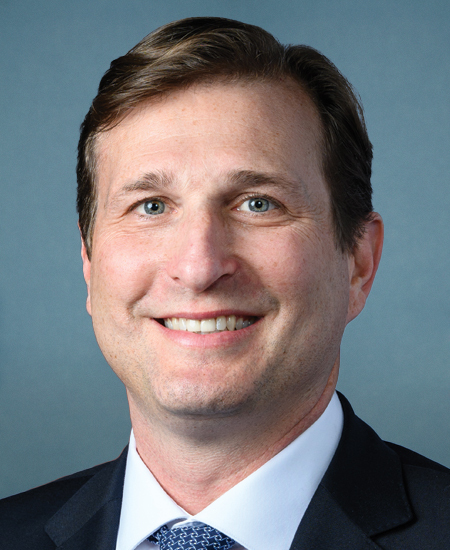
Rep. Daniel S. Goldman
Sponsored bills
Maddy summaryThe Pell Grant Preservation and Expansion Act of 2024 would double Federal Pell Grants, increasing the maximum award to $10,000 for the 2025-2026 academic year with annual inflation adjustments, and make Pell Grants a fully mandatory program rather than requiring annual appropriations. It would expand eligibility for students with negative student aid indexes (those with the lowest expected family contributions), provide Pell Grant eligibility for "Dreamer" students protected under DACA, and restore eligibility for students who previously lost it due to academic progress issues. The bill would also increase the total semesters of Pell Grant eligibility from 12 to 18. These changes would directly affect millions of undergraduate students, particularly students of color who currently rely on Pell Grants, with 3 in 5 African American students and half of Latino students depending on these grants. The bill would take effect for the 2025-2026 academic year.
Maddy summaryThis resolution recognizes June 19, 2024, as Juneteenth Independence Day, acknowledging its historical significance as the anniversary of the end of slavery in the U.S. (specifically referencing Union soldiers' announcement in Galveston, Texas, on June 19, 1865). It does not create new policy but formally encourages all Americans to observe the day through ceremonies and educational activities. The resolution emphasizes Juneteenth's role in honoring African American freedom and its importance to U.S. history and cultural heritage. It follows the 2022 law that established Juneteenth as a federal holiday, focusing solely on symbolic recognition and annual observance.
Maddy summaryHRES 1306 is a non-binding resolution expressing congressional support for designating June 21, 2024, as National ASK (Asking Saves Kids) Day. It encourages parents to ask visitors' homes, "Is there a gun in your house?" and "Is it locked and unloaded?" to promote safe gun storage around children. The resolution specifically supports the ASK Campaign, a national initiative run by the Brady Campaign since 2000 that focuses on preventing accidental child firearm injuries through simple safety conversations. This resolution does not create new laws but formally endorses an existing public health awareness effort.
Maddy summaryThis resolution (HRES 1309) calls for federal recognition and support of freedmen's settlements - historical Black communities established by formerly enslaved people after emancipation - by preserving their history and investing in their revitalization. It specifically targets communities like Sand Branch, Texas (facing water contamination and poverty) and Africatown, Alabama (struggling with industrial pollution), which have endured systemic disinvestment and environmental hazards. Key provisions include urging federal agencies (like the EPA and HUD) to coordinate funding for historic preservation, economic justice initiatives, and infrastructure improvements, while prioritizing community-led efforts to protect against gentrification and pollution. The resolution does not create new laws but sets a framework for collaboration to address long-standing inequities in these historically marginalized communities.
Maddy summaryThe PROSPER Act of 2024 authorizes the Attorney General to establish a youth gun violence prevention program, allocating $25 million annually from 2025 through 2030 for grants under existing juvenile justice programs. This funding directly supports community-based initiatives focused on preventing gun violence among young people, particularly in high-risk areas. The bill specifies that $100 million total will be available each year for juvenile justice grants, with $25 million dedicated specifically to this youth-focused violence prevention effort. It does not create new federal agencies or mandate state actions, instead directing existing federal resources toward targeted prevention programs.
Maddy summaryHR 8764, the Clean Hands Firearm Procurement Act, prohibits federal agencies from entering contracts with gun dealers who are identified as "covered firearms dealers" based on firearm tracing data. A dealer becomes "covered" if 25 or more firearms traced to them were recovered within 3 years of a crime during two of the past three calendar years. Federal agencies must then avoid contracting with such dealers for the current year and the two preceding years, with a 180-day implementation period. The law includes a national security waiver for the Defense or Homeland Security Secretaries, requiring immediate notification to congressional judiciary committees. This directly affects federal procurement decisions and gun dealers meeting the specified tracing thresholds.
Maddy summaryHR 8768, the Restoring Trust in Public Safety Act, provides $15 million annually (2025-2030) for federal grants to state, tribal, and local governments to safely destroy firearms. Eligible entities must use funds to fully destroy firearms (including all parts and accessories) through methods like shredding or crushing, maintain detailed records, and provide documented proof of destruction. The bill requires grantees to use no more than 10% of funds for administration and prioritizes funding for rural areas and Metropolitan Statistical Areas. It directly affects local law enforcement agencies and governments seeking to eliminate firearms through certified destruction programs.
Maddy summaryThis bill amends the Occupational Safety and Health Act to explicitly include public employees - such as those working for federal, state, or local government agencies - under OSHA's coverage. It changes the definition of "employee" to specify that public sector workers are protected, removing previous exclusions. The law takes effect 90 days after enactment for most workplaces, but gives states and local governments without OSHA-approved plans up to 36 months to comply. This directly affects public service workers in government roles by bringing their workplace safety protections under the same federal OSHA framework as private-sector employees.
Maddy summaryThis bill requires employers to provide safety warnings and materials in English and a language workers actually understand, tailored to their literacy level and education. It directly affects workers with limited English proficiency (including those whose native language differs from English or who live in non-English-speaking communities) in workplaces like agriculture and service industries. Key provisions include amending OSHA to mandate multilingual safety information, directing the Labor Secretary to update safety standards within 180 days, and creating competitive grants to fund translation services for covered workers. Grants prioritize organizations serving migrant workers or those in agriculture/service sectors, with reporting requirements to track assistance.