

Maddy summaryHRES 1409 is a symbolic House resolution condemning Nicolás Maduro's regime for alleged election fraud in Venezuela's July 28, 2024 presidential election. It recognizes opposition candidate Edmundo González Urrutia as the president-elect based on observed vote tallies showing his decisive victory, and condemns the regime's refusal to release transparent results. The resolution calls for new sanctions against Maduro and his allies, demands respect for the election outcome, and urges diplomatic pressure to support Venezuela's democratic transition. This resolution directly addresses the Maduro regime's actions and expresses U.S. solidarity with Venezuelan voters and the opposition.
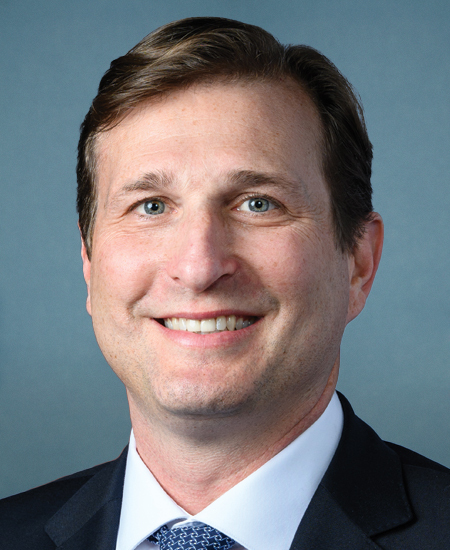
Rep. Daniel S. Goldman
Sponsored bills
Maddy summaryHR 9299, the IRAN Act, requires the U.S. Secretary of State to lead federal efforts promoting internet freedom and access to information in Iran. It amends a 2012 law to mandate specific strategy updates, including evaluating how activists use virtual private networks (VPNs) and satellite tech, developing guidance to prevent sanctions from blocking internet tools for Iranians, and planning to bypass government internet blackouts. The bill directs the State Department to coordinate with Treasury, Commerce, USAID, and intelligence agencies to implement these updates. This affects U.S. government agencies' coordination and aims to improve internet access for Iranian civil society activists.
Maddy summaryThe Safer Skies Act of 2024 requires certain smaller airlines to adopt the federal security screening program currently used by larger carriers. Specifically, it mandates that airlines operating passenger planes with more than 9 seats (that do not use TSA checkpoints, offer individual seats in advance with public schedules) must comply with the Aircraft Operator Standard Security Program within 360 days of enactment. The Transportation Security Administration must revise its rules to enforce this new requirement. This directly affects regional carriers that currently skip standard airport security screenings but serve passengers under these specific operational conditions. The bill extends existing security standards to cover these previously exempt airlines without creating new security protocols.
Maddy summaryThe Stop Militarizing Our Streets Act of 2024 restricts the Department of Defense from selling military-grade assault weapons or specific high-capacity ammunition (like .223 Remington and 7.62 NATO) in the commercial marketplace, and prohibits the department from procuring weapons or ammunition from dealers that sell these items commercially. The bill establishes detailed requirements for dealers who want to sell to the government, including mandatory background checks through NICS, security measures, limits on ammunition sales to individuals (500 rounds of covered ammunition or 1,000 rounds of other types in 30 days), and employee training on recognizing straw purchases and preventing illegal sales. Government-owned plants that produce firearms or ammunition for commercial sale must report annual sales data to Congress, including customer locations and revenue. The bill also authorizes the Attorney General to establish licenses for ammunition dealers and allow them to use the NICS background check system. This legislation directly affects the Department of Defense, firearms and ammunition dealers, and government-owned manufacturing facilities.
Maddy summaryThis bill (HR 9255) is a simple naming resolution that renames a specific U.S. Postal Service facility. It designates the post office at 114 John Street in New York, New York, as the "Jack Greenberg Post Office." The bill requires all federal references to the building (in laws, maps, documents, etc.) to use the new name. This is a procedural change affecting only the official name of that single post office location.
Maddy summaryThe Active Shooter Alert Act of 2024 establishes a national coordination system for active shooter alerts by designating a Department of Justice Coordinator. The Coordinator will work with federal agencies (FEMA, FCC, Transportation) and state/local governments to develop voluntary best practices for alert systems, including geotargeted notifications, multilingual messaging, and training for transportation authorities. The bill requires annual reports to Congress on state adoption of protocols and mandates a Comptroller General study on state response times to active shooter alerts, funded by $2 million for the Department of Justice. It does not mandate state adoption but encourages coordination to improve alert effectiveness.
Maddy summaryHR 9253, the National Gun Violence Research Act, repeals longstanding restrictions that blocked federal funding for gun violence research, including the 1996 Dickey Amendment. It establishes a National Gun Violence Research Program to support scientific studies on gun-related injury and death, with $200 million authorized over six years (2025-2030). The program directs agencies like the CDC, NIH, and National Institute of Justice to fund research, train researchers, develop safety standards, and share gun trace data with researchers through new protocols. This bill directly affects federal research institutions and public health agencies by enabling evidence-based study of gun violence causes and prevention strategies.
Maddy summaryThis bill establishes the Destination Reception Services Program to provide medium-term support to certain immigrants in the U.S., including those granted parole, placed in removal proceedings, or with pending asylum applications. It authorizes $3 billion annually (2025-2028) to fund services like housing assistance, healthcare, job training, legal aid for work authorization/asylum, childcare, and transportation through local government and nonprofit organizations. The program is managed by a federal Board and local community boards that identify high-need areas and allocate funds based on criteria like immigrant population density and service gaps. It explicitly states the program is not an "alternatives to detention" initiative and prioritizes services to help new arrivals achieve self-sufficiency.
Maddy summaryThis bill establishes a federal grant program to help state, local, and tribal prosecutors' offices hire and retain legal staff. It provides competitive grants covering up to 75% of costs for hiring, training, or retaining prosecutors and support staff, with preference given to rural, tribal, and areas affected by budget cuts. The program requires annual reporting on outcomes and includes $10 million in annual funding for fiscal years 2025-2029.
Maddy summaryHRES 1386 is a non-binding House resolution expressing the House's condemnation of Project 2025. It states that if enacted, Project 2025 would threaten healthcare access (including ending protections for pre-existing conditions and banning Medicare drug negotiations), restrict abortion and fertility services, cut education funding, raise costs for working families, and give tax breaks to wealthy corporations. The resolution specifically lists these potential impacts as reasons for the House to "condemn in the strongest terms" Project 2025. As a resolution, it does not create new law but formally expresses the House's position on this policy proposal.