

Southeast Asian Deportation Relief Act of 2023 This bill prohibits the detention or removal of certain nationals of Vietnam, Cambodia, or Laos. Specifically, this protection from detention or removal shall apply to nationals of these countries who (1) entered the United States on or before January 1, 2008, (2) have continuously resided in the United States since entry, and (3) are subject to a final order of removal. Such individuals shall also receive employment authorization. The bill also directs the Department of Justice to grant motions to reconsider or reopen the case of any non-U.S. national who was ordered removed, deported, or excluded from the United States between April 24, 1996, and this bill's enactment and who otherwise satisfies the requirements for protection from detention or removal under this bill. For these individuals, the bill also waives certain requirements that typically apply to motions to reconsider or reopen, such as deadlines for filing such a motion. Further, the Department of Homeland Security must provide individuals covered by the bill with notice of the bill's provisions. The notice must include instructions for filing a motion to reconsider and reopen removal proceedings.
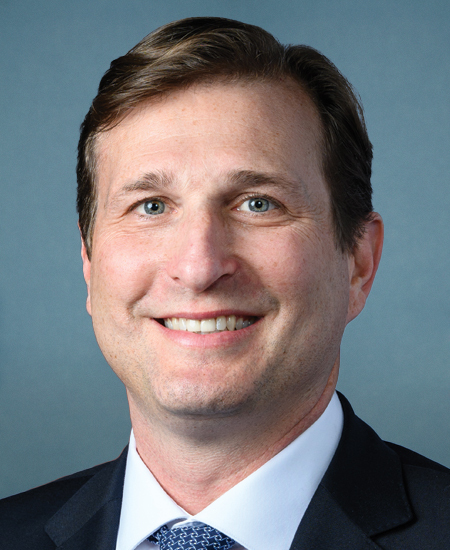
Rep. Daniel S. Goldman
Sponsored bills
Maddy summaryHRES 650 is a resolution to expel Representative George Santos from the U.S. House of Representatives. It cites his false claims about his education (e.g., falsely claiming degrees from Baruch College and NYU), employment history, religious background (including false claims about Holocaust-survivor grandparents), family connections (such as a fabricated 9/11 survivor mother), and financial disclosures (including undisclosed assets and campaign fund mismanagement). The resolution references his May 2023 indictment for wire fraud, money laundering, and false statements, as well as the Ethics Committee's failure to report on its investigation within the promised 60 days after prior resolutions (H. Res. 114) called for his expulsion. If adopted, the resolution would remove Santos from his congressional seat.
Maddy summaryThe CHARGE Act of 2023 modernizes U.S. electricity transmission planning and cost allocation to better support renewable energy integration and grid reliability. It requires transmission providers to conduct interregional planning every five years, allocate costs based on multiple benefits (including reduced consumer costs, renewable energy access, and grid resilience), and make hourly operational data publicly available. The bill establishes an Office of Transmission within the Federal Energy Regulatory Commission (FERC) and creates an Independent Transmission Monitor to oversee planning processes. These changes aim to reduce costs for consumers, improve grid reliability, and support the transition to cleaner energy sources through concrete regulatory reforms.
Providing Essential Temporary Shelter Assistance For Emergencies Act of 2023 or the PETSAFE Act of 2023 This bill directs the Federal Emergency Management Agency (FEMA) to establish a pilot program to provide grants for mobile pet shelters during emergencies and major disasters. FEMA may provide funds to state, local, and tribal governments to establish a new pet shelter site that is a mobile unit, which may be a companion animal mobile equipment trailer, to be used in case of evacuation due to emergencies and major disasters. FEMA's authority to approve projects under this bill shall cease on January 1, 2029.
Maddy summaryHR 5155 creates a new temporary visitor visa category specifically for family visits to the U.S. It directly affects U.S. citizens and lawful permanent residents wanting to host relatives for short stays, and their eligible relatives (including parents, children, siblings, and extended family). The bill requires visitors to have a financial sponsor, short-term medical insurance covering U.S. expenses, and proof of intent to leave within 90 days per year - reducing the previous 180-day limit. It explicitly states this visa does not count as immigrant status, and applicants who previously overstayed a similar visa face additional restrictions unless extraordinary circumstances apply.
Maddy summaryHR 5127, the Visitor Visa Wait Time Reduction Act, requires the State Department to report on consular posts with visitor visa interview wait times exceeding 100 days and to take steps to reduce those waits. If wait times at any post exceed 300 days, the Secretary must temporarily reassign State Department personnel to assist consular staff at that location. The bill directly affects U.S. embassies and consulates handling visitor visa applications and the applicants waiting for interviews. It mandates specific administrative actions to address processing delays but does not change visa eligibility or fees. The focus is on improving internal staffing efficiency at consular posts, not altering immigration policy.
Maddy summary# Summary of the "Protecting Our Democracy Act" This comprehensive legislation aims to strengthen democratic processes, increase government transparency, and prevent foreign interference in elections. Key provisions include: ## Ethics and Transparency - **Ethics Pledge**: Requires all appointees to sign an ethics pledge committing to: - Ban on gifts from registered lobbyists - 2-year revolving door ban (prohibiting participation in matters related to former employers) - Golden parachute ban (no special payments from former employers) - Commitment to decision-making based on public interest - **Tax Transparency**: Requires presidential and vice presidential candidates to disclose 10 years of tax returns, with sitting presidents submitting returns within 30 days of enactment ## Campaign Finance and Foreign Interference - **Foreign Contact Reporting**: Requires political committees to report any contact with "covered foreign nationals" within 1 week - **Enhanced Penalties**: Criminal penalties of up to $1 million and 5 years in prison for violations - **Online Advertising Rules** ("Honest Ads Act"): - Requires clear disclosure of who paid for political ads online - Mandates machine-readable public databases of political ads - Requires visible sponsor identification that remains when ads are shared - Defines "qualified political advertisements" to include various online formats ## Preventing Patronage Systems - Limits exceptions to competitive service for federal positions - Restricts transferring positions between competitive and excepted service - Requires employee consent for position transfers ## Use of Federal Property - Prohibits holding national political conventions on federal property - Requires publicly available visitor records at White House and other official locations (with privacy exceptions) The legislation establishes detailed definitions, reporting requirements, and enforcement mechanisms across multiple agencies, with the goal of increasing transparency, preventing foreign interference, and ensuring ethical conduct in government service.
Maddy summaryThis bill requires phone calls, texts, and chats to 9-8-8 (the national suicide prevention and mental health crisis hotline) to be routed to the nearest participating crisis center within 90 days of enactment, while protecting caller privacy by not revealing precise location. It mandates all phone carriers to transmit every 9-8-8 call or text - including those from prepaid or non-initialized handsets - and updates phone systems to allow direct 9-8-8 dialing without extra steps. The law affects crisis centers (by directing calls to their area), callers (through improved routing and privacy), and phone carriers (by requiring transmission compliance). These changes aim to make the 9-8-8 system more efficient and accessible for those seeking mental health support.
Maddy summaryThis bill creates a federal loan repayment program to help mental health professionals (like counselors, psychologists, and social workers) repay student loans. It directly affects individuals who have taken out education loans for mental health degrees and agree to work in underserved areas. Key provisions require participants to commit to 3-6 years of full-time service in designated mental health shortage areas or counties with high overdose death rates, with funding increased to $100 million annually for 2023-2032. The program expands eligibility to cover all mental health-related fields, including behavioral health roles.
Maddy summaryThe Communications, Video, and Technology Accessibility Act of 2023 requires video programming providers to provide closed captions and audio description for all online video content, including live and near-live programming. It mandates that video playback devices (such as smart TVs and streaming devices) include accessible controls for captions and audio description, with specific requirements for labeling and discoverability. The bill establishes advisory committees to develop technical standards for accessibility and updates requirements for video conferencing services to include built-in captioning and compatibility with assistive technologies. These provisions directly affect video service providers, device manufacturers, and video conferencing platforms, aiming to improve accessibility for people who are deaf, hard of hearing, blind, or DeafBlind.