

Veterans Burn Pits Exposure Recognition Act of 2021 This bill requires the Department of Veterans Affairs (VA) to concede, for the purposes of health care benefits and wartime disability compensation, that a veteran was exposed to certain toxic substances, chemicals, and hazards from burn pits if such veteran served on active duty in a covered location during a specified time frame (unless there is affirmative evidence to establish that the veteran was not exposed during such service). A burn pit is an area used for burning solid waste in open air without equipment. Specifically, the bill covers the following locations and corresponding time periods: Iraq between August 2, 1990, and February 28, 1991, as well as from March 19, 2003, until burn pits are no longer used in this location; Somalia and Southwest Asia (including Kuwait, Saudi Arabia, Oman, and Qatar) from August 2, 1990, until burn pits are no longer used in these locations; and Afghanistan, Syria, Jordan, Egypt, Lebanon, Yemen, Uzbekistan, the Philippines, and Djibouti from September 11, 2001, until burn pits are no longer used in these locations. Under the bill, if an exposed veteran submits insufficient evidence to establish a service-connection for purposes of disability compensation, the VA shall provide a medical examination and request a medical opinion regarding a causal link between the disability and a toxin, chemical, or hazard.
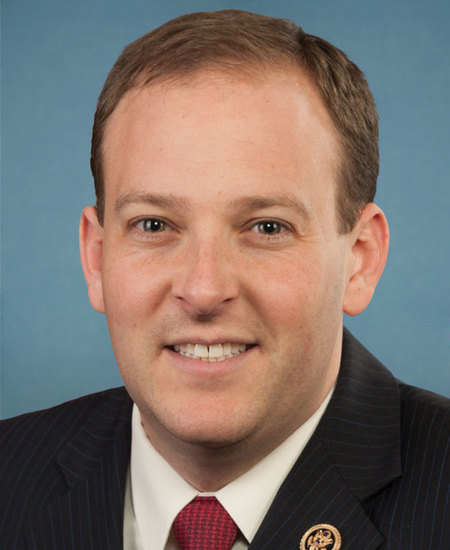
Rep. Lee M. Zeldin
Sponsored bills
This resolution recognizes and expresses support for the efforts of democracy and human rights activists in Cuba.
Carbon Capture Improvement Act of 2021 This bill authorizes the issuance of tax-exempt facility bonds for the financing of qualified carbon dioxide capture facilities. A qualified carbon dioxide capture facility is any equipment installed in an industrial carbon dioxide facility that satisfies specified capture and storage requirements and (1) is used for the capture, treatment and purification, compression, transportation, or on-site storage of carbon dioxide produced by the industrial carbon dioxide facility; or (2) is integral or functionally related and subordinate to a gasification process that converts a product from coal, petroleum residue, biomass, or other materials that are recovered for their energy or feedstock value into a synthesis gas composed primarily of carbon dioxide and hydrogen for direct use or subsequent chemical or physical conversion.
Strategic Lebanon Security Reporting Act This bill requires the Department of State to submit to Congress a strategy and report concerning the implementation of a United Nations (U.N.) Security Council resolution adopted on August 11, 2006, which calls for the disarming of armed groups along the Israeli-Lebanese border. Specifically, the State Department must develop a strategy for implementing the resolution. The strategy must address Lebanon's control of its southern border, cooperation between Lebanon and U.N. forces, and prevention of border tunnels. In addition, the State Department must report on the implementation of the resolution, including issues related to the Lebanese armed forces, U.S. security interests, and the extent of Hizballah's influence within Lebanon and its armed forces.
Essential Caregivers Act of 2021 This bill requires skilled nursing facilities, nursing facilities, intermediate care facilities for the intellectually disabled, and nearby inpatient rehabilitation facilities to establish an essential caregivers program during a public health emergency. Under the program, facilities must allow each resident to select up to two essential caregivers to provide daily living assistance, emotional support, or companionship during the emergency. Facilities must afford such caregivers 12 hours of access to residents each day (or unlimited access for end-of-life care), and caregivers must agree to follow facility protocols for staff safety. Facilities may deny access to caregivers who violate protocols, subject to certain notification requirements; the Centers for Medicare & Medicaid Services must establish an appeals process relating to such decisions and may take specified enforcement actions against facilities that violate the bill's requirements.
Countering Hizbollah in Lebanon's Military Act of 2021 This bill limits the use of security assistance funds for Lebanon until certain conditions are met. Specifically, 20% of funds appropriated or made available for such security assistance may not be obligated or expended until the President certifies to Congress that (1) the Lebanese Armed Forces have taken measurable steps to limit or expel Hezbollah-influenced military personnel that have significant influence over the Lebanese Armed Forces' policies or activities, (2) activities of the Lebanese Armed Forces to disarm Hezbollah demonstrate a serious commitment to fulfill United Nations Security Council Resolution 1701 calling for such disarmament, and (3) the Lebanese Armed Forces have not cooperated or partnered with Hezbollah during the last year. The President may waive the first two requirements if it is in U.S. national security interest to do so.
This bill requires the Department of Veterans Affairs to ensure that, if it creates a presumption of service-connection between the occurrence of a disease and exposure to an herbicide agent while serving in the Armed Forces between January 9, 1962, and June 30, 1976, at a military base in Thailand, such presumption must also apply to exposure at any military base in Thailand, regardless of where on the base the veteran was located or what military job specialty the veteran performed.
Local Journalism Sustainability Act This bill allows individual and business taxpayers tax credits for the support of local newspapers and media. Specifically, individual taxpayers may claim an income tax credit up to $250 for a local newspaper subscription. The bill also allows local newspaper employers a payroll tax credit for wages paid to an employee for service as a local news journalist and certain small businesses a tax credit for local newspaper and media advertising expenses.
Shark Fin Sales Elimination Act of 20 21 This bill addresses the sale of shark fins and the inclusion of rays and skates in the Seafood Traceability Program. The Seafood Traceability Program has data reporting and recordkeeping requirements at the time of entry for imported fish or fish products entered into U.S. commerce. The bill makes it illegal to possess, buy, or sell shark fins or any product containing shark fins, except for certain dogfish fins. A person may possess a shark fin that was lawfully taken consistent with a license or permit under certain circumstances. Penalties are imposed for violations under the Magnuson-Stevens Fishery Conservation and Management Act. The Department of Commerce must revise its regulations to include rays and skates as species that are subject to the Seafood Traceability Program.
Strengthening and Amplifying Vaccination Efforts to Locally Immunize All Veterans and Every Spouse Act or the SAVE LIVES Act This bill authorizes the Department of Veterans Affairs (VA) to furnish a COVID-19 (i.e., coronavirus disease 2019) vaccine to covered individuals during the COVID-19 public health emergency. Under the bill, covered individuals are veterans who are not eligible to enroll in the VA health care system; specified veterans who are eligible for hospital care, medical services, and nursing home care abroad; beneficiaries who are eligible for care due to a specified disability or death of a veteran; family caregivers of veterans who are participating in the VA's Program of Comprehensive Assistance for Family Caregivers; caregivers of veterans participating in the VA's Program of General Caregiver Support Services; caregivers of veterans participating in the VA's Medical Foster Home Program, Bowel and Bladder Program, Home Based Primary Care Program, or Veteran Directed Care Program; and the spouses of veterans. The VA must prioritize the vaccination of (1) veterans who are enrolled in the VA health care system, (2) veterans who fail to enroll but receive hospital care and medical services for specified disabilities in their first 12 months of separation from service, and (3) caregivers accompanying such prioritized veterans. Under the bill, the VA is authorized to determine the timing for offering a vaccine to the spouse of a veteran.