

Maddy summaryHJRES 76 proposes renaming the Robert E. Lee Memorial in Arlington National Cemetery to the "Arlington House National Historic Site." This procedural bill would replace all official references to the memorial with the new name and repeal two prior resolutions (1955 and 1972) that established the memorial. The change affects how the site is identified in federal laws, documents, and records but does not alter its management or historical significance. The bill focuses solely on the official designation, not on policy changes or historical interpretation.
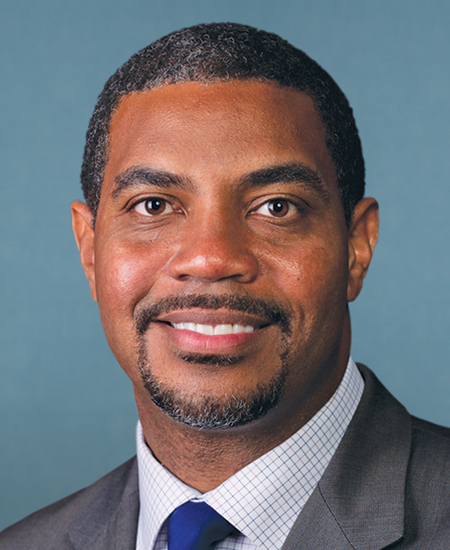
Rep. Steven Horsford
Sponsored bills
Maddy summaryThe Ending Homelessness Act of 2023 would expand housing assistance for low-income families by creating a new entitlement program for housing choice vouchers starting in 2028, with 500,000 new vouchers in 2024 and 1,000,000 annually through 2027. It would provide $1 billion annually for emergency relief grants to address unmet needs of homeless populations, prioritizing jurisdictions with the highest need and local policies that decriminalize homelessness. The bill prohibits housing discrimination based on source of income, including rental vouchers and Social Security benefits, and repeals current ineligibility criteria for housing programs. It also permanently authorizes funding for McKinney-Vento Homeless Assistance Act grants and expands eligibility for private nonprofit and faith-based organizations to receive housing assistance. The bill directly affects extremely low-income families, homeless individuals, and housing providers by increasing access to affordable housing and reducing barriers to housing stability.
Maddy summaryThe Housing Crisis Response Act of 2023 authorizes over $100 billion in funding for housing programs, including $10 billion for public housing capital improvements, $9.9 billion for the HOME Investment Partnerships Program, and $1.77 billion for energy efficiency improvements in affordable housing. It creates new down payment assistance programs for first-time and first-generation homebuyers, expands housing vouchers for vulnerable populations including those experiencing homelessness, and establishes new requirements for accessible housing units. The bill mandates that many housing projects maintain affordability for at least 20 years and includes specific provisions for rural housing, Native American communities, and lead-based paint hazard control. It also creates a new Housing Investment Fund to support affordable housing development and preservation, primarily for low-, very-low, and extremely low-income renters.
Maddy summaryThe Downpayment Toward Equity Act of 2023 creates a federal program to provide down payment assistance to first-generation homebuyers, defined as individuals whose parents did not own a home. The program would provide grants to states (75% of funds) and eligible entities (25% on competitive basis) to help cover down payments, closing costs, and mortgage interest reductions, with maximum assistance of $20,000 or 10% of purchase price. To qualify, homebuyers must have household income up to 120-140% of median area income, be first-time homebuyers, and meet the "first-generation" definition. States must comply with fair housing requirements, and recipients must repay assistance if they don't occupy the home as their primary residence within five years, with exceptions for hardship.
Maddy summaryThis bill improves the VA Work-Study program for veterans and active-duty military members by expanding eligible work opportunities to include roles with state/local governments and nonprofits that support veterans. It establishes a higher minimum wage standard, requiring payments to meet the highest of federal, state, or local minimum wage rates. The bill also requires electronic time tracking for participants and annual public reporting on program data, including participant demographics, wages, hours worked, and participating schools. These changes apply to work-study payments made on or after January 1, 2026.
Maddy summaryThis bill establishes the John Lewis Civil Rights Fellowship Program within the Fulbright exchange system to honor civil rights leader John Lewis and advance U.S. foreign policy through global civil rights education. It creates a new fellowship for U.S. early- to mid-career professionals, selecting at least 25 annually for 10-month programs to conduct research or intern with approved organizations in countries participating in Fulbright exchanges. Fellows must complete a work plan, attend an orientation in Washington, DC, and present findings at an annual summit, with the State Department covering costs for travel, lodging, and expenses. The program requires annual reports on participant demographics and program effectiveness, and expires seven years after enactment.
Maddy summaryThe Equality Act (HR 15) would amend federal civil rights laws to explicitly prohibit discrimination based on sexual orientation and gender identity in public accommodations, housing, employment, credit, and jury service. It amends the Civil Rights Act of 1964 to include sexual orientation and gender identity as protected characteristics under existing sex discrimination provisions. The bill would require businesses, housing providers, employers, and government entities to provide equal access and services without regard to a person's sexual orientation or gender identity. It includes specific definitions for gender identity and sexual orientation to clarify protections across all covered areas. The law would apply to all entities covered by the Civil Rights Act of 1964, including those receiving federal funding.
Maddy summaryHR 4209, the Incentivizing Safe and Sound Banking Act, prohibits senior executives at large banks from selling securities they received as compensation if the bank faces regulatory issues. It directly affects senior executives at bank holding companies, bank subsidiaries, or banks with over $50 billion in assets that receive a poor regulatory rating (3-5) or fail to resolve issues noted by regulators within a deadline. The bill automatically blocks such stock sales until the bank fixes the problem to the regulator's satisfaction. This provision aims to align executive compensation with bank stability by preventing sales during periods of regulatory concern. The law amends the Federal Deposit Insurance Act to implement these restrictions.
Maddy summaryThis bill requires financial regulators to reclaim compensation from bank executives and directors whose negligence caused a bank's failure. It allows the FDIC to claw back salaries, bonuses, and other compensation received in the two years before the bank failed (with no time limit for fraud), and imposes fines of up to $25,000 per day for negligent conduct. Executives found responsible for a bank's failure may also face orders prohibiting them from working in any insured bank. The law directly affects executives and directors of failed institutions like Silicon Valley Bank, Signature Bank, and First Republic Bank. It amends the Federal Deposit Insurance Act and Dodd-Frank Act to strengthen accountability mechanisms without limiting existing regulatory powers.
Maddy summaryHR 4121, the Right to Contraception Act, establishes a federal statutory right for individuals to access contraceptives and contraception services without government restriction or coercion, directly affecting all people seeking reproductive care and health care providers. The bill prohibits state or federal laws that limit access to contraceptives (defined broadly to include devices, drugs, and fertility methods), prevent individuals from obtaining or using them, or allow providers to refuse services based on personal beliefs. It preempts conflicting state laws, requires any restrictions to be justified by "clear and convincing evidence" of advancing access with no less restrictive alternative, and allows private lawsuits to challenge violations. The Act applies nationwide to all health care providers and individuals, protecting access regardless of factors like race, income, or location.