

Maddy summaryThe MARCH for Military Servicemembers Act repeals a restriction that previously prohibited the use of Department of Defense (DoD) funds and facilities for abortion care. This change directly allows military healthcare providers to offer abortion services using DoD resources within military treatment facilities. It affects active-duty service members, veterans, and dependents receiving care through the military health system. The policy removes a longstanding barrier to accessing abortion care under the DoD’s healthcare framework.
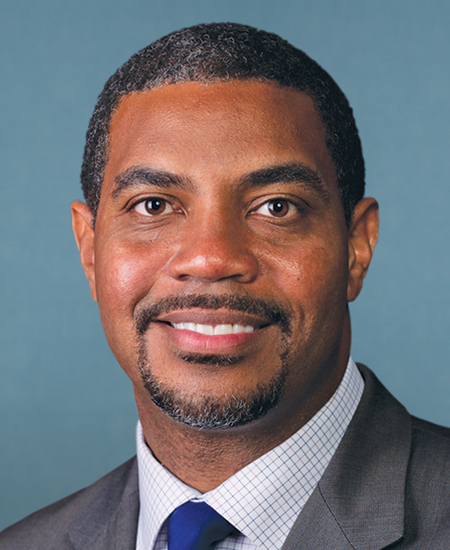
Rep. Steven Horsford
Sponsored bills
Maddy summaryHR 4422 (Global Respect Act) requires the President to publicly identify foreign officials responsible for violence, torture, or arbitrary detention against LGBTQI individuals and block their entry to the U.S., including revoking visas for them and their immediate families. It mandates annual reporting to Congress on the list of sanctioned individuals, the reasons for additions/removals, and efforts to coordinate with other countries on similar sanctions. The bill also updates U.S. human rights reporting requirements to explicitly include data on violence and discrimination against LGBTQI people worldwide. These measures aim to increase accountability for human rights violations against LGBTQI individuals without advocating for specific policy outcomes.
Maddy summaryHR 4340, the Therapeutic Fraud Prevention Act of 2023, prohibits paid providers from offering conversion therapy - defined as any commercial service attempting to change a person's sexual orientation or gender identity - and bans advertising that claims such therapy is effective or harmless. It directly affects therapists, counselors, or organizations offering paid conversion therapy services, including those advertising such services. Key provisions make it unlawful to provide, advertise, or facilitate paid conversion therapy, with enforcement led by the Federal Trade Commission (FTC) under consumer protection laws and allowing states to pursue civil actions. The bill explicitly excludes supportive care for gender transition or identity exploration from its definition of prohibited therapy.
Maddy summaryHouse Resolution 522 is a symbolic resolution recognizing that active father involvement during pregnancy, birth, and postpartum care improves health outcomes for both mothers and babies. It cites research showing fathers' engagement correlates with better prenatal care access, reduced maternal mental health risks, lower smoking/drinking during pregnancy, healthier birth weights, and improved child development. The resolution calls for addressing systemic barriers - such as workplace policies, cultural stigma, and healthcare access inequities - to support fathers as partners in maternal and infant health. It does not create new laws but formally acknowledges the role of fathers in reducing maternal mortality, infant health risks, and racial disparities in care.
Maddy summaryThis bill amends federal water infrastructure funding rules to better support Indian tribes. It allows the Secretary to reduce or waive a tribe's required financial contribution (non-Federal share) for water projects if that contribution would cause financial hardship. Tribes receiving federal grants for water infrastructure improvements directly benefit from this change. The provision specifically adds a waiver mechanism to existing law, shifting more cost responsibility to the federal government when tribes face budget constraints. This creates a more flexible funding approach for tribal water management projects.
Maddy summaryHR 4335, the VA Loan Informed Disclosure Act of 2023, requires mortgage lenders to include specific information about VA home loan programs in standard mortgage disclosures. The bill amends the National Housing Act to mandate that lenders provide details on VA loans (guaranteed under Title 38) alongside other loan options, including assumptions about prevailing interest rates. This change directly affects lenders processing VA-guaranteed mortgages, ensuring borrowers receive clearer comparisons between VA loans and other financing. The law does not require lenders to verify borrower eligibility for VA loans, only to include the specified disclosure language.
Maddy summaryHR 4272, the Stop Fentanyl Now Act of 2023, directly affects schools, public health systems, and law enforcement by expanding prevention and response efforts to the fentanyl crisis. The bill requires schools to train staff on carrying and administering naloxone (an opioid overdose reversal drug) and provides grants to states for school-based programs, treatment access, and harm reduction tools like fentanyl test strips. It also increases law enforcement resources to disrupt fentanyl trafficking, including targeting online sales, and removes legal barriers for possessing fentanyl test strips. These provisions aim to reduce overdose deaths by improving education, treatment access, and prevention strategies in communities most impacted by fentanyl-laced pills.
Maddy summaryHR 4241, the Horse Transportation Safety Act of 2023, prohibits transporting horses between states or territories in multi-level motor vehicles (like certain livestock trailers with stacked levels). This directly affects commercial horse transporters moving animals across state lines. The bill adds a civil penalty of $100-$500 per horse per violation for knowingly violating this rule, with separate penalties for each horse transported. It amends the Horse Protection Act to address safety concerns related to transporting horses in vehicles not designed for such travel.
Maddy summaryHR 3698, the Feed Hungry Veterans Act of 2023, amends the Food and Nutrition Act of 2008 to expand eligibility for SNAP (Supplemental Nutrition Assistance Program) benefits to more veterans. It adds four new categories of veterans who can qualify: those with a "catastrophically disabled" status under military disability law, veterans under 65 receiving a pension under specific veteran benefits law, and those meeting existing high-disability rating thresholds. This change directly affects veterans who previously did not meet the program’s eligibility criteria but now qualify under these expanded definitions. The bill takes effect on October 1, 2023, making these eligibility changes operational for SNAP enrollment.
Maddy summaryThe SAFE Act of 2023 extends a 2018 law that prohibits slaughtering animals for human consumption to include horses, donkeys, and other equine animals, such as ponies. It amends Section 12515 of the Agriculture Improvement Act of 2018 by updating the language to replace "dog or cat" with "dog, cat, or equine" in both the section title and the main prohibition. This change directly affects the livestock industry and slaughter facilities by banning the processing of equines for food. The bill modifies existing law without adding new enforcement mechanisms, closing a gap in animal protection.