

Maddy summaryThis bill reauthorizes federal grants for state programs that provide family-centered substance use disorder treatment to families with children in or at risk of entering the child welfare system. It extends funding through 2029 (previously expired in 2023) and requires states to report on current/future funding sources and partnerships with treatment providers. Key changes include expanding approved evidence-based services, updating terminology from "substance abuse" to "substance use disorder" throughout the law, and adding new requirements for program evaluations and reporting on outcomes. The bill directly affects state child welfare agencies, treatment providers, and families navigating both child welfare and substance use challenges.
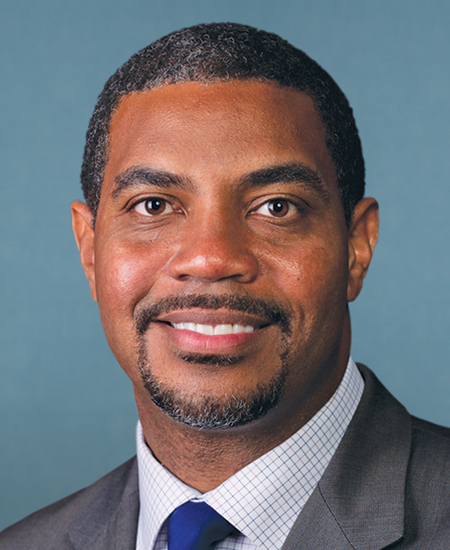
Rep. Steven Horsford
Sponsored bills
Maddy summaryThis bill creates federal grants to support partnerships between child welfare agencies, substance use disorder treatment providers, courts, and other community services to better serve families where parents have substance use disorders. The grants require collaborative planning and implementation to improve child safety, parental recovery, and family stability, with minimum funding of $250,000 annually for planning and $500,000-$750,000 for implementation phases. The bill allocates $60 million annually from 2024-2029 ($30 million for regional grants, $30 million for statewide grants) and establishes performance metrics focused on safety, permanency, recovery, and family well-being. It also requires states to establish protocols coordinating child welfare and substance use disorder services, with implementation beginning in 2025. The bill aims to reduce out-of-home placements for children and improve outcomes for families affected by parental substance use disorders.
Maddy summaryHR 8796, the "Stop Comstock Act," removes outdated restrictions from federal law that previously banned the distribution of materials related to contraception and abortion as "obscene" or "indecent." The bill amends Title 18 and the Tariff Act by deleting references to "indecent," "immoral," "unlawful abortion," and "procuring abortion" from provisions governing obscene materials. It clarifies that the law only prohibits "obscene materials" in commerce, eliminating broad restrictions on reproductive health information. This directly affects internet platforms, healthcare providers, and individuals sharing reproductive health resources by removing legal barriers to their distribution.
Maddy summaryHR 8681, the Health Providers Training Act, amends the Social Security Act to allow hospitals to apply for existing "health profession opportunity grants." This change directly affects hospitals (as defined in Section 1861(e) of the Social Security Act), making them eligible alongside community-based organizations for these federal grants. The bill does not create new funding but expands the current grant program's eligibility to include hospitals. The amendment takes effect on October 1, 2024.
Maddy summaryHR 8390, the Mental Health and MAMA Act of 2024, eliminates cost-sharing (like copays or deductibles) for mental health and substance use disorder services during pregnancy and for one year after birth. It applies to people enrolled in group health plans, individual insurance, or federal employee health plans, covering services provided by in-network providers. The bill requires insurers to waive these costs starting two years after enactment, explicitly including telehealth services. It specifically targets care for pregnant and postpartum individuals, ensuring coverage from pregnancy diagnosis through the 12 months following birth.
Maddy summaryThis bill creates a new TANF Program Integrity Unit at the Administration for Children & Families to monitor state use of Temporary Assistance for Needy Families (TANF) funds, with $10 million in annual funding added to support its operations. If a state intentionally misuses TANF funds, the unit would require the state to repay the misused amount by providing direct cash assistance to families earning below 100% of the federal poverty line. The law applies directly to states administering TANF programs, mandating stricter oversight of fund usage and repayment of misused funds. It also requires the unit to submit annual reports to Congress on its activities.
Maddy summaryHR 7929, the Nursing Home Workforce Support and Expansion Act of 2024, allocates $400 million annually (2025-2028) to states for grants supporting nursing home staff. It directly affects workers like home health aides, nurse aides, and personal care aides in eligible facilities (e.g., nursing homes, hospices) by requiring states to use funds for wage subsidies, student loan repayment, childcare, and transportation assistance. States must also report annually on how funds are spent and track metrics like worker retention, wages, and job categories. The bill prohibits using grant funds to replace existing state spending on staffing and mandates transparency through detailed federal reporting.
Maddy summaryThe Nurse Overtime and Patient Safety Act of 2024 sets new limits on mandatory overtime for nurses in healthcare facilities, prohibiting work beyond 48 hours in a week, 12 consecutive hours in a 24-hour period, or during the 10 hours following a 12-hour shift. It requires healthcare providers to document mandatory overtime during emergencies, post nurse schedules and rights notices, and prohibits retaliation against nurses who refuse mandatory overtime or report violations. The bill authorizes civil penalties of up to $10,000 per violation for non-compliance and mandates studies to establish safe working hour standards and assess federal medical facility policies. This directly affects hospitals, clinics, and other covered healthcare providers, as well as registered and licensed practical nurses working in these settings.
Maddy summaryThe Mental Health Transparency Act (HR 7140) requires health insurance plans and issuers to publicly disclose the percentage of mental health and substance use disorder providers in their networks using a rating system (like high/medium/low or star ratings). It mandates that plans display this information on their websites along with a public database listing mental health and substance use disorder providers, including details like location, specialty, whether they treat children under 19, and if they offer telehealth. The government will create and maintain this database, updating it annually with information provided by providers. Implementation begins for plan years starting January 1, 2027, aiming to increase transparency about provider availability for consumers.
Maddy summaryThis bill increases funding for child care programs by authorizing $10 billion for fiscal year 2024 and subsequent years with annual increases tied to inflation. It creates new $5 billion annual grants specifically to improve child care workforce, supply, quality, and access in underserved areas, requiring states, territories, and Indian Tribes to use these funds for specific activities like workforce development, facility improvements, and expanding services for vulnerable children. The bill mandates recipients to prioritize services for dual language learners, children with disabilities, rural communities, and low-income families, while requiring detailed reporting on how funds are used and their impact on child care access and quality. It directly affects low-income families relying on child care assistance, child care providers, and the states and tribes administering these programs. The bill takes effect on October 1, 2023.