

Maddy summaryThe Protect America's Workforce Act cancels an executive order issued on March 27, 2025, that excluded certain groups from federal labor-management relations programs, making it legally unenforceable. It also ensures that all collective bargaining agreements between federal agencies and labor unions, which were active as of March 26, 2025, remain fully effective until their agreed terms expire. This directly affects federal agencies, labor unions, and the employees covered by these agreements. The bill prevents federal funds from being used to implement the canceled executive order while preserving existing labor agreements.
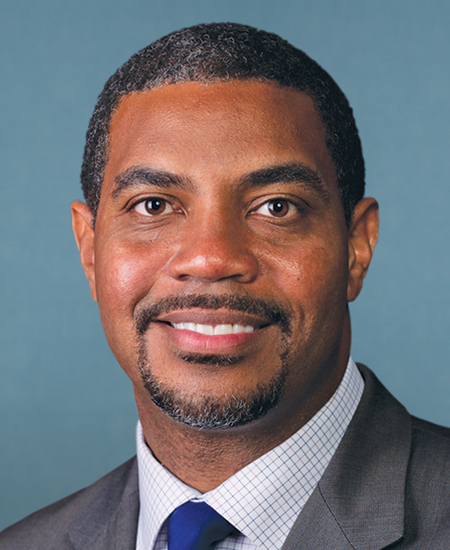
Rep. Steven Horsford
Sponsored bills
Maddy summaryHRES 949 is a symbolic resolution expressing congressional support for designating the first Saturday in May as "National Lowrider Day." It recognizes lowrider culture as an integral part of U.S. history and cultural identity, originating in Chicano communities and reflecting creativity, community building, and resistance to discrimination. The resolution honors lowrider builders, artists, and clubs, acknowledges historical challenges like criminalization, and calls for public events and educational programs celebrating this cultural heritage. As a non-binding resolution, it does not create new laws but formally acknowledges the cultural significance of lowrider culture for affected communities nationwide.
Maddy summaryHR 6689, the ETHICAL Procurement Act, prohibits the U.S. Secretary of Defense from entering into, renewing, or extending defense contracts with entities that have specific ties to certain government officials or their immediate family members. It blocks contracts if an entity’s officer, director, partner, or majority owner holds a position appointed by the President (with Senate approval), serves in a confidential/policy role under Schedule C, is a special government employee, or is in the Senior Executive Service. The bill also prohibits contracts if an immediate family member (parent, child, sibling, spouse, or domestic partner) of such an official owns a significant stake in the entity or would gain substantial financial benefit. The Secretary of Defense must issue implementing regulations within 30 days of the bill’s enactment. This directly affects defense contractors with leadership connected to high-level government roles, aiming to prevent conflicts of interest in defense procurement.
Miracle on Ice Congressional Gold Medal Act This act provides for the award of Congressional Gold Medals to the members of the 1980 U.S. Olympic men's ice hockey team in recognition of the team's achievement at the 1980 Winter Olympic Games.
Maddy summaryThe BASIC Act prohibits certain non-regular government employees (called "special Government employees") from receiving or arranging for federal contracts, grants, or other awards exceeding $1 million annually if they or their family, household, or affiliated organizations would benefit. Exceptions apply to employees serving only on advisory committees, holding GS-10 or lower positions, or working in student-specific roles. The bill requires agencies to update regulations to enforce this ban, mandates public disclosure of financial reports for affected employees (with exceptions), and creates a searchable online database tracking these employees' service details. These changes aim to prevent conflicts of interest in federal contracting.
Maddy summaryThis concurrent resolution (HCONRES 65) is a symbolic congressional commendment of state and local governments that have affirmed reproductive rights as human rights. It recognizes efforts by jurisdictions like Carrboro, North Carolina; Austin, Texas; and Fulton County, Georgia, which passed resolutions or proclamations declaring abortion access a human right and condemning criminalization of pregnancy outcomes. The resolution urges states to repeal restrictive abortion laws and protect access to reproductive care, but it does not create new legal requirements or fund programs. As a procedural resolution, it has no binding effect on federal or state law.
Maddy summaryHR 6597, the LET’S Protect Workers Act, increases civil penalties for employers violating key labor laws to strengthen worker protections. It raises fines for child labor violations to up to $700,000 per incident causing death or serious injury, and doubles penalties for repeated wage/hour violations (up to $50,000 per violation). The bill also significantly boosts OSHA penalties (e.g., up to $800,000 for serious violations), adds new retaliation penalties for mine safety violations (up to $200,000 for repeat offenses), and clarifies that recordkeeping violations continue until corrected. These changes apply to employers across sectors, including manufacturing, agriculture, and mining, under the Fair Labor Standards Act, Occupational Safety and Health Act, and Mine Safety Act.
Maddy summaryHR 6579, the Justice for Breonna Taylor Act, requires federal, state, and local law enforcement officers to provide notice of their authority and purpose before entering a premises with a warrant. This applies to all officers serving warrants, including those at the federal level and state/local agencies receiving Department of Justice funding. The law mandates this notice requirement starting in the first fiscal year after enactment, directly affecting law enforcement agencies that receive federal funding for policing. It changes the process for executing warrants by eliminating the ability to conduct no-knock entries without first informing occupants.
Maddy summaryThis bill prohibits Department of Homeland Security (DHS) officers from arresting or detaining immigrants at immigration court facilities during hearings or while arriving/departing for hearings, except with a judicial warrant. It applies to all pending immigration cases, appeals, and motions to reopen, covering anyone whose removal order isn't final. Exceptions allow arrests only to prevent imminent threats to life, safety, or national security. The bill also requires DHS to report scheduled check-in arrests to the Inspector General and mandates annual oversight reports to Congress on compliance.
Maddy summaryThis bill provides a one-time $200 monthly payment to eligible Social Security, SSI, railroad retirement, and veterans disability/pension beneficiaries during January-June 2026. It directly affects individuals receiving these specific benefits who reside in U.S. states, territories, or the District of Columbia, with payments delivered through existing benefit channels. Key provisions include treating these payments as non-income for tax and program eligibility purposes, prohibiting double payments for multiple benefits, and ensuring payments cannot be offset or assigned. The payments expire by July 2026, and the bill includes specific administrative funding for implementation.