

Maddy summaryThis bill makes it a federal crime to steal packages from private or commercial carriers (like FedEx or UPS) before the recipient takes physical possession. It directly affects thieves who target delivery vehicles or curbside packages and carriers who report such thefts. The key provision amends federal law to explicitly include "any package... delivered by any private or commercial interstate carrier" under existing protections against embezzlement or theft. This expands current law, which previously covered packages in transit, to cover packages left for pickup by carriers. The law does not change delivery practices but creates new federal penalties for stealing packages during this specific handoff period.
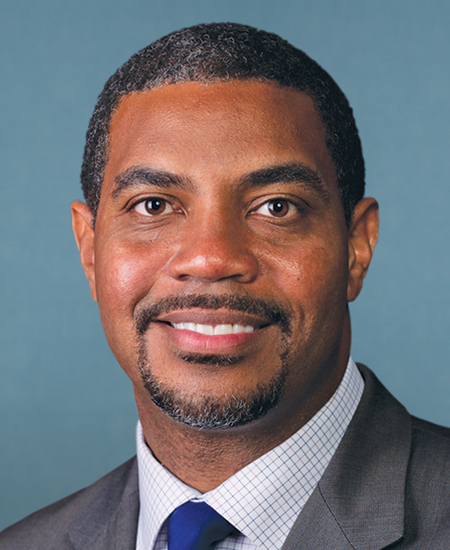
Rep. Steven Horsford
Sponsored bills
Maddy summaryThis bill expands tax benefits for military personnel by adding drone operators to the existing combat zone tax exclusion under the Internal Revenue Code. It specifically includes "the operation of a remotely piloted aircraft in a combat zone" and related intelligence/support activities certified by the Secretary of Defense as directly supporting combat operations. The change affects military personnel who operate drones in active combat zones, extending tax-free compensation they previously received. This provision modifies existing tax law to cover drone crews' service, applying to compensation received after the bill's enactment.
Maddy summaryHR 4611 (EACH Act of 2025) requires all federally funded health programs - including Medicaid, Medicare, military health plans, and the Indian Health Service - to cover abortion services without restrictions, repealing the Hyde Amendment's long-standing ban on federal funding for most abortions. This directly affects millions of people enrolled in these programs, particularly low-income women, women of color (including 25% of Black women and 22% of Hispanic women on Medicaid), and young people. The bill mandates coverage in all federally administered health plans and prohibits state or private insurers from restricting abortion coverage in health insurance. It aims to eliminate current federal and state barriers that deny abortion access to people who rely on government health programs.
Maddy summaryHR 1404, the CHAMPVA Children’s Care Protection Act of 2025, expands healthcare eligibility under the CHAMPVA program for children of veterans. It increases the maximum age for children to receive medical benefits from 21 to 26 years old, regardless of marital status. This change directly affects dependent children of veterans who were previously eligible until age 21, extending coverage through their mid-twenties. The policy amendment applies to medical care provided on or after the bill’s enactment date.
Maddy summaryHR 6901 establishes two key programs for civilian workers involved in U.S. nuclear weapons programs. It creates a commemorative medal for current or former civilian employees or contractors who directly participated in atomic weapon detonations, cleanup of radioactive material from detonations or accidents, or were exposed to radiation during WWII. The bill also creates a $75,000 compensation program for eligible individuals diagnosed with specific radiation-linked cancers (like leukemia, thyroid cancer, or lung cancer) who participated in cleanup efforts, requiring documentation and offsetting any existing payments under the Radiation Exposure Compensation Act. This bill directly affects civilian workers and contractors with documented exposure or participation in nuclear program cleanup activities.
Maddy summaryThe Geothermal Tax Parity Act (HR 6873) updates U.S. tax code to treat geothermal energy projects the same as oil and gas projects for tax purposes. It allows geothermal developers to deduct exploration and development costs (amortization) and removes restrictions on passive loss deductions that previously limited geothermal investments. This directly affects geothermal energy companies, investors, and developers by providing tax parity with the oil and gas industry. The changes apply to taxable years beginning after the bill’s enactment date. The bill makes no new funding commitments but adjusts existing tax rules to support geothermal development.
Maddy summary# Summary of Proposed Tax Code Amendment This document is a comprehensive proposal for tax code amendments, primarily focused on extending, modifying, and creating new tax credits related to clean energy, energy efficiency, and environmental initiatives. The key components include: ## Housing and Residential Credits - **First-Time Homebuyer Tax Credit**: A refundable credit for first-time homebuyers (Section 13001) - **Renter Tax Credit**: A refundable credit for renters paying more than 30% of their adjusted gross income in rent (Section 13002) ## Clean Energy Credits (Sections 21001-21007) - Extended clean energy production credit with a new phase-out date (2032 or when greenhouse gas emissions reach 25% of 2022 levels) - Extended clean electricity investment credit for wind and solar facilities - Restored credit for wind and solar leasing arrangements - Extended clean hydrogen production credit (construction date reverted to 2033) - Extended residential clean energy credit (termination date moved to 2034) - Reinstated special rate for sustainable aviation fuel (35 cents/ gallon for certain facilities) ## Energy Efficiency Credits (Sections 22001-22004) - Restored product identification number requirement for energy-efficient home improvements - Extended new energy efficient home credit (acquisition date moved to 2032) - Repealed termination of new energy efficient commercial buildings deduction - Restored cost recovery for energy property ## Electric Vehicle and Charging Infrastructure Credits (Sections 23001-23005) - Extended previously-owned vehicle credit (acquisition date moved to 2032) - Extended clean vehicle credit (placement in service date moved to 2032) - Extended commercial clean vehicles credit (termination date moved to 2032) - Extended alternative fuel vehicle refueling property credit (termination date moved to 2032) - Created a new credit for electric bicycles (30% of cost, up to $5,000 per bicycle) ## Clean Infrastructure and Resiliency Credits (Sections 24001-24007) - Created qualifying water reuse project credit (30% of qualified investment) - Created recycling property investment credit (30% of qualified investment with phase-out) - Excluded amounts received from State-based catastrophe loss mitigation programs from gross income - Expanded exclusion for certain emergency agricultural assistance - Created credit for disaster mitigation expenditures (30% of qualifying mitigation activities) - Created qualifying electric power transmission line credit (30% of qualified investment) - Created qualifying advanced battery project credit (30% of qualified investment with $3 billion cap) The proposed amendments generally extend existing credits through 2032-2037, with some credits having phase-out schedules and others having specific termination dates. The document also includes numerous conforming amendments to other sections of the tax code to accommodate these changes.
Maddy summaryThis bill amends Section 287(g) of immigration law to restrict immigration enforcement authority exclusively to U.S. Immigration and Customs Enforcement (ICE) officers and DHS employees. It removes state and local law enforcement agencies' ability to verify immigration status, investigate, or arrest individuals for immigration violations under current 287(g) agreements. The change directly affects local police departments that previously participated in immigration enforcement through federal partnerships. The bill does not create new policies but alters existing authority to limit enforcement to federal officers only.
Maddy summaryThis bill amends the Servicemembers Civil Relief Act to create a new 6% interest rate cap for student loan consolidation or refinancing. Specifically, it limits interest to 6% on loans consolidated or refinanced during military service to cover student debt incurred *before* service (not new debt during service). This applies to active-duty servicemembers (or jointly with their spouse) who refinance pre-service loans while serving. The change affects how military members manage existing student debt during their service, without altering interest rates on other loans or providing debt forgiveness.
Maddy summaryThis bill establishes a digital system for TRICARE members to electronically file and track complaints about access to care at military medical facilities. It requires the Defense Department to create a system where beneficiaries can submit complaints online, view their status in real time, and have complaints automatically aggregated quarterly for review. The system mandates annual reports to Congress comparing complaint types (e.g., specialty vs. primary care, pediatric vs. non-pediatric, administrative hurdles) and detailing facility-level actions taken to address issues. The goal is to improve transparency and accountability in military healthcare access.