

Maddy summaryThis bill would allow foreign universities to offer certain distance education courses to students physically present in their home country while still qualifying for U.S. federal student aid under the Higher Education Act. It sets three key requirements: no more than 12.5% of a program can consist of distance education courses, the institution must be evaluated by an accrediting body or government entity as capable of delivering distance education, and students must be physically located in the foreign country during instruction. The bill amends existing law to clarify eligibility for these specific programs, directly affecting foreign institutions seeking to provide distance education to their on-site students. It does not change eligibility for U.S.-based institutions or remote students outside the foreign country.
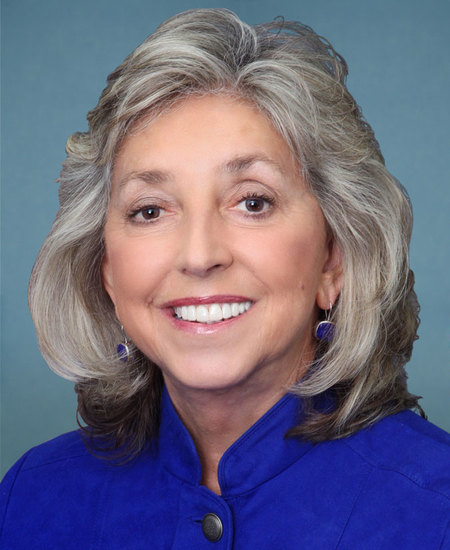
Rep. Dina Titus
Sponsored bills
Maddy summaryThe ProTECT Act of 2024 bans the hunting, taking, or importing of hunting trophies from species listed as "threatened" under the Endangered Species Act. It directly affects hunters, importers, and businesses involved in trading trophies of threatened species, which currently face fewer protections than endangered species. The bill extends existing prohibitions - previously limited to endangered species - to explicitly cover threatened species, including banning permits for such activities and defining "trophy" to include processed animal parts. This creates a uniform ban on trophy hunting and trade for all listed threatened species, closing a gap in current law.
Maddy summaryThe Good Samaritan Remediation of Abandoned Hardrock Mines Act of 2024 establishes a limited pilot program allowing non-responsible parties (called "Good Samaritans") to remediate pollution at abandoned hardrock mine sites. The bill creates a permit process requiring applicants to demonstrate they're not liable for the pollution, can safely complete the remediation, and will protect the environment. The Environmental Protection Agency would issue up to 15 permits for these projects, providing liability protection for permitted activities while requiring public notice and environmental review. The pilot program would expire after 7 years, with the EPA required to report on its effectiveness to Congress.
Maddy summaryThis bill establishes a commission to study whether the Weitzman National Museum of American Jewish History in Philadelphia should be transferred to the Smithsonian Institution. The commission, composed of 8 members appointed by congressional leaders with expertise in Jewish American history and museum administration, will examine the museum's collections, financial status, governance, and feasibility of transfer within two years. The commission must submit a report detailing findings, a fundraising plan, and legislative recommendations for any potential transfer. The bill does not transfer the museum but creates a process to evaluate the possibility.
Maddy summaryHR 7438 directs the U.S. Treasury to mint commemorative coins for the 2026 FIFA World Cup, including 100,000 $5 gold coins, 500,000 $1 silver coins, and 750,000 half-dollar coins. The coins will be sold to the public at face value plus surcharges ($35, $10, and $5 per coin, respectively), with all surcharge revenue paid to FWC2026 US, Inc. for U.S. soccer programs. These funds must support soccer initiatives, particularly in underserved communities and youth development, as specified in the bill. The coins are legal tender but will only be issued during 2026, with no net cost to the U.S. government.
Maddy summaryHR 6229, the DHS Special Events Program and Support Act, creates a new program within the Department of Homeland Security to assess security threats at pre-planned special events not already designated as National Special Security Events. It allows state, local, tribal, and territorial officials to voluntarily request a security rating for events, which could lead to DHS providing direct security and situational awareness support. The program uses a risk-based approach considering factors like event size, attendance of officials, venue, and credible threats, with expedited reassessment options. DHS must report annually on the program’s usage and support provided, and conduct research on technologies for mass gathering security. This directly affects event organizers seeking federal security assistance for non-NSS events.
Maddy summaryHR 7776, the Help Hoover Dam Act, authorizes the Secretary of the Interior to spend non-reimbursable funds recovered into account XXXR5656P1 on Hoover Dam operations, maintenance, cleanup, and capital improvements. It specifically allows these funds to be used for activities within the Boulder Canyon Project at Hoover Dam or on related land, subject to contractor approval under the 2011 Hoover Power Allocation Act. The bill modifies the existing Boulder Canyon Project Act to clarify spending authority for existing recovered funds, without creating new appropriations or affecting other funding mechanisms. This procedural change directly affects how the Department of the Interior manages and allocates specific recovered funds for Hoover Dam maintenance and operations.
Maddy summaryHR 7671, the Disaster Management Costs Modernization Act, allows local governments and organizations receiving federal disaster funds to redirect unused management costs toward disaster preparedness and mitigation. It defines "excess funds" as the difference between authorized management costs and actual spending, making these funds available for activities like building disaster recovery capacity or managing ongoing disaster operations. These redirected funds must be used within five years of availability and cannot create new spending, as the bill specifies "no additional funds" are authorized. The act also requires a GAO study to assess historical management costs for future funding decisions.
Maddy summaryThis bill requires the Government Accountability Office (GAO) to report on how well General Services Administration (GSA)-owned office buildings comply with existing accessibility standards under the Architectural Barriers Act of 1968. The report must be submitted to specific congressional committees within one year of the bill's enactment. It does not change accessibility laws or create new requirements, but instead mandates a study of current compliance for federal office buildings managed by the GSA. The bill directly affects GSA building operations and federal facilities under its jurisdiction.
Maddy summaryHR 9024 establishes a new FEMA advisory panel to review how incident periods are determined for disasters, focusing on slow-onset, compound, and cascading events like extreme heat. It authorizes FEMA to fund community cooling centers and resilience centers, and to support innovative heat mitigation projects like equipment stockpiling for households and first responders. The bill requires FEMA to issue updated guidance on extreme heat planning and conduct a study examining heat impacts on vulnerable communities, infrastructure, health, and emergency alerts. These changes directly affect FEMA, state/local emergency managers, and communities facing increasingly frequent extreme heat events.