

Maddy summaryThis bill approves new agreements that amend the Compact of Free Association between the United States and the Federated States of Micronesia, the Republic of the Marshall Islands, and the Republic of Palau. It incorporates related agreements including fiscal procedures and trust fund agreements that govern how U.S. funding is managed and distributed to these nations. The bill provides funding for 2024-2043 to support programs like healthcare, education, veterans' services, and economic development in the Freely Associated States. It establishes reporting requirements and oversight mechanisms for federal agencies implementing these agreements. The bill directly affects U.S. federal agencies, the Freely Associated States, and U.S. funding mechanisms for these Pacific Island nations.
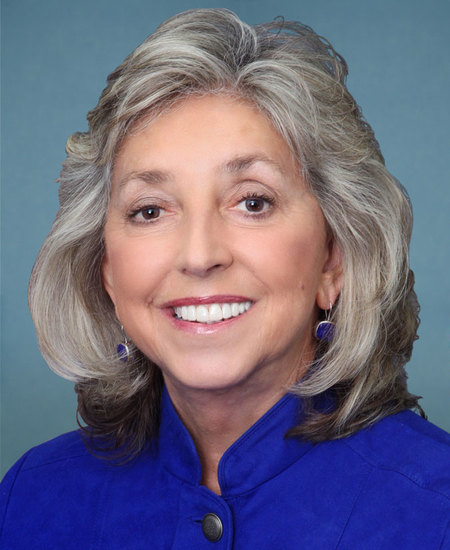
Rep. Dina Titus
Sponsored bills
Maddy summaryHRES 1625 is a symbolic resolution supporting the recognition of "World Basketball Day" on December 21 each year, following a 2023 UN resolution. It does not create new laws or directly affect specific groups, but formally honors basketball's role in fostering global unity, sports diplomacy, and community impact. The resolution highlights basketball's worldwide reach (over 585 million annual players), the NBA's international diversity (125+ players from 43 countries in 2024), and its humanitarian contributions. It encourages continued growth of basketball programs that build community leadership and opportunities globally. The resolution is purely ceremonial, expressing the House's support for the sport's unifying values.
Maddy summaryHR 7070, the Wildfire Response Improvement Act, updates federal wildfire response and recovery policies. It requires FEMA to make fire management assistance available for emergency stabilization regardless of the declared incident period (Section 2), and to add wildfire-specific recovery guidance to its Public Assistance Guide covering debris removal, water toxicity, and emergency measures (Section 3). The bill also mandates FEMA to review and update cost-effectiveness criteria for wildfire mitigation projects (like defensible space, nature-based infrastructure, and smoke impact reduction) under the Stafford Act, prioritizing projects based on these revised standards (Section 4). These changes directly affect communities recovering from wildfires and FEMA's process for funding recovery and mitigation efforts.
Maddy summaryThe Promoting Accessibility on Federal Lands Act of 2024 requires the Secretaries of Agriculture and the Interior to conduct a comprehensive assessment of accessibility for individuals with disabilities at federal trails, campsites, boat docks, and outdoor recreation facilities on National Forest System lands and public lands. Within 180 days of receiving funding, these assessments must be completed and made publicly available on the Department of Agriculture and Department of the Interior websites. Existing accessibility evaluations conducted before the bill's enactment may be incorporated into the required assessment. This legislation establishes a standardized process to document current accessibility conditions without mandating immediate facility modifications.
Maddy summaryThe ARTICLE ONE Act would significantly increase congressional oversight of national emergencies by requiring the President to specify which laws they plan to use during an emergency and giving Congress 30 days to approve the declaration before emergency powers can be exercised. The bill would mandate detailed reports from the President about the emergency's circumstances, estimated duration, and planned actions, with additional reports every six months during the emergency. If Congress doesn't approve an emergency declaration within 30 days, the President cannot extend it or use the emergency powers for the same situation. This would limit national emergencies to 30 days unless renewed through congressional approval, fundamentally changing how presidential emergency powers operate.
Maddy summaryHR 2367, the Truck Parking Safety Improvement Act, creates a federal grant program to address commercial truck parking shortages on highways. It provides competitive grants (totaling $175M-$320M over three years) for projects like building new rest areas, expanding parking at ports or truck stops, or improving safety at existing facilities. The program requires all funded parking to be free, publicly accessible to all truck drivers, and maintained without user fees. This directly affects commercial truck drivers, motor carriers, and highway safety by aiming to improve parking access, reduce traffic congestion, and enhance safety on federal-aid highways.
Maddy summaryThis concurrent resolution (HCONRES 135) affirms U.S. support for Syria's religious and ethnic minorities, including groups like Yezidis, Kurds, Christians, and Alawites, who have faced persecution from ISIS and ongoing violence. It calls for an inclusive political transition in Syria that protects minority rights, urges the U.S. government to support cultural heritage restoration, and demands all actors cease violence against minorities. The resolution encourages the State Department and USAID to advocate for minority protection and address humanitarian needs through targeted programming. It does not create new policy but reaffirms existing U.S. commitments, referencing prior legislation like the Iraq and Syria Genocide Relief Act.
Maddy summaryHR 3396, the Fire Department Repayment Act of 2023, requires the Secretaries of Agriculture, Interior, Homeland Security, and Defense to establish standard procedures for federal fire suppression cost share agreements within one year. It mandates reviewing existing agreements to align them with local cooperative fire protection agreements and conducting second-level reviews after wildfires, involving state and local fire organizations. The bill directly affects fire departments and agencies participating in these cost-sharing arrangements under the Reciprocal Fire Protection Act. Key changes include standardized procedures for agreement management and post-wildfire reviews to ensure cost-sharing compliance.
Maddy summaryHR 9774, the Health Care Affordability Act of 2024, would expand premium tax credits under the Affordable Care Act for households earning between 150% and 400% of the federal poverty level. It modifies the sliding scale calculation to reduce the percentage of monthly insurance premiums these households must pay, with the lowest out-of-pocket costs for those near 400% of poverty. This directly affects individuals and families purchasing health insurance through marketplace plans who qualify for these tax credits. The changes apply to tax years beginning after December 31, 2025.
Maddy summaryThe SWIFT Act (HR 9234) amends Social Security provisions to benefit widows, widowers, and surviving divorced spouses. It eliminates reductions in benefits for those claiming survivors benefits before retirement age due to disabilities. The bill increases the age limit for child-in-care benefits from 16 to 18 (or 19 for full-time students). It also creates new provisions allowing beneficiaries who delay claiming benefits to receive increased amounts. These changes apply to benefits payable on or after January 1, 2025.