This resolution condemns Russia's nuclear escalatory rhetoric and implied threats on the potential use of nuclear weapons in the context of its invasion of Ukraine. The resolution also (1) condemns Russia's purported suspension of participation in the New START Treaty, (2) emphasizes the value of arms control agreements between the United States and Russia, and (3) calls on the administration to continue pursuing nuclear arms control and risk reduction with Russia and China.
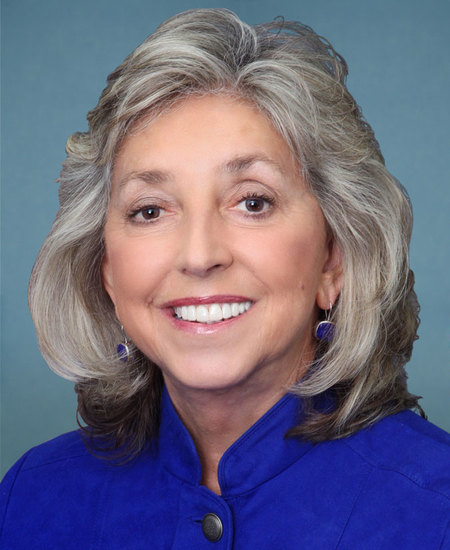
Rep. Dina Titus
Sponsored bills
Stop the Wait Act of 2025 This bill phases out the initial waiting period for Social Security Disability Insurance (SSDI) benefits and eliminates the waiting period for certain disabled individuals to become eligible for Medicare. Under current law, individuals generally must wait five months after the onset of disability to begin receiving SSDI benefits. The bill would gradually reduce this waiting period before eliminating it entirely in the year 2030. Further, the bill would eliminate the 24-month waiting period for certain disabled workers and other individuals to become eligible for Medicare. Under current law, individuals under the age of 65 may generally enroll in Medicare after they have been eligible for SSDI or Social Security child’s, widow’s, or widower’s benefits by reason of disability for 24 months. The bill would eliminate this waiting period for individuals for whom the annual cost of certain medical insurance would exceed a specified percentage of their household income (i.e., those who cannot afford minimum essential coverage). Medicare eligibility for these individuals must be available retroactively to the first month that an individual qualified for SSDI or Social Security child’s, widow’s, or widower’s benefits by reason of disability.
Maddy summaryHR 942, the "Banning SPR Oil Exports to Foreign Adversaries Act," prohibits the export of petroleum products drawn from the U.S. Strategic Petroleum Reserve to China, North Korea, Russia, Iran, and any entity owned or controlled by these countries or the Chinese Communist Party. The Secretary of Energy may grant a waiver for such exports if certified as serving U.S. national security interests, but must issue implementing rules within 60 days of enactment. This policy directly affects U.S. energy exports and entities seeking to purchase SPR oil from the listed adversaries.
Maddy summaryHR 957, the Parity Enforcement Act of 2025, strengthens enforcement of mental health and substance use disorder coverage parity requirements under federal law. It expands accountability for violations to include not only health plan sponsors but also service providers and administrators of group health plans. The bill adds civil monetary penalties for failing to meet parity rules, specifically targeting requirements related to mental health, substance use disorder coverage, and genetic information protections. These changes apply to health plans for years beginning one year after the bill's enactment. The law directly affects employers, insurers, and health plan administrators offering group health coverage.
National Origin-Based Antidiscrimination for Nonimmigrants Act or the NO BAN Act This bill imposes limitations on the President's authority to suspend or restrict aliens from entering the United States. It also prohibits religious discrimination in various immigration-related decisions, such as whether to issue an immigrant or nonimmigrant visa, unless there is a statutory basis for such discrimination. The President may temporarily restrict the entry of any aliens or class of aliens after the Department of State determines that the restriction would address specific and credible facts that threaten U.S. interests such as public safety. The bill also imposes limitations on such restrictions, such as requiring the President, State Department, and the Department of Homeland Security (DHS) to (1) only issue a restriction when required to address a compelling government interest, and (2) narrowly tailor the suspension to use the least restrictive means to achieve such an interest. Before imposing a restriction, the State Department and DHS shall consult with Congress. The State Department and DHS shall report to Congress about the restriction within 48 hours of the restriction's imposition. If such a report is not made, the restriction shall immediately terminate. Individuals or entities present in the United States and unlawfully harmed by such a restriction may sue in federal court. The bill transfers the authority to suspend the entry of aliens traveling to the United States on a commercial airline that failed to comply with regulations related to detecting fraudulent travel documents from the Department of Justice to DHS.
This bill provides for the presentation of a Congressional Gold Medal to the Freedom Riders, in recognition of their contribution to civil rights by fighting for equality in interstate travel.
Household Goods Shipping Consumer Protection Act This bill allows the Federal Motor Carrier Safety Administration (FMCSA) to assess civil penalties against motor carriers, brokers, and freight forwarders for violations related to the interstate transportation of household goods and provides states with additional related authorities. As background, a broker is the “middle person” between a shipper and a motor carrier and arranges for the transportation of household goods. A freight forwarder organizes shipments for individuals or corporations. Unlike a broker, freight forwarders assume responsibility for transportation and may transport the freight itself. The bill expands the FMCSA registration requirements to require motor carriers, brokers, and freight forwarders to designate a principal place of business (i.e., a single physical location where management officials report to work, a significant portion of the transportation business is conducted, and records are maintained). FMCSA may withhold, suspend, amend, or revoke any part of a registration for failure to designate. In addition, brokers and freight forwarders must disclose any common ownership, management, control, or familial relationship with any other carrier, freight forwarder, broker, or applicant in the previous three years. Under current law, motor carriers must disclose this information. Further, states may use certain grant funds to enforce federal household goods statutes and regulations for the interstate transportation of these goods by motor carriers and brokers. This applies to Motor Carrier Safety Assistance Program (MCSAP) grant funds and MCSAP High Priority discretionary grant funds. A state shall retain collected fines that are a result of enforcement.

Stop Antiabortion Disinformation Act or the SAD Act This bill prohibits deceptive advertising for reproductive health services. Specifically, the bill makes it unlawful for a person (i.e., individual, partnership, corporation, association, or organization) to deceptively advertise the reproductive health services they offer, including by misrepresenting that the person (1) offers or provides contraception or abortion services (or referrals for such contraception or abortion services), or (2) employs or offers access to licensed medical personnel. The bill provides for enforcement by the Federal Trade Commission. In addition to any other penalty, violations are subject to a civil penalty that may not exceed the greater of $100,000 (adjusted annually for inflation) or 50% of the revenue earned during the preceding 12-month period by the ultimate parent entity of the person who violated the bill.
Medicare Patient Access and Practice Stabilization Act of 2025 This bill increases certain payment adjustments under the Medicare physician fee schedule for services furnished between April 1, 2025, and January 1, 2026.
Maddy summaryHR 903, the Smoke and Heat Ready Communities Act of 2025, creates federal grant programs to help communities prepare for wildfire smoke and extreme heat events. It funds air pollution control agencies to monitor air quality, deploy monitoring equipment, equip public buildings with air filtration, and distribute protective gear like N95 masks. The bill also establishes university research centers to study health impacts and develop community response strategies, and provides competitive grants for local governments, tribes, and Native Hawaiian organizations to create collaborative community plans. These programs target communities most vulnerable to poor air quality from wildfire smoke and extreme heat, with priority given to areas impacted by these events.