

Maddy summaryThe CLEAR Act extends the Freedom of Information Act (FOIA) to certain federal entities established under Section 3161 of Title 5, United States Code, including the National Archives and Records Administration. It requires these entities to process FOIA requests for all records - regardless of when they were created - starting from the law's enactment date. This change directly affects the public, who can now access historical and current records held by these entities through FOIA. The bill does not alter existing record-keeping practices but ensures consistent access to information across these specific federal bodies.
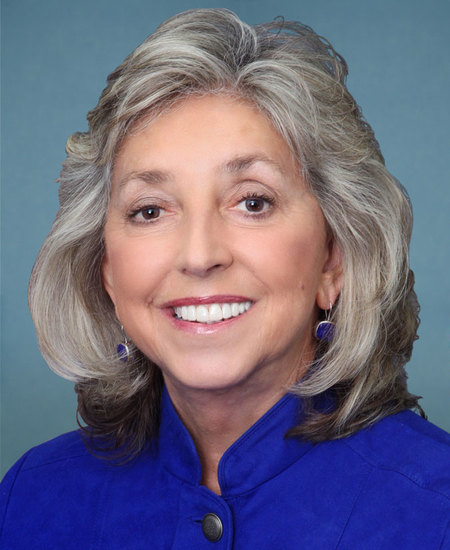
Rep. Dina Titus
Sponsored bills
Maddy summaryThe ORPHAN Cures Act (HR 946) adjusts how the government calculates approval timelines for certain rare disease treatments under the Drug Price Negotiation Program. It clarifies that periods when a drug was previously designated as an "orphan drug" (for rare diseases) won't count toward the timeline for price negotiations. The bill also broadens the definition of "rare disease" to cover multiple conditions simultaneously, aligning with existing federal law. This directly affects manufacturers of orphan drugs by potentially extending their exclusivity periods before price negotiations begin.
Maddy summaryHR 211, the Equal Access to Contraception for Veterans Act, eliminates out-of-pocket costs for specific contraceptives for veterans using VA healthcare. It amends Section 1722A of Title 38 to prohibit the VA from charging veterans copayments for contraceptive items that must be covered without cost-sharing under federal law (as required by Section 2713(a)(4) of the Public Health Service Act). This means veterans will not pay any amount for contraceptives covered by the federal mandate, such as birth control pills or IUDs, when obtained through the VA system. The bill directly affects veterans enrolled in VA healthcare seeking contraceptive services, ensuring no additional costs beyond what is already mandated for these items.
Maddy summaryHRES 116 is a non-binding House resolution condemning pardons granted to individuals convicted of assaulting Capitol Police officers. It expresses the House's disapproval of such pardons but does not alter any laws or affect legal proceedings. The resolution has no legal force and serves only as a formal statement of disapproval by the sponsoring lawmakers. It directly addresses the pardons of specific individuals found guilty in criminal cases related to the January 6, 2021, Capitol breach.
Maddy summaryHR 989 would turn Executive Order 11246 into law, requiring federal contractors and subcontractors to follow its equal employment nondiscrimination rules. This bill directly affects businesses working with the U.S. government by making these requirements legally binding. The key provision ensures the existing order has the full force of law, rather than being subject to executive changes.
Maddy summaryThis bill expands access to family and medical leave under the FMLA by reducing the required employment period from 12 months to 90 days for most workers. It also lowers the employer size threshold from "50 or more employees" to "1 or more employees," requiring nearly all employers to provide this leave. The changes specifically apply to private-sector workers, federal employees (covered under Title 5), and congressional staff, removing previous eligibility barriers. Key provisions include updating definitions in the FMLA and modifying federal employee leave rules to align with the 90-day requirement. This directly affects millions of workers who previously had to wait a full year for leave eligibility.
Maddy summaryThis bill modifies corporate tax rules to prevent companies from avoiding US taxes by moving operations overseas. It targets tax breaks that companies currently use when they outsource work to foreign countries or reorganize as foreign entities (so-called "inverted corporations"). The bill requires companies to pay tax on foreign profits based on each country where they operate, limits tax deductions for interest by multinational corporations, and treats foreign corporations managed in the US as domestic for tax purposes. These changes aim to close loopholes that allow companies to reduce their US tax burden through foreign operations.
Maddy summaryHR 1024, the US-Kazakhstan Trade Modernization Act, terminates the application of Title IV of the Trade Act of 1974 to Kazakhstan. This means the U.S. will no longer apply special trade restrictions tied to Kazakhstan's emigration policies, as Kazakhstan has been found compliant since 1997. The bill allows the President to determine that Title IV no longer applies and extend normal trade relations (NTR) treatment to Kazakhstan's products. As a result, Kazakhstan's exports to the U.S. will be subject to standard U.S. trade rules rather than the specific Title IV provisions.
Maddy summaryThis bill establishes a federal right to access contraception, protecting individuals' ability to obtain contraceptives and health care providers' ability to offer them without government interference. It prohibits states from banning or restricting contraceptive services, products, or information, including laws that force providers to deny care based on personal beliefs or limit access to specific methods. The law immediately overrides conflicting state regulations and ensures that contraception remains available regardless of factors like race, income, disability, or location. It applies to all individuals and providers, building on existing federal protections like the Affordable Care Act's coverage requirements.
This resolution supports federal investment in public K-12 schools, affirms that the Department of Education (ED) plays a vital role in the public education system, and states that public education funding should not be diverted (e.g., through the use of vouchers) to privately run K-12 schools. The resolution also rejects any claim that the executive branch has the legal authority to (1) dismantle or relocate ED or any of its major offices; or (2) reduce federal funding for public education, block federal grants for education, or transfer funding burdens for education to state and local governments.