

Maddy summaryThis bill prohibits the U.S. military from discriminating against service members or applicants based on gender identity. It bans policies that would deny service, involuntarily separate members, deny medically necessary healthcare, or require service in a gender different from one's identity. The law defines "gender identity" broadly to include a person's internal sense of gender, appearance, and mannerisms, regardless of sex assigned at birth. It directly affects transgender and gender-diverse individuals currently serving or seeking to serve in the Armed Forces.
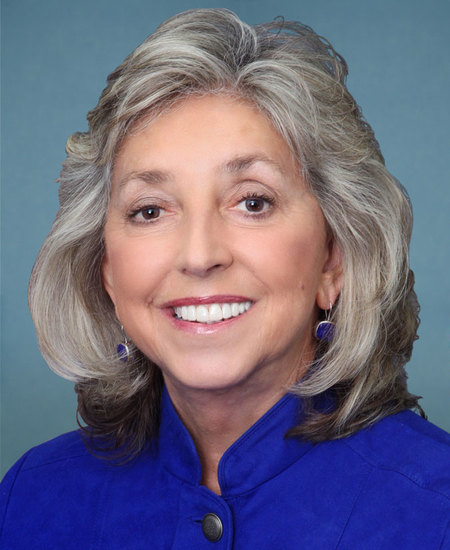
Rep. Dina Titus
Sponsored bills
Maddy summaryHR 3564, the Nuclear First-Strike Security Act of 2025, requires the President to notify key congressional leaders at least seven days before authorizing a first-use nuclear strike (using nuclear weapons without prior attack on the U.S. or allies). This applies unless the strike occurs under a congressional declaration of war, in response to a nuclear attack on the U.S. or an ally (defined as NATO, Japan, South Korea, or Australia), or during a launch-on-warning scenario. The bill mandates the Secretary of Defense to certify the strike's legality and necessity to congressional leaders before execution. It directly affects the President and Defense Department, adding a formal congressional notification step to nuclear decision-making. The law aims to create a deliberate review period for the most extreme military action.
Maddy summaryThe DEFIANCE Act of 2025 creates a new civil legal remedy for victims of non-consensual intimate digital forgeries (synthetic images or videos manipulating real people into sexual contexts without consent). It allows affected individuals to sue perpetrators in federal court for damages up to $250,000, injunctions to remove content, and privacy protections like pseudonyms. The bill specifically covers cases where forgeries are created or shared with intent to disclose, including scenarios involving sexual assault or harassment. It expands existing federal protections under 15 U.S.C. 6851 to address digital forgeries while ensuring state laws remain in effect.
Maddy summaryHR 3559, the Save Our Forests Act of 2025, requires the U.S. Forest Service to increase staffing for National Forest System lands within 30 days of enactment to support forest health and productivity. It mandates reinstating Forest Service employees terminated between January 20, 2025, and the bill’s enactment date. The bill also directs the continuation of specific existing projects funded under laws like the Inflation Reduction Act and Infrastructure Investment and Jobs Act. These provisions directly affect Forest Service operations, workers, and the management of national forests.
Maddy summaryHR 3555, the Protect our Parks Act of 2025, requires the Secretary of the Interior to ensure National Park Service units are fully staffed for visitor safety, resource protection, and maintenance within 30 days of enactment. It mandates rehiring all National Park Service employees involuntarily terminated between January 20, 2025, and the bill’s enactment date. The bill also directs the continuation of specific park projects funded under the Great American Outdoors Act, Infrastructure Investment and Jobs Act, and the Inflation Reduction Act. This legislation directly affects National Park Service staff and park operations, focusing on staffing stability and project continuity.
Maddy summaryHR 3532, the Striking and Locked Out Workers Healthcare Protection Act, prohibits employers from terminating or altering an employee’s employer-sponsored health coverage during a lawful strike or a lockout (when an employer withholds work to influence bargaining). It directly affects workers participating in strikes or facing lockouts, ensuring continued healthcare access during these labor disputes. The bill adds penalties: $75,000 per violation for lockout-related coverage termination (up to $150,000 for repeat offenses), and $50,000 per violation for strike-related termination (up to $100,000 for repeat offenses), with penalties applied alongside other remedies. These provisions amend the National Labor Relations Act to protect workers’ healthcare rights during collective bargaining actions.
Maddy summaryHR 3516, the Opportunities for Fairness in Farming Act of 2025, imposes new rules on agricultural checkoff programs (like those for beef, dairy, cotton, and wheat) that collect fees from producers to fund promotion and research. The bill prohibits these programs from contracting with entities lobbying on agricultural policy (except for university research), bans conflicts of interest, and forbids anticompetitive or disparaging activities. It requires boards to publicly disclose all budgets, spending, and contracts quarterly, and mandates regular audits by the USDA Inspector General and the Comptroller General to ensure compliance. These changes aim to prevent misuse of funds and increase transparency for programs affecting thousands of agricultural producers nationwide.
Maddy summaryHRES 427 is a symbolic resolution recognizing "National Public Works Week" (May 18-24, 2025). It honors public works professionals, including engineers, managers, and first responders who maintain infrastructure like roads, water systems, and public buildings. The resolution encourages the public to acknowledge their role in protecting community health, safety, and quality of life. As a non-binding resolution, it does not create new laws or allocate funding but aims to raise awareness of these workers' contributions.
Maddy summaryHR 3501 would require Medicare providers to screen beneficiaries aged 65 and older for cognitive impairment during annual wellness visits and initial preventive physical exams, using tools approved by the National Institute on Aging. The screening must be documented in the patient’s medical record. This change applies to visits starting January 1, 2026, and aims to support early detection of conditions like Alzheimer’s through standard preventive care. The bill directly affects Medicare beneficiaries, providers, and caregivers by integrating cognitive screening into routine preventive services.
Stronger Communities through Better Transit Act This bill requires the Department of Transportation (DOT) to establish a grant program to support operating projects for public transportation and related service improvements, particularly in underserved communities and areas of persistent poverty. Specifically, the bill requires DOT to allocate funding under the program for urbanized areas, states, and Indian tribes that are recipients of funds under either the Federal Transit Administration's (FTA's) Urbanized Area Formula Funding program or Formula Grants for Rural Areas program. Eligible recipients may use funding for operating costs associated with projects that improve public transportation service for transit-dependent populations and support increased transit ridership (e.g., service expansion, information technology enhancements, and workforce development). DOT must apportion the funding so that recipients receive funds that are proportional to their share of operating costs. The bill also provides for an increased federal cost share for operating assistance for projects or programs carried out in areas of persistent poverty or underserved communities. DOT must set up a multimodal access measurement interface for public agencies to aid transit agencies in determining and reporting on access to jobs and essential services. A grant recipient must (1) report specific information to the FTA for inclusion in the National Transit Database, and (2) survey transit riders and non-riding residents regarding transit service improvements. Further, the bill expands the purposes of the public transportation programs to include supporting public transportation's role in combating climate change through growing/retaining transit ridership.