

Maddy summaryThis resolution (HRES 457) is a symbolic measure expressing congressional support for designating June 6, 2025, as "National Gun Violence Awareness Day" and June 2025 as "National Gun Violence Awareness Month." It does not create new laws or policies but encourages public awareness through specific actions: wearing orange on June 6, focusing on gun safety during summer months, and holding community discussions. The resolution references statistics on gun violence deaths and honors Hadiya Pendleton, a teen victim killed in 2013. It directly affects the public by calling for voluntary observance and community engagement, not government mandates.
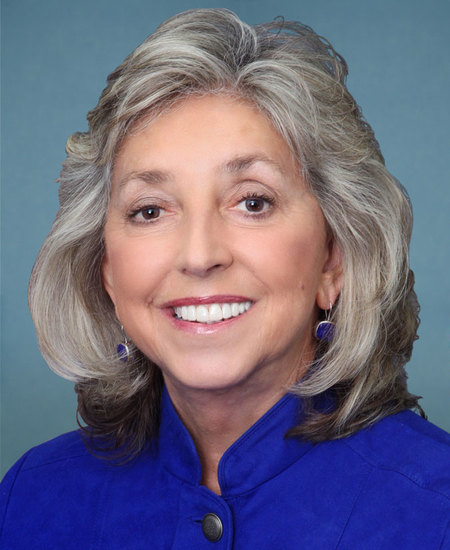
Rep. Dina Titus
Sponsored bills
Maddy summaryHR 3694, the VALID Act of 2025, requires lenders to include specific information about VA loans in mortgage disclosures. It amends the National Housing Act to mandate that disclosures state the loan-to-value ratio and clarify that VA loans are available under Chapter 37 of Title 38 (veterans' benefits law), assuming prevailing interest rates. The bill also requires the Federal Housing Finance Agency to add a military service question to the Uniform Residential Loan Application form, placing it above the signature line within six months of enactment. This directly affects veterans and active-duty service members applying for VA-guaranteed mortgages, as well as the lenders processing those applications.
Maddy summaryThe FBI Animal Cruelty Taskforce Act of 2025 establishes a dedicated FBI unit to investigate federal animal cruelty crimes, specifically targeting dogfighting, cockfighting, and "crush videos." This taskforce will create training materials for local law enforcement to help them detect and investigate these offenses. It also requires the taskforce to coordinate with agencies like the Department of Agriculture and U.S. Customs, and to submit annual reports to Congress detailing filed charges, convictions, and unresolved investigations. The bill directly affects local police departments through new training resources and federal agencies through mandated coordination and reporting.
Maddy summaryHR 3623, the Horse Transportation Safety Act of 2025, prohibits transporting horses between states in motor vehicles with two or more stacked levels. This directly affects horse transporters, including owners and carriers moving horses across state lines. The bill defines "motor vehicle" to exclude rail vehicles but requires compliance with the multi-level ban, imposing civil penalties of $100-$500 per horse transported in violation. Violations are enforced through separate penalties for each horse transported illegally, in addition to other applicable laws.
Maddy summaryHR 3661, the Extreme Weather and Heat Response Modernization Act, requires FEMA to review and update how it defines "incident periods" (timeframes for disaster response) for extreme weather events. Within one year, FEMA must form an advisory panel with diverse emergency management representatives to assess current procedures, particularly for slow-onset, compound, or cascading disasters, and submit findings to Congress. The bill also mandates FEMA to issue new guidance on community cooling centers, resilience centers, and extreme heat/cold mitigation projects within a year, and conduct a study on impacts to vulnerable communities, infrastructure, and emergency alerts. These changes directly affect FEMA, state/local emergency managers, and communities facing extreme heat or cold events by modernizing response protocols and funding eligibility.
Maddy summaryThis bill requires new passenger cars, SUVs, and light trucks (under 10,000 lbs) to have automatic emergency braking systems that detect cyclists in all lighting conditions and across diverse appearances. The rule must be finalized within 3 years of enactment, with manufacturers required to comply within two model years after the rule's release. It mandates systems that activate at appropriate speeds and recognize vulnerable road users like bicyclists, regardless of skin tone, clothing, or protective gear. The law directly affects vehicle manufacturers and aims to improve safety for cyclists through standardized vehicle technology.
Maddy summaryHR 3663, the Bridge Protection Act, requires owners of bridges built before 1996 over navigable water to conduct vessel collision vulnerability assessments using a specific method. If assessments show high risk, owners must develop and implement a risk reduction plan within one year; failure to do so after October 1, 2026, makes them ineligible for federal bridge grants (unless granted an extension). The bill also establishes an interdisciplinary bridge safety team to oversee compliance and maintain a national vulnerability database, and creates a $500 million competitive grant program (2026-2030) to fund assessments and physical improvements for these older bridges. This directly affects state and local bridge owners managing pre-1996 structures.
Maddy summaryThe Labor Income Fairness and Transparency Act (HR 3662) increases the federal minimum wage to $10.25 per hour after one year, $13.75 after two years, and $17.00 after three years, with future increases tied to median wage growth. It eliminates subminimum wage rates for youth workers (previously allowed for first 90 days), student-learners, and special certificate programs, requiring all workers to receive the standard minimum wage. The bill also increases minimum wage rates for tipped employees and raises civil penalties for wage law violations from $1,100 to $2,200. It establishes a National Advisory Committee on the Hospitality Industry to advise on worker issues in that sector and makes temporary Earned Income Tax Credit improvements permanent. This legislation directly affects all covered workers and employers across the United States who must comply with federal wage laws.
Maddy summaryThis bill reorganizes collective bargaining rules for Veterans Health Administration (VHA) employees by removing existing subsections (b), (c), and (d) from Section 7422 of Title 38 and redesignating the current subsection (e) as (b). It directly affects VA health care employees by altering the structure of their collective bargaining framework. The bill explicitly states it does not change the Secretary of Veterans Affairs' existing authorities over incentive pay or expedited hiring under Section 706 of Title 38. The change is purely procedural, focusing on the internal organization of bargaining rules without introducing new employee benefits or obligations.
Maddy summaryHRES 446 is a symbolic House resolution supporting the designation of July 3-10, 2025, as "National Extreme Heat Awareness Week." It aims to raise public awareness about extreme heat dangers to health, infrastructure, agriculture, and safety through educational campaigns and community initiatives. The resolution encourages federal and local efforts to promote heat safety knowledge and preparedness, citing that extreme heat causes over 1,300 U.S. deaths annually. It does not create new laws or allocate funding but formally expresses congressional support for this awareness observance.