

Maddy summaryThe Tipped Worker Protection Act eliminates the sub-minimum wage for tipped workers, requiring employers to pay the full minimum wage instead of the current $2.13/hour rate that relies on tips to make up the difference. During a transition period, tipped workers would receive a minimum cash wage of $3.60/hour in the first year, increasing by $1.50 annually until reaching the full minimum wage. The bill also prohibits employers from keeping tips or using them for anything other than distributing to employees, requires transparency about service charges, and establishes rules for voluntary tip pooling. This bill directly affects workers in restaurants, bars, and other service industries who traditionally receive tips as part of their compensation.
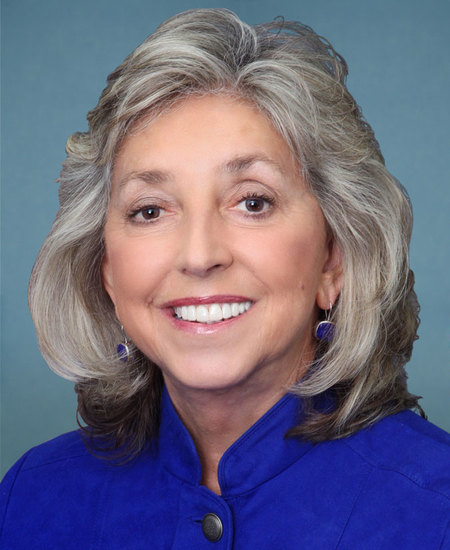
Rep. Dina Titus
Sponsored bills
Maddy summary# Summary of Proposed FEMA Reform Legislation (FEMA Act of 2025) This comprehensive legislative document proposes significant reforms to the Robert T. Stafford Disaster Relief and Emergency Assistance Act, with four main sections addressing: ## 1. Disaster Assistance Reforms - **Expanded eligibility** for assistance, including clarifying that absence of a fixed address doesn't disqualify individuals from sheltering assistance - **Improved rental assistance** with consideration of local post-disaster rent increases - **Direct assistance** for those unable to use financial assistance, with no requirement to show other assistance can cover costs (except insurance) - **Enhanced notices** for applicants, including documentation of denial decisions - **Clarification of displacement assistance** eligibility, stating insurance shouldn't be considered a duplication of benefits ## 2. Mitigation Program Enhancements - **Preapproved project mitigation plans** requiring states to develop plans with peer review processes - **Improved allocation of funds** with formulas prioritizing vulnerable communities, high-risk areas, and rural/economically distressed communities - **Resilient buildings** requirements for housing retrofits using the latest building codes - **Streamlined application processes** for hazard mitigation funds across multiple programs - **Study on mitigation benefits** to evaluate cost savings and effectiveness ## 3. Transparency and Accountability Measures - **Public dashboards** for both individual assistance (431) and public assistance (432) showing application status, approvals, denials, and funding - **Transparency requirements** for disaster declarations with detailed justifications for approvals/denials - **GAO studies** on numerous topics including: - Identity theft in disaster assistance (409) - Insurance utilization for public assistance facilities (410) - Wildfire management plans (411) - Effectiveness of alerting systems (412) - Cost savings of repair/rebuilding reforms (415) - **Prohibition on political discrimination** in assistance distribution ## 4. Workforce and Operational Improvements - **Study on workforce retention** in noncontiguous communities - **Pilot program** for preliminary damage assessments in remote communities - **Fast-moving disasters working group** to develop best practices for rapid response The legislation focuses on improving efficiency, transparency, and effectiveness of disaster relief programs while prioritizing vulnerable populations and communities with higher risk of disasters. It also emphasizes data-driven decision making through required studies and reports to continuously improve disaster management policies.
Maddy summaryThis bill prohibits federal courts from excluding potential jurors based on disability or age. It amends jury selection laws to require reasonable accommodations (like sign language interpreters or accessible seating) so people with disabilities can serve if otherwise qualified. The law removes automatic disqualification for "infirmity" and ensures individuals aren't barred from jury service solely due to disability when accommodations could enable participation. It directly affects millions of Americans with disabilities and older adults who may have been previously excluded from federal jury duty. The changes apply specifically to jury service in U.S. district courts.
Maddy summaryThis bill requires the Health and Human Services and Labor Secretaries to review all federal grant programs supporting the nursing workforce and submit a report to Congress within one year. The report must include recommendations to improve specific goals: increasing nursing faculty (especially in underserved areas), creating pathways for experienced nurses to become faculty, and expanding opportunities for licensed practical nurses to become registered nurses. It does not create new funding or programs but mandates a comprehensive review of existing initiatives. The bill directly affects federal agencies managing nursing workforce grants and aims to identify ways to strengthen nursing education pipelines.
Maddy summaryHR 5009, the Fine Arts Protection Act of 2025, requires the Comptroller General to conduct a comprehensive review of the General Services Administration’s (GSA) Fine Arts Program within one year of the bill’s enactment. The review will survey every artwork in the GSA’s public collection - including New Deal-era pieces - estimate its economic value, assess management practices, staffing, funding, and compare GSA’s approach to other art collections. The Comptroller General must then submit a report to Congress within two years, detailing findings and recommending whether the GSA should continue managing the collection. This bill directly affects the GSA’s Fine Arts Program and provides Congress with data to inform future decisions about the collection’s preservation.
Maddy summaryThis bill permanently establishes the Coordinator for Afghan Relocation Efforts (CARE) within the State Department, expanding their role to prioritize family reunification for U.S. military personnel and veterans with Afghan allies. It mandates the Coordinator to collect detailed data on Afghan applicants (including special immigrant visa seekers, refugees, and parolees), vetting timelines, and pending family reunification cases into a centralized database. The Coordinator must report this data to Congress every 90 days to ensure transparency and inform policy decisions. The law directly affects Afghan allies and their families seeking U.S. relocation, particularly those connected to U.S. military service.
Maddy summaryThis bill (HJRES 115) terminates a presidential emergency declaration made on August 11, 2025, which claimed a "crime emergency" in Washington, D.C. It directly affects the District of Columbia by ending federal restrictions that prevented D.C. from using $1 billion in locally-raised funds for public safety, law enforcement, fire services, and schools. The resolution cites that the emergency declaration was legally flawed - section 740 of the DC Home Rule Act does not permit federalizing the Metropolitan Police Department - and notes that D.C. violent crime has reached a 30-year low. The bill formally ends the emergency under the DC Home Rule Act, restoring D.C.'s authority over its own budget and public safety resources.
Maddy summaryThis resolution (HRES 653) expresses U.S. congressional support for Japan's newly formed "Caucus for Universal Values in the Indo-Pacific," a bipartisan group within Japan's Diet focused on advancing democratic principles. It encourages continued collaboration between the U.S. Congress and Japan's Diet through existing programs like the House Democracy Partnership to strengthen democratic governance, civil society, and human rights protections across the Indo-Pacific region. The resolution does not create new laws or directly affect individuals or organizations; it serves as a symbolic endorsement of U.S.-Japan partnership in promoting shared democratic values. Key provisions include commending Japan's caucus, affirming common commitments to human rights and the rule of law, and urging expanded bilateral coordination on democracy initiatives.
Maddy summaryThis bill amends the Food and Nutrition Act to clarify that Social Security benefits (income under Title II of the Social Security Act) are not counted when determining eligibility for SNAP (Supplemental Nutrition Assistance Program) benefits. It directly affects seniors receiving Social Security who rely on SNAP for food assistance, ensuring their Social Security payments do not reduce their SNAP benefits. The key change adds Social Security income to the list of non-countable resources under SNAP rules. The amendment takes effect 90 days after the bill is enacted.
Maddy summaryHR 4926, the Highway Funding Transferability Improvement Act, increases the percentage of federal-aid highway funds that states can transfer between different transportation projects from 50% to 75%. This change directly affects state transportation departments managing federal highway funds, giving them greater flexibility to shift resources between projects like road repairs and new construction. The key provision amends Section 126(a) of Title 23, U.S. Code to allow states to reallocate a larger portion of their allocated funds without federal approval. This is a procedural adjustment to existing funding rules, not a new policy.